Bulletin for April 5, 2026
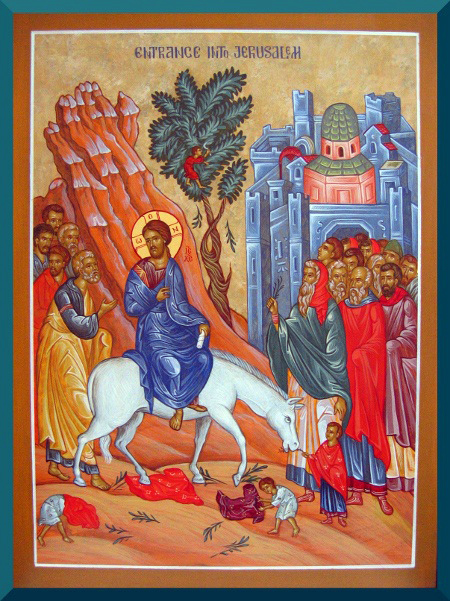
Apr. 5 – PALM SUNDAY. THE ENTRY OF THE LORD INTO JERUSALEM.
Monk-martyr Nicon and 199 disciples, in Sicily (251). Martyrs Philetas the Senator, his wife Lydia, their sons Macedon and Theoprepius, the notary Cronides, and Amphilochius the Captain, in Illyria (125). Ven. Nicon, abbot of the Kyiv Caves (1088).
Phil. 4:4-9; Jn. 12:1-18;
Liturgy of St. John Chrysostom
Apr. 7 – The Annunciation of the Theotokos
Благовіщення Богородиці.
Heb. 2:11-18; Lk. 1:24-38;
Vesperal Liturgy of St. John Chrysostom.
Apr. 9 – GREAT THURSDAY. THE MYSTICAL SUPPER
St. Matrona of Thessalonica (4th c.). Martyrs Manuel and Theodosius (304). St. John the Clairvoyant of Lycopolis, anchorite of Egypt (394).
1 Cor. 11:23-32;
Mt.26:1-20; Jn.13:3-17;
Mt.26:21-39; Lk.22:43-45;
Vesperal Liturgy of St. Basil the Great.
Services & Other Events
5 April, Sunday:
- 9am – Confession / Hours
- 9:30am – Divine Liturgy - Бож. Літургія
- Blessing of the Pyssy Willow and Palms – Освячення гілок верби та пальми
- 6:30pm – Bridegroom Matins - Постова Утрення
6 April, Holy Monday:
- 6:30pm – Great Compline - Велике Повечір'я
7 April, Annunciation - Благовіщення:
- 9am – Vesperal Liturgy of St. John Chrysostom - Вечірня із Літургією св. Івана Хрестителя
8 April, Holy Wednesday:
- 6:30pm – Sacrament of the Holy Unction - Таїнство Миропомазання
9 April, Holy Thursday:
- 10am – Divine Liturgy - Бож. Літургія
- 6:30pm – Matins with 12 Gospel Readings - Утрення із 12 Євангельськими читаннями
10 April, Holy Friday:
- 9:30am – Royal Hours - Царські Часи
- 6:30pm – Vespers with Shroud - Вечірня із винесеням плащаниці
11 April, Holy Saturday:
- 9:30am – Divine Liturgy - Бож. Літургія
12 April, PASCHA - ПАСХА:
- 7am – Midnight Nocturns - Полуношниця
- 7:30am – Resurrectional Matins – Воскресна Утрення
- 8:45am – Paschal Hours - Пасхальні Часи
- 9am – Divine Liturgy - Бож. Літургія
Апостол і Євангеліє - Gospel and Epistle of the Day
Rejoice in the Lord Always
Palm Sunday stands at the threshold of the most sacred week in the Christian year. The Church, adorned with branches of willow and palms, sings "Rejoice greatly, O daughter of Zion!" — an ancient word that the Apostle Paul echoes in his letter to the Philippians: "Rejoice in the Lord always; again I will say, Rejoice" (Phil. 4:4). These two texts — one from the eve of the Passion, one from the pen of an apostle in chains — illuminate each other with a light that transcends circumstance. Taken together, they form an icon of the Christian vocation: to live in joy, peace, and attentive love in the very midst of a suffering world.
The saints of the Ukrainian Orthodox tradition and the holy fathers of Mount Athos have pondered these words from within the furnace of their own struggles. From the Kyivan Caves to the hermitages of Athos, from the martyrs of the twentieth century to the hesychast elders of the Holy Mountain, their witness gives flesh and bone to Paul's counsel and John's narrative. This article seeks to read these scriptures through the lens of that luminous cloud of witnesses.
"Rejoice in the Lord Always" — The Joy That Cannot Be Taken Away
Saint Paul writes from prison. The Philippian community he addresses faces hostility from without and anxiety from within. Yet his command is uncompromising: Rejoice — always. The Greek word chairete — χαίρετε (rejoice) carries not the thin cheerfulness of positive thinking, but the deep gladness that flows from union with the risen Lord. It is a joy rooted not in pleasant circumstances but in divine presence.
Saint John of the Caves (Sviatohorsky), one of the earliest ascetics of the Kyiv Pechersk Lavra, taught his disciples that the heart purified by prayer and fasting becomes capable of bearing a joy the world cannot give and cannot take away. For him, the Psalms and the Pauline epistles were not texts to be memorised but medicines to be received into the very bloodstream of the soul. "Rejoice in the Lord" was not, for this saint, a pious exhortation — it was a description of what happens when the ego's agitated noise grows still enough for the Lord's presence to be felt.
"Let your gentleness be known to everyone. The Lord is at hand" (Phil. 4:5).
The proximity of the Lord — His "at-handness" — is precisely what makes gentleness possible. When we know that He is near, we are freed from the desperate clinging and anxious self-protection that make human interactions so harsh. The Elder Paisios of Mount Athos, beloved across the Orthodox world and glorified as a saint in 2015, incarnated this gentleness in a remarkable way. Pilgrims who came to his cell expecting stern ascetic pronouncements often found themselves disarmed by warmth, laughter, and an attentiveness to their pain that felt miraculous. He once said that the Christian who has truly encountered Christ cannot but be joyful, because he carries within him a Guest who is Joy itself.
Prayer, Petition, and the Peace That Passes Understanding
Paul continues: "Do not be anxious about anything, but in everything by prayer and supplication with thanksgiving let your requests be made known to God. And the peace of God, which surpasses all understanding, will guard your hearts and your minds in Christ Jesus" (Phil. 4:6–7).
This is perhaps the most densely practical passage in all of Paul's letters. He does not deny that there are things to be anxious about; he redirects the energy of anxiety into prayer. The word translated "supplication" (deesis — δέησις (supplication/petition)) implies a personal, urgent petition — the kind of prayer that arises from genuine need. And the result is not the resolution of every problem, but something more mysterious: a peace that "surpasses all understanding," that stands guard like a sentinel over the inner life.
Saint Paisios Velichkovsky, the eighteenth-century Ukrainian-born elder who restored Patristic spirituality to the Slavic world, made this passage central to his teaching on the Jesus Prayer. In his celebrated Philokalia, the Prayer of the Heart — "Lord Jesus Christ, Son of God, have mercy on me, a sinner" — is the lived practice of exactly what Paul commands. One brings every anxiety, every wound, every desire, into the fire of this prayer, and discovers that the Lord's peace begins to permeate the places within that reason alone could never pacify.
His disciple communities, first at Dragomirna and later at Neamț in Moldavia, became schools of precisely this kind of interior life. Hundreds of monastics learned that prayer was not the escape from reality but its deepest penetration — and that the peace thus received was not passivity but a creative, attentive stillness from which love could act freely.
The Anointing at Bethany — Extravagant Love Before the Passion
The Gospel of John places us in Bethany, six days before the Passover (Jn. 12:1). The household of Lazarus — he who had been raised from the dead — prepares a supper. Martha serves; Lazarus reclines at table with Jesus. And then Mary takes a pound of pure nard, worth three hundred denarii — a year's wages — breaks open the alabaster jar, and anoints the feet of Jesus, wiping them with her hair. The house is filled with the fragrance of the perfume (Jn. 12:3).
This scene is one of the most arresting in all the Gospels. It is an act of pure, uncalculating love — prodigal, embodied, and public. Judas, calculating the waste, objects. Jesus silences the objection: "Leave her alone, so that she may keep it for the day of my burial. For the poor you always have with you, but you do not always have me" (Jn. 12:7–8).
The fathers of Mount Athos have long read this passage as a type of the contemplative life itself. Just as Mary chose the "better part" in the Lucan account, here she enacts what the Greek Fathers call theoria — θεωρία (contemplative vision/beholding) — the loving, undivided attention of the soul toward God. The precious nard represents the totality of the self, broken open and offered. Saint Gregory Palamas, the great defender of hesychasm who spent years at Athos, saw in Mary's act an icon of what happens in deep prayer: the soul pours out everything it has, and the fragrance of that offering fills not just the house but the cosmos.
Saint Paisios of Athos connected this scene to what he called "holy madness" (in the tradition of the "Fool for Christ") — an extravagance of love that the calculating mind cannot comprehend. He observed that those who love Christ truly always appear to be "wasting" something by the world's accounting: time, comfort, reputation, security. But the fragrance of such love, he said, is the most powerful apologetic the Church possesses.
The Entry into Jerusalem — Triumph Through Humility
The next day, the great crowd that had come for the Passover heard that Jesus was coming to Jerusalem. They took branches of palm trees and went out to meet him, crying out, "Hosanna! Blessed is he who comes in the name of the Lord, even the King of Israel!" (Jn. 12:12–13). Jesus comes riding not on a war horse but on a young donkey — meek, unhurried, arriving as the fulfilment of Zechariah's ancient prophecy.
Here the paradox that runs through all of Paul's letter reaches its iconic expression: the Lord of all things chooses the path of lowliness. Power expresses itself as gentleness. Victory arrives as vulnerability. The crowd shouts "Hosanna" — save us! — and the One who will save them does so not by overthrowing Rome but by allowing Rome to nail him to wood.
Saint Theodosius of the Caves (Pechersky), co-founder of the Kyiv Pechersk Lavra and one of the most beloved fathers of Ukrainian Orthodoxy, embodied this same paradox throughout his life. Of noble birth, he chose the rough garments of a peasant. As abbot of the greatest monastery in Kievan Rus, he served in the kitchen, welcomed the poor at the gates, and slept less than any of his monks. His entry into authority was always an entry into greater service. His contemporaries wrote that to be near him was to feel both the weight of holiness and the lightness of joy — precisely the combination Paul describes and John's Gospel enacts.
"Whatever Is True… Think About These Things" — The Discipline of Holy Thought
Paul's counsel reaches its practical apex in verse 8: "Finally, brothers, whatever is true, whatever is honorable, whatever is just, whatever is pure, whatever is lovely, whatever is commendable, if there is any excellence, if there is anything worthy of praise, think about these things."
This is the Apostle's cognitive therapy, grounded not in modern psychology but in the ancient understanding that the nous — the faculty of spiritual intellect — is shaped by what it habitually attends to. In the Patristic tradition, this is the doctrine of nepsis: watchfulness, sobriety, attentiveness of mind. The Desert Fathers taught that as a monk guards the door of his cell, so he must guard the door of his thoughts.
The Athonite tradition speaks of the "guarding of the heart" (phylake kardias) as the central work of the monastic life. Elders like Saint Silouan the Athonite — glorified by the Ecumenical Patriarchate — taught that the primary battlefield of the Christian life is interior. "Keep thy mind in hell and despair not," he was famously taught by Christ in a vision — a paradoxical directive that means: look unflinchingly at the worst in yourself and in the world, and yet refuse to let go of hope, because the Lord is present even there.
The Fragrance Fills the House — A Theology of Holy Witness
When Mary broke the alabaster jar, the text says the entire house was filled with the fragrance. This detail is theologically laden. In the Old Testament, the filling of a space with divine fragrance or glory signals a divine presence (cf. the cloud filling the Tabernacle, Exodus 40). Here, Mary's act of love becomes a kind of liturgy — an offering that transforms the atmosphere of the whole house.
In our own time, the Ukrainian church has endured its own Passion — war, displacement, the martyrdom of priests and civilians. And yet, as in John 12, the response of so many has been not despair but an extraordinary extravagance of charity, prayer, and solidarity. The liturgical life has continued — in bomb shelters, in refugee centers, in the fields. The house is still being filled with fragrance.
Practice These Things
Paul ends his counsel with a word of integration: "What you have learned and received and heard and seen in me — practice these things, and the God of peace will be with you" (Phil. 4:9). The Christian life is not finally a matter of correct ideas but of embodied practice. Prayer, gentleness, thanksgiving, the guarding of thought — these are not occasional exercises but the daily rhythm of a life oriented toward God.
The saints of Ukraine and Athos did not merely theorise about these things. They lived them — in caves and monasteries, in prisons and hospitals, in the liturgy and in the kitchen, in the whispered Jesus Prayer and in the public homily. Mary of Bethany did not theorise about love; she broke open the jar. The crowd did not theorise about welcome; they cut branches and ran into the road. The disciples did not understand what was happening — John tells us explicitly (12:16) — but they participated, and understanding came later.
The same invitation stands before the Church in every age: to rejoice, to pray, to anoint, to welcome, to guard the heart, and to trust that the God of peace — who rides in on a donkey, who is anointed with nard, who rises from the dead — is, even now, at hand.
Вхід Господній до Єрусалима
Свято Входу Господнього до Єрусалима зазвичай називають у народі "Вербною неділею". Православні християни поспішають до церкви з пучками пухнастих верб. Нас охоплює радісне передчуття: за тиждень – Великдень! Але до чого тут верби, про які нічого не знали євангельські герої? Який взагалі історичний смисл свята?
Звернімося до євангельської історії.
Рання весна 30 року від Різдва Христового. До Єрусалима вже прибув військовий губернатор (прокуратор, точніше – префект) Іудеї Понтій Пилат, щоб спостерігати за бунтівними підданими. Скоро єврейська Пасха, і за шість днів до неї Христос прямує до міських воріт, немов бажаючи посісти належний Йому царський престол, уперше дозволяючи називати Себе Царем. Це – остання спроба відвернути людей від політичних хибних думок, вказавши істинний характер Свого Царства "не від світу цього". Тому під Ісусом не бойовий кінь, а лагідний осел, який символізує мир. А люди розмахують пальмовими гілками й кричать "осанна!" ("спасай нас!"). Взявши пальмові гілки, вони вийшли Йому назустріч і кричали: «Осанна! Благословенний, хто йде в ім'я Господнє, Цар Ізраїлів!» (Ів. 12:12–13). Ісус їде не на бойовому коні, а на молодому осляті — лагідний, неквапливий, що прийшов як виконання давнього пророцтва Захарії.
Вони чекають, що Він явить Божественну силу, ненависні римські окупанти будуть знищені – і прийде вічне Месіанське Царство. Але Христос не винищуватиме римські легіони й не змінюватиме політичний устрій світу. Це безглуздо, якщо немає оновлення морального. Подібні спроби обертаються ще більшою бідою.
Мине чотири дні, і невірні учні в страху розбіжаться із нічного Гефсиманського саду, залишивши зв'язаного Вчителя в руках варти; а юрба, яка нині вітає Месію захопленими криками, буде в озлобленні волати: "Розіпни, розіпни Його!" Він не виправдає її очікувань…
Наслідуючи сучасників Христа, ми теж зустрічаємо Його з зеленими гілками в руках. Християни Сходу – з гілками фінікових пальм чи лавру або квітами. У жителів Півночі вони мимоволі замінюються вербами – першими деревами, що зеленіють. Їх освячують напередодні свята, на всенічному бдінні, після читання Євангелія. У народі набули поширення різноманітні "вербні" звичаї та обряди: зберігати освячену в церкві вербу протягом року, прикрашати нею домашні ікони та ставити на підвіконня, приносити на могили родичів, окропляти вербним пензлем, змоченим у святій воді, худобу, їсти вербну кашу, зварену з бруньками верби, які тільки-но розпустилися, та її сережками.
On behalf of our St. John's Ukrainian Refugee and Humanitarian Relief Committee we extend our best wishes to our parish family, friends and neighbors on this "Willow Sunday". As we enter Holy Week with reverence and solemn prayers in preparation for our Lord's Resurrection on Easter Sunday, we reflect upon Christ's agony and suffering on the cross. We also remember and pray for those in our ancestral homeland who continue to suffer unwarranted terror, pain, and destruction as they defend their families, faith, and freedom from the evil forces that have befallen them.
This February, we commemorated the fourth anniversary of Russia's unprovoked full scale invasion of Ukraine and the fourteen years of war since Putin first invaded and illegal annexed Crimea. In March, we participated in Binghamton's St. Patrick's Day parade to remind our community about the more than twenty thousand Ukrainian children abducted by the Russian terrorists and that Ukraine has not perished, but still needs America's attention and support. This past week, world leaders gathered in Ukraine to honor the hundreds of innocent civilians massacred in Bucha, and we sadly marked the daily killings and suffering in Ukraine that now surpass one thousand five hundred days since the full scale invasion started, with no end in sight.
Regrettably, with the U.S. Government's support for Ukraine now significantly reduced in favor of Russia, it is all the more important that we not forsake our brothers and sisters in Ukraine. We must continue our efforts to help provide critical humanitarian assistance to our brethren, in God's name. Thanks to the prayers and generous donations from our compassionate parishioners and friends, we contributed financial resources to the UOC of the USA's Ukraine Aid Fund, Ukrainian American Veterans Fund, Revived Soldiers Ukraine, SEED: Support or Education, Empowerment and Development, Blue Check Ukraine, St. Andrews Society, World Central Kitchens, and Hope for Ukraine. This quarter we also provided each of our five sponsored families from Ukraine with a stipend to help them defray some of their substantial U.S. Customs and Immigration fees.
Please best wishes for a joyous Easter celebration with our sincere gratitude to all of our donors. We also take this opportunity to humbly ask for your continued prayers for Ukraine and ask that you kindly consider making a donation to our St. John's Humanitarian Fund in memory or honor of your loved ones this Easter and throughout the year, as we mark St. John's Centennial and remember our founders, benefactors, ancestors and honor our Ukrainian American Heritage.
In Memory of:
Lydia Klecor, Dmytro Wasylko, Children of Ukraine, Peter Dobransky and Ralph Winters.
In Honor of: Children of Ukraine
Христос воскрес! Воістину воскрес ! + Christ Has Risen! In Deed He has Risen!
Paschal Cemetery Blessing
Traditionally at our parish we have Paschal Cemetery blessing on Sunday of Memorial Day weekend. But during the time when Memorial Day is outside of Paschal Season we select different day.
This year we are going to have the Paschal Cemetery Blessing on St. Thomas Sunday, April 19, 2026 after the Divine Liturgy.
Thank You Note

We would like to thank our Pysanky instructors, Lenten Lunch chefs and all the participants for continuing the tradition.
Let's Help Ukraine!

St. John's Ukrainian Humanitarian Fund is accepting donations to help Ukrainians during war. Donations will go to provide food and other humanitarian needs.
To make donation online click here
We accept checks as well.
Please make the checks to St. John Ukrainian Humanitarian Fund
Mailing address:
1 Saint John's Parkway
Johnson City NY 13790
Cash is accepted in church
Pray for Ukraine!

Prayers for Ukraine are done during each service. To see the schedule click here.
Молитви за Україну проводяться під час кожної служби. За розкладом дивіться тут.
May God bless and protect Ukraine!
Please Note!
- Only Orthodox Christians may receive Holy Communion or other Sacraments.
- If you have not been to confession in over a month, please go to confession before receiving the Holy
Gifts.
- We fast from all food and drink (including water) from bedtime (the previous night) until we receive the Holy Gifts during morning Divine Liturgy. That also means no coffee, no cigarettes, no gum, candies in the morning and during Divine Liturgy.
Happy Birthday
- April 01: Sophia Maliwacki
- April 05: Juanita Atwood
- April 05: Michael Muzyka
- April 05: Mia Scannell
- April 07: Rose Klodowski
- April 08: Hristos Dimitriou
- April 11: Lily Hatala
* If your or someone else's birthday is missing or incorrect please let Fr. Ivan know right away.
Please Pray for the Servants of God
Benjamin, Rachel, John, Rose, Solomiia,
Bob, Melodye, Julie, John, Jane, Alla,
Fr. Andre, Mary, Zenna, Douglas, Ivan,
Daniel, Melanie, William, Marion, Helen,
Mariann, Robert, Jean, Ronald, Brian,
Fr. James, Scott, Andriy, James, William,
Fr. Gabriel and PM Susan, Vasyl, Olha
Upcoming Readings
| Mon. Apr. 6 | Mt. 21:18-43; | Mt. 24:3-35; |
| Tue. Apr. 7 | Heb. 2:11-18; | Lk. 1:24-38; |
| Wed. Apr. 8 | Jn. 12:17-50; | Mt. 26:6-16 ; |
| Thu. Apr. 9 | 1 Cor. 11:23-32; | Mt. 26:1-20; Jn.13:3-17; |
| Fri. Apr. 10 | 1 Cor. 1:18 - 2:2; | Mt. 27:1-38; Lk. 23:39-43; |
| Sat. Apr. 11 | Rom. 6:3-11; | Mt. 28:1-20; |