Bulletin for May 10, 2026
May 10 – Fifth Sunday of Pascha. Tone 4
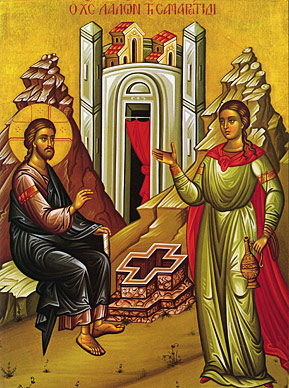
The Samaritan Woman. Holy Apostle and Hieromartyr Symeon the Kinsman of the Lord (107). St. Eulogius the Hospitable (6th c.). Ven. Stephen, abbot of the Kyiv Caves and bishop of Volodymyr in Volyna (1094).
Acts 11:19-26, 29-30; Jn. 4:5-42 ;
May 17 – Sixth Sunday of Pascha. Tone 5
The Blind Man. Virgin-martyr Pelagia of Tarsus in Asia Minor (287). Hieromartyr Erasmus, bishop of Formia in Campania (303). Hieromartyr Albian (Olbian), bishop of Anaea in Asia Minor (304). Hieromartyr Silvanus of Gaza (311).
Acts 16:16-34; Jn. 9:1-38;
Christ is Risen! Indeed He is Risen!
Христос Воскрес! Воістину Воскрес!
Hristos Voskres! Voistynu Voskres!
Χριστός Ἀνέστη! Ἀληθῶς ἀνέστη!
Hristos a înviat! Adevărat a înviat!
¡Cristo ha resucitado! ¡En verdad ha resucitado!
Services & Other Events
10 May, Sunday - Неділя:
- 9am – Confession / Hours
- 9:30am – Divine Liturgy - Бож. Літургія
12 May, Tuesday:
- 6:30pm – Altar Floor Committee Meeting
13 May, Wednesday:
- 7pm – Finance Committee Meeting
16 May, Saturday - Субота:
- 5pm – Great Vespers - Вел. Вечірня
17 May, Sunday - Неділя:
- 9am – Confession / Hours
- 9:30am – Divine Liturgy - Бож. Літургія
18 May, Monday:
- 7pm – Parish Council Meeting
19 May, Tuesday:
- 2-8:30pm – Pictures for Centennial
20 May, Wednesday:
- 7pm – Great Vespers - Вел. Вечірня
21 May, Ascension of Christ - Вознесіння Господнє:
- 9:00am – Divine Liturgy - Бож. Літургія
23 May, Saturday - Субота:
- 5pm – Great Vespers - Вел. Вечірня
24 May, Sunday - Неділя:
- 9am – Confession / Hours
- 9:30am – Divine Liturgy - Бож. Літургія
Апостол і Євангеліє - Gospel and Epistle of the Day
Time, Prayer, and Eternity
The Ancient Jewish Hour System
and the Orthodox Liturgical Tradition
An exploration of how the daily rhythm of ancient Israel became the heartbeat of Orthodox Christian prayer
The Jewish Day: A Twelve-Hour Clock
When the Evangelist John writes that Christ arrived at Jacob's Well in Samaria 'about the sixth hour' (John 4:6), or that Pilate sat in judgment 'at about the sixth hour' (John 19:14), he is using a precise and universally understood timekeeping system that every reader of his day would have grasped immediately: the ancient Jewish twelve-hour day.
The Jewish day was not measured by a fixed mechanical clock but by the arc of the sun. Each day — from sunrise to sunset — was divided into twelve equal parts, regardless of the season. The 'hours' were not fixed in duration. In summer, each hour stretched to approximately seventy-five minutes; in winter, it shrank to about forty-five. The twelve hours always filled the space between sunrise and sunset, however long or short that space happened to be. This is a solar hour, not a clock hour.
| Jewish Hour | Landmark | Modern Time* | Character |
|---|---|---|---|
| 1st | Sunrise | ~6:00 am | Dawn — beginning of day |
| 2nd | ~7:00 am | ||
| 3rd | ~9:00 am | Mid-morning | |
| 4th | ~10:00 am | ||
| 5th | ~11:00 am | ||
| 6th | Noon | ~12:00 pm | Midday — sun at zenith |
| 7th | ~1:00 pm | ||
| 8th | ~2:00 pm | ||
| 9th | ~3:00 pm | Afternoon | |
| 10th | ~4:00 pm | ||
| 11th | ~5:00 pm | ||
| 12th | Sunset | ~6:00 pm | End of day |
* All modern equivalents are approximate, based on an equinox day. Highlighted rows mark the four hours that became canonical Hours of Christian prayer.
How the Jews Told Time
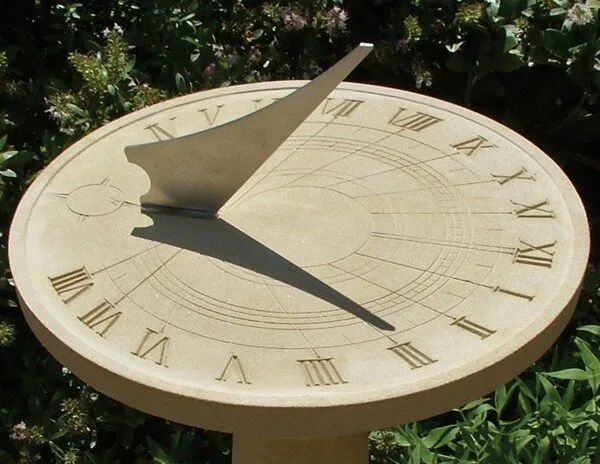
During the day, the primary instrument was the sundial. Archaeological evidence confirms sundials in Israel from at least the eighth century BC. The famous passage in Isaiah 38:8, where the shadow on the 'dial of Ahaz' moves backward ten steps as a sign to King Hezekiah, describes precisely such an instrument. By the Second Temple period, sundials were common enough to be mentioned matter-of-factly in the Mishnah.
For ordinary people without instruments, the shadow of one's own body served as a natural clock. Rabbinic literature frequently uses shadow-length as a time indicator: when your shadow equals your own height, it is approximately the sixth hour; when it stretches to twice your height, the ninth hour approaches. For the Temple itself, a designated priest observed the sun's position and announced the hour for the sacrifices.
The Night: Watches Rather Than Hours
The night was divided not into hours but into watches. The older Biblical system recognized three night watches; by the New Testament era, under Roman influence, the night had shifted to four watches of approximately three hours each. This is why the Gospels speak of 'the fourth watch of the night' when Christ walks on water (Matthew 14:25).
| System | 1st Watch | 2nd Watch | 3rd Watch | 4th Watch |
|---|---|---|---|---|
| Hebrew (3 watches) | Dusk – ~10 pm | ~10 pm – ~2 am | ~2 am – Dawn | — |
| Roman (4 watches) | 6–9 pm | 9 pm – Midnight | Midnight – 3 am | 3 am – 6 am |
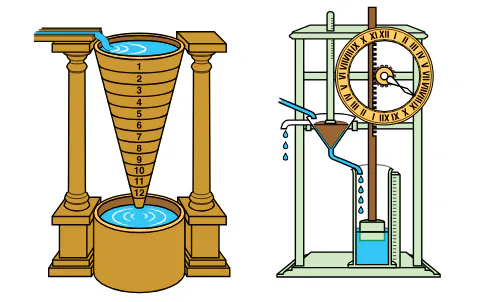
For those who needed to track night-time hours precisely — Temple priests, scholars, astronomers — the primary instrument was the water clock, or clepsydra. Water dripped at a steady rate from one vessel into another, and markings on the receiving vessel indicated elapsed time. The positions of stars and constellations provided another means of night reckoning for trained observers.
Relational and Approximate?
For ordinary daily life the system was largely relational and contextual. The phrase 'about the sixth hour' (hōsei hektē hōra in John's Greek) is itself a tell: 'about' signals comfortable imprecision. But for institutional and religious life — Temple sacrifices, Sabbath calculations, new-moon declarations — real precision was demanded. Two tiers coexisted: the relational time of everyday life, and the precise sacred time of liturgical and legal obligation.
The Christian Baptism of Jewish Time
The earliest Christians were Jews. They prayed at the same hours their ancestors had prayed, gathered in the same Temple courts, observed the same daily rhythm of sacrifice and psalm. When the Church gradually separated from the Synagogue, she did not abandon this inherited structure of time — she transformed it, filling each hour with the memory of Christ's Passion and the anticipation of His return.
The Acts of the Apostles is eloquent on this point. Peter and John go up to the Temple 'at the ninth hour, the hour of prayer' (Acts 3:1). Peter receives his vision at the sixth hour (Acts 10:9). Cornelius prays at the ninth hour when the angel appears (Acts 10:3). The earliest Christian communities did not invent a new timetable for prayer; they inhabited the existing one and reread it in the light of the Resurrection.
What the Church did, gradually and definitively, was attach specific memories of Christ's Passion to each hour of prayer. The third hour became the hour of the Holy Spirit's descent at Pentecost. The sixth hour became the hour of the Crucifixion. The ninth hour became the hour of Christ's death. The first hour became the hour of His condemnation — and of His Resurrection at dawn.
'Seven times a day do I praise Thee because of Thy righteous judgments.'
The Orthodox Canonical Hours
In the Orthodox Church, the sanctification of time through prayer is not an optional devotional practice — it is the very structure of the Church's life. The Typikon, the book of liturgical rules, prescribes a daily cycle of eight offices that together cover the full twenty-four hours from sunset to sunset. Every hour of human existence is, in principle, claimed for God.
The four daytime Hours — the First, Third, Sixth, and Ninth — stand at the core of this system. In the Western tradition they acquired Latin names: Prima, Terce, Sext, and None. In the Orthodox East they are called by their ordinal numbers in Greek or Church Slavonic. The content and theology are identical; the language differs. The word 'noon' in modern English descends directly from Nona — the ninth hour — because in medieval monasteries the office of None gradually drifted earlier until it landed at midday, dragging the word with it.
| Hour | Time | Church Slavonic / Ukrainian | Greek | Event Commemorated | Psalms |
|---|---|---|---|---|---|
| 1st Hour | ~6:00 am (Sunrise) |
Час Первый / Перший | Πρώτη (Prote) | Christ before Pilate; His condemnation at dawn. Also commemorates the Resurrection at sunrise. | Ps. 5, 89, 100 |
| 3rd Hour | ~9:00 am | Час Третий / Третій | Τρίτη (Trite) | Descent of the Holy Spirit at Pentecost (Acts 2:15). The mocking and scourging of Christ. | Ps. 16, 24, 50 |
| 6th Hour | ~12:00 noon | Час Шестой / Шостий | Ἕκτη (Hekte) | The Crucifixion. Christ nailed to the Cross (Jn 19:14). Darkness covered the land (Mt 27:45). The Samaritan Woman meets Christ at the well. | Ps. 53, 54, 90 |
| 9th Hour | ~3:00 pm | Час Девятый / Дев'ятий | Ἐνάτη (Enate) | The death of Christ: 'My God, why hast Thou forsaken me?' (Mt 27:46). Cornelius prayed at this hour (Acts 10:3). | Ps. 83, 84, 85 |
Each Hour consists of three appointed psalms, a troparion, the Trisagion, the Lord's Prayer, a kontakion, and a closing prayer — approximately 10–15 minutes in total.
The Full Orthodox Liturgical Day
One feature of Orthodox liturgical time that surprises most modern Christians is that the Church's day begins at sunset, not midnight. This follows the Hebrew reckoning preserved in Genesis: 'And there was evening, and there was morning' — evening precedes morning in the divine ordering of time. Each new liturgical day begins with Vespers on the preceding evening.
| Service | Time | Occasion | Theological Theme | Day / Night |
|---|---|---|---|---|
| Vespers | ~6:00 pm | Sunset | Thanksgiving for the day; anticipation of the Kingdom | Night |
| Compline | ~9:00 pm | Before sleep | Committing the soul to God; prayers for the departed | Night |
| Midnight Office | ~12:00 am | Midnight | The Ten Virgins; vigilance for the Second Coming | Night |
| Matins / Orthros | ~3–6 am | Before dawn | The Resurrection; Christ as Light of the world | Night |
| 1st Hour | ~6:00 am | Sunrise | Christ before Pilate; the Resurrection at dawn | Day |
| 3rd Hour | ~9:00 am | Mid-morning | Pentecost; the scourging of Christ | Day |
| Divine Liturgy | ~9–11 am | After 3rd & 6th | The Eucharist — the eternal sacrifice re-presented | Day |
| 6th Hour | ~12:00 pm | Noon | The Crucifixion; darkness at midday | Day |
| 9th Hour | ~3:00 pm | Afternoon | The death of Christ on the Cross | Day |
In monastic practice, this full cycle is served daily. In parish practice, many services are combined or abbreviated. Vespers and Matins are often served as a single All-Night Vigil on Saturday evenings, while the Hours are read immediately before the Divine Liturgy on Sundays and feast days.
The Hours Before the Divine Liturgy
In current Orthodox practice, the Third and Sixth Hours are read immediately before the Divine Liturgy. This is not accidental. The Third Hour commemorates Pentecost — the descent of the Holy Spirit who makes the Eucharist possible — and the scourging of Christ. The Sixth Hour commemorates the Crucifixion itself. The faithful thus arrive at the Liturgy having already stood, in prayer, at the foot of the Cross. The Eucharist that follows is not a separate event but the fulfillment of what the Hours have already announced.
On days when the Liturgy of the Presanctified Gifts is served (Wednesday and Friday evenings in Great Lent), the Ninth Hour is read beforehand, recalling Christ's death and preparing the faithful to receive the pre-consecrated gifts with appropriate solemnity.
The Horologion: The Book of Hours
The primary liturgical book containing the texts of the Hours in the Orthodox Church is called the Horologion — from the Greek hora (hour) and logos (word or account): literally 'the book of hours.' It contains the full daily cycle of services. Its arrangement is itself a theological statement: time is a book to be read, each page a prayer, each hour a chapter in the ongoing story of salvation. To pray the Hours is not merely to observe a pious habit but to enter consciously into sacred history.
The Sixth Hour and the Samaritan Woman
The encounter between Christ and the Samaritan Woman at Jacob's Well unfolds precisely at the sixth hour — noon — and the Orthodox tradition has always understood this as profoundly intentional. Noon was the hour of the Crucifixion, the hour of maximum light and heat, the hour when ordinary people rested and wells stood empty. That a woman burdened by shame came alone at this hour, and that Christ was waiting there, is read by the Holy Fathers as a parable of divine providence. Saint John Chrysostom observes that the Sun of Righteousness met the outcast at the very zenith of the natural sun's journey. The Church honors her as Saint Photini, Equal-to-the-Apostles, with her feast on the fifth Sunday of Pascha.
Time Sanctified: A Theological Reflection
The deepest significance of the canonical Hours is theological. When the Church appointed prayer at the first, third, sixth, and ninth hours, she was making a claim about the nature of time itself: that it is not a neutral medium but a gift from God that can be either squandered or consecrated. The Incarnation — God entering human time at a specific moment — is the definitive act of time's consecration. The canonical Hours are the Church's way of refusing to let that potential go to waste.
The ancient Jewish hour system, with its twelve solar divisions of the day and its watches of the night, was the vessel into which the Church poured her prayer. The vessel was not discarded when the wine of Christian faith was poured in — it was transformed. To understand the Hours is to understand that the Orthodox Church has never separated sacred time from natural time, prayer from the turning of the earth, or the memory of Christ's Passion from the daily movement of the sun that witnessed it.
'It is good to give thanks to the Lord, and to sing praises to Thy Name, O Most High; to declare Thy loving-kindness in the morning, and Thy faithfulness every night.'
'Seven times a day do I praise Thee.'
Час, Молитва і Вічність
Давньоєврейська система годин і Православна Літургійна Традиція
Дослідження того, як щоденний ритм стародавнього Ізраїлю став серцебиттям православної молитви
Єврейський день: Дванадцятигодинний відлік
Коли Євангеліст Іван пише, що Христос прибув до колодязя Якова «близько шостої години» (Ін. 4:6), або що Пилат сидів на судилищі «близько шостої години» (Ін. 19:14), він використовує точну систему відліку часу, зрозумілу кожним читачем тогочасності: стародавньо-єврейський дванадцятигодинний день.
Єврейський день вимірювався не фіксованим годинником, а дугою сонця. Кожний день від сходу до заходу сонця ділився на дванадцять рівних частин незалежно від пори року. Це ключова особливість: «години» не були фіксованої тривалості. Літом кожна година тривала ~75 хвилин, взимку ~45. Це сонячна, а не абсолютна година.
| Єврейська година | Орієнтир | Суч. час* | Характер |
|---|---|---|---|
| 1-ша | Схід сонця | ~6:00 | Світанок — початок дня |
| 2-га | ~7:00 | ||
| 3-тя | ~9:00 | Середина ранку | |
| 4-та | ~10:00 | ||
| 5-та | ~11:00 | ||
| 6-та | Полудень | ~12:00 | Полудень — сонце в зеніті |
| 7-ма | ~13:00 | ||
| 8-ма | ~14:00 | ||
| 9-та | ~15:00 | Пополудні | |
| 10-та | ~16:00 | ||
| 11-та | ~17:00 | ||
| 12-та | Захід сонця | ~18:00 | Кінець дня |
* Сучасні еквіваленти є наближеними, розрахованими для дня рівнодення. Виділені рядки позначають чотири канонічні Години християнської молитви.
Як євреї визначали час
Вдень основним інструментом був сонячний годинник. Раввінська література використовує довжину власної тіні як показник часу: коли тінь дорівнює зросту людини — шоста година; коли вдвічі довша — дев'ята. Ніч ділилася на варти: за єврейською традицією їх було три, за римською — чотири. Для точного нічного відліку використовували водяний годинник (клепсидру) і положення зірок на нічному небі.
| Система | 1-ша варта | 2-га варта | 3-тя варта | 4-та варта |
|---|---|---|---|---|
| Єврейська (3 варти) | Захід – ~22:00 | ~22:00 – ~2:00 | ~2:00 – Схід | — |
| Римська (4 варти) | 18:00–21:00 | 21:00–00:00 | 00:00–3:00 | 3:00–6:00 |
Християнське хрещення єврейського часу
Перші християни були євреями. Вони молилися в ті самі години. Коли Церква поступово відокремилася від Синагоги, вона не відмовилася від успадкованої структури часу — вона її переосмислила, наповнила пам'яттю Страстей і Воскресіння Господнього. Діяння Апостолів свідчить: Петро й Іван йдуть у Храм «о дев'ятій годині, годині молитви» (Діяння 3:1). Корнилій молився о дев'ятій годині (Діяння 10:3). Церква не вигадувала нового розкладу — вона перечитувала існуючий і перечитувала його у світлі Воскресіння.
«Семикратно кожного дня я прославляю Тебе за суди правди Твоєї.»
Православні Канонічні Години
У Православній Церкві освячення часу через молитву є не факультативною побожною практикою — це сама структура церковного життя. Типікон приписує щоденний цикл служб, що охоплюють усі двадцять чотири години. Чотири денні Години — Перша, Третя, Шоста і Дев'ята — становлять серцевину цієї системи.
| Година | Час | Англ. | Грец. | Подія | Псалми |
|---|---|---|---|---|---|
| 1-ша Година (Перший Час) |
~6:00 (схід сонця) |
1st Hour | Πρώτη (Проті) | Христос перед Пілатом; Його засудження на світанку. Також — Воскресіння на світанку. | Пс. 5, 89, 100 |
| 3-тя Година (Третій Час) |
~9:00 | 3rd Hour | Τρίτη (Тріті) | Зіслання Святого Духа на П'ятидесятницю (Дії 2:15). Насміхання та бичування Христа. | Пс. 16, 24, 50 |
| 6-та Година (Шостий Час) |
~12:00 | 6th Hour | Ἕκτη (Екті) | Розп'яття. Христа прибито до Хреста (Ін. 19:14). Пітьма накрила землю (Мт. 27:45). Зустріч Самарянки з Христом. | Пс. 53, 54, 90 |
| 9-та Година (Дев'ятий Час) |
~15:00 | 9th Hour | Ἐνάτη (Енаті) | Смерть Христа на Хресті: «Боже мій, чому Ти мене покинув?» (Мт. 27:46). Корнилій молився в цю годину (Дії 10:3). | Пс. 83, 84, 85 |
Кожний Час містить три псалми, тропар, Трисвяте, Молитву Господню, кондак і завершальну молитву — близько 10–15 хвилин.
Повний Православний Літургійний День
Однією з особливостей православного літургійного часу, яка дивує більшість сучасних християн, є те, що церковний день починається на заході сонця, а не опівночі. Це слідує єврейському розумінню: «І був вечір, і було рано» — вечір передує ранок.
| Служба | Час | Нагода | Богослов. тема | День / Ніч |
|---|---|---|---|---|
| Вечірня | ~18:00 | Захід сонця | Подяка за день; очікування прийдешнього Царства | Ніч |
| Повечір'я | ~21:00 | Перед сном | Доручення душі Богові; молитви за померлих | Ніч |
| Полунощниця | ~00:00 | Північ | Притча про десять дів; пильнування Другого Пришестя | Ніч |
| Утреня | ~3–6:00 | Перед світанком | Воскресіння; Христос як Світло світу | Ніч |
| Перший Час | ~6:00 | Схід сонця | Христос перед Пілатом; Воскресіння на світанку | День |
| Третій Час | ~9:00 | Середина ранку | П'ятидесятниця; бичування Христа | День |
| Божественна Літургія | ~9–11:00 | Після 3-ї і 6-ї год. | Євхаристія — вічна жертва у своїй присутності | День |
| Шостий Час | ~12:00 | Полудень | Розп'яття; темрява опівдні | День |
| Дев'ятий Час | ~15:00 | Пополудні | Смерть Христа на Хресті | День |
У сучасній православній практиці Третій і Шостий Час читаються безпосередньо перед Божественною Літургією. Це не випадковість розкладу. Третій Час вшановує П'ятидесятницю — зішестя Духа Святого, що робить Євхаристію можливою. Шостий Час вшановує Розп'яття. Віруючі таким чином прибувають на Літургію, вже стоячи, в молитві, біля Підніжжя Хрестового.
Часослов: Книга Годин
Основна літургійна книга, яка містить тексти Часів, називається Часословом — буквально «книга годин». Сама його структура є богословським висловлюванням: час є книгою, яку належить читати, і кожна година — розділ в триваючій історії спасіння. Молитва Часів — це не просто побожна звичка, а свідоме входження в святу історію.
Освячений Час
Найглибше значення канонічних Часів полягає не в історичному, а в богословському. Коли Церква призначала молитву на першій, третій, шостій і дев'ятій годинах, вона робила твердження про природу самого часу: що він не є нейтральним середовищем, а даром Божим, який можна або промарнувати, або освятити.
Давньоєврейська система годин, з її дванадцятьома сонячними поділами дня і нічними вартами, стала посудиною, в яку Церква влила свою молитву. Зрозуміти Часи — значить зрозуміти, що Православна Церква ніколи не відділяла освячений час від природного, молитву від обертання землі, або пам'ять Страстей Христових — від обертання сонця, що було їх свідком.
«Благо є сповідуватися Господу і співати імені Твоєму, Вишній. Сповіщати зранку милість Твою і істину Твою на всяку ніч.»
«Семикратно кожного дня я прославляю Тебе.»

Happy Mother's Day!
Today we honor the mothers among us and all who have offered a mother's love — nurturing, steadfast, and selfless. We keep in our prayers those for whom this day brings both joy and tenderness. May the Lord bless our mothers for many blessed year!
Church directory portrait date May 19th 1pm - 8:30pm
Our new church directory will not be complete without you!!
Due to the great response for sign ups we have added an extra hour from 1pm to 2pm in case you have not had a chance to sign up. Please sign up in the Memorial Center. If you are not able to do that please call Pam Scannell at 607-760-1671 and I will sign you up.
Also please remember to email or text me a picture if you are out of town and are unable to be here in person. pamelascannell@gmail.com
Thank you for making our directory complete!!
Pam
Thank you!
Thank you to all who came to help us during Roll Baking session this past week. May God bless you for your dedication and support!

Late Spring 2026 Kitchen Sessions
Preparing for Ukrainian Day · May – July 2026
Kolachky Session
CookiesPirohy Session — Cabbage
3 BatchesHolubtsi Session — Round 1
10 BatchesHolubtsi Session — Round 2
8–10 BatchesUkrainian Day Week
July 14–18
Let's Help Ukraine!

St. John's Ukrainian Humanitarian Fund is accepting donations to help Ukrainians during war. Donations will go to provide food and other humanitarian needs.
To make donation online click here
We accept checks as well.
Please make the checks to St. John Ukrainian Humanitarian Fund
Mailing address:
1 Saint John's Parkway
Johnson City NY 13790
Cash is accepted in church
Pray for Ukraine!

Prayers for Ukraine are done during each service. To see the schedule click here.
Молитви за Україну проводяться під час кожної служби. За розкладом дивіться тут.
May God bless and protect Ukraine!
Happy Birthday
- May 10: Dr. Zenon Wasyliw
- May 10: Zenna Mihovan
- May 12: Nancy Dobransky
- May 13: Nataliya Gulachok
- May 14: Sharon Kostyun
- May 14: Carol Wasylko
- May 15: Stepan Mykytyuk
- May 15: Addison Scannell
- May 16: Nancy Skojec
* If your or someone else's birthday is missing or incorrect please let Fr. Ivan know right away.
Please Pray for the Servants of God
Benjamin, Rachel, John, Peter John,
Rose, Solomiia, Bob, John, Jane, Alla,
Fr. Andre, Mary, Zenna, Douglas, Ivan,
Daniel, Melanie, William, Marion, Helen,
Mariann, Robert, Jean, Ronald, Brian,
Fr. James, Scott, Andriy, James, William,
Fr. Gabriel and PM Susan, Vasyl, Olha
Upcoming Readings
| Mon. May 11 – | Acts 12:12-17 ; | Jn. 8:42-51; |
| Tue. May 12 – | Acts 12:25–13:12; | Jn. 8:51-59; |
| Wed. May 13 – | Acts 13:13-24; | Jn. 6:5-14 ; |
| Thu. May 14 – | Acts 14:20-27 ; | Jn. 9:39–10:9 ; |
| Fri. May 15 – | Acts 15:5-34; | Jn. 10:17-28; |
| Sat. May 16 – | Acts 15:35-41 ; | Jn. 10:27-38; |