Bulletin for August 16, 2026
Aug. 16 – 11th Sunday after Pentecost. Tone 2
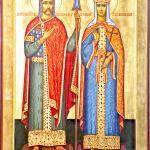
Venn. Isaac, Dalmatus, and Faustus (5th c.). Ven. Anthony the Roman (1147). Ven. Cosmas, eunuch and hermit of Palestine (6th c.).
1 Cor. 9:2-12; Mt. 18:23-35;
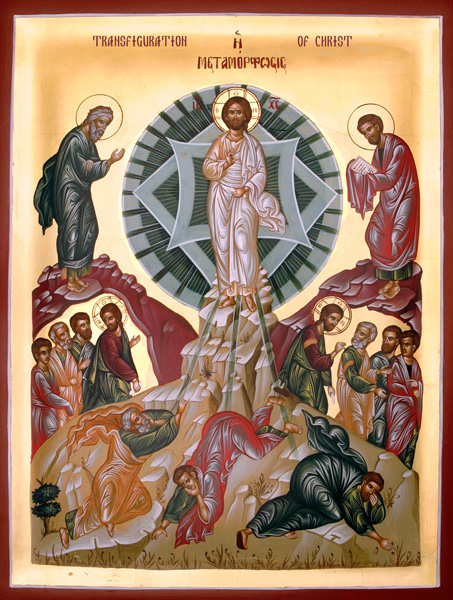
Aug. 19 – The Holy Transfiguration Of Our Lord, God And Savior Jesus Christ
ПРЕОБРАЖЕННЯ ГОСПОДА БОГА І СПАСА НАШОГО ІСУСА ХРИСТА
2 Pet. 1:10-19 ; Mt. 17:1-9;
Services & Other Events
16 August, Sunday - Неділя:
- 9am – Confession / Hours
- 9:30am – Divine Liturgy - Бож. Літургія
17 August, Monday:
- 7pm – Parish Council Meeting
18 August, Tuesday:
- 7pm – Great Vespers - Вел. Вечірня
19 August, Transfiguration – Преображення:
- 9am – Divine Liturgy - Бож. Літургія
22 August, Saturday - Субота:
- 5pm – Great Vespers - Вел. Вечірня
23 August, Sunday - Неділя:
- 9am – Confession / Hours
- 9:30am – Divine Liturgy - Бож. Літургія
27 August, Monday:
- 7pm – Great Vespers - Вел. Вечірня
28 August, Dormition – Успіння:
- 9am – Divine Liturgy - Бож. Літургія
Апостол і Євангеліє - Gospel and Epistle of the Day
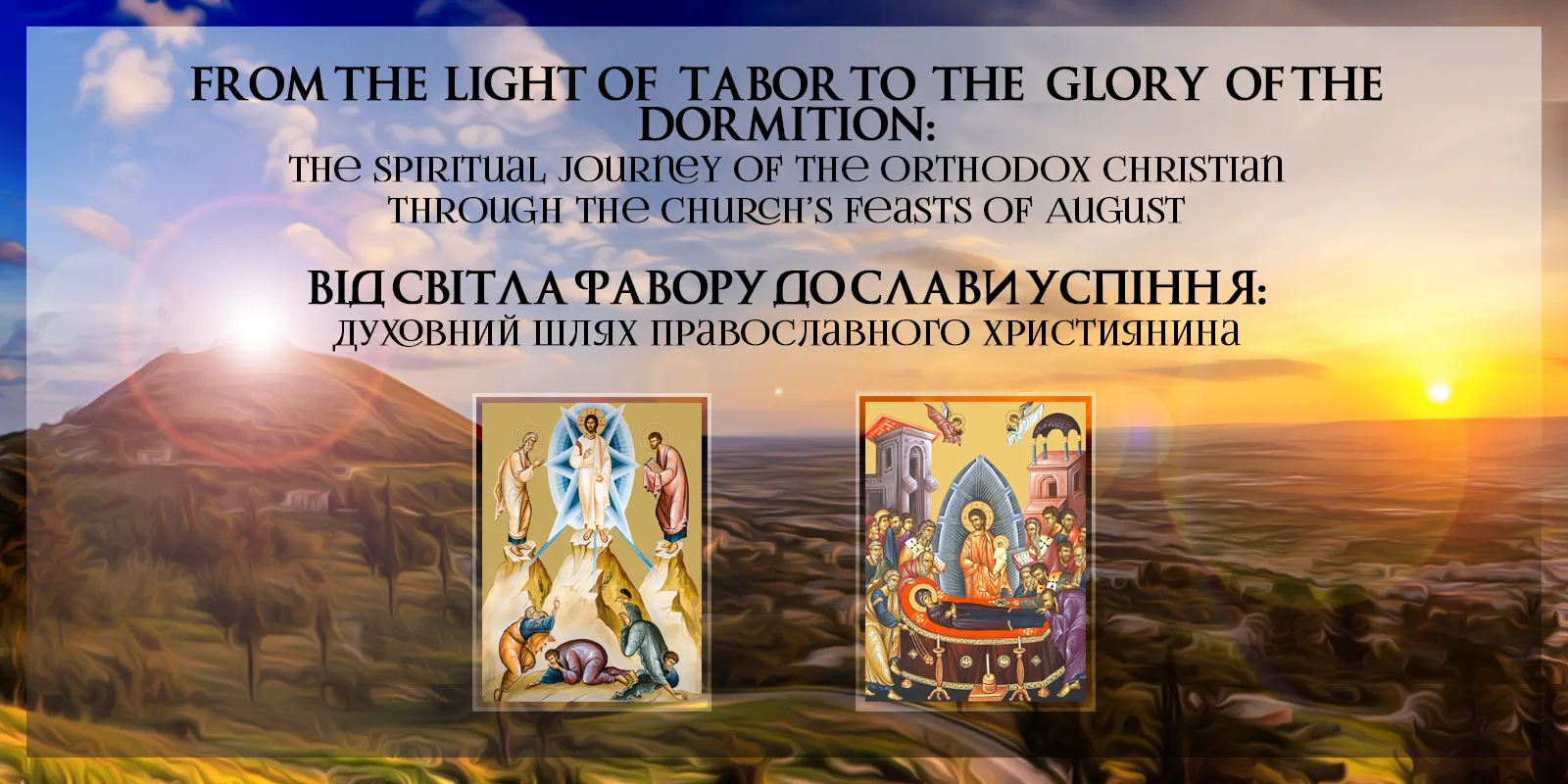
From the Light of Tabor to the Glory of the Dormition:
The Spiritual Journey of the Orthodox Christian Through the Church's Feasts of August
The Transfiguration of Our Lord and the Dormition of the Most Holy Theotokos: History, Theology, Liturgical Tradition, and the Spiritual Experience of Orthodox Life
"The Lord is my light and my salvation; whom shall I fear?" (Psalm 26:1)
August holds a special place in the liturgical year of the Orthodox Church. Following the spiritual labor of the Apostles' Fast and the missionary work of the summer months, the Church invites us to a profound spiritual contemplation of two majestic events in the history of salvation: the Transfiguration of our Lord Jesus Christ and the Dormition of our Most Holy Theotokos and Ever-Virgin Mary.
These feasts are joined by an invisible thread within the theology of salvation. One reveals to humanity the glory of the Incarnate God; the other reveals the glory of the human person who responded completely to God's call.
It is not without reason that the Holy Fathers spoke of Orthodox life as a journey from Tabor to the Heavenly Jerusalem - a path of gradual transformation of the human heart.
The Feast of the Transfiguration of Our Lord: The Revelation of Divine Glory
The Feast of the Transfiguration of our Lord is one of the Twelve Great Feasts of the Orthodox Church. Its historical celebration can be traced back to the fourth century, when Saint Helen, Equal-to-the-Apostles, built a church on the holy Mount Tabor in Palestine.
The Evangelist Matthew tells us: "And He was transfigured before them. His face shone like the sun, and His clothes became as white as the light" (Matthew 17:2). The Apostles Peter, James, and John became witnesses to an event that the Church understands as a manifestation of divine glory.
Beside Christ appeared two great prophets of the Old Testament: Moses, representing the Law, and Elijah, representing the Prophets. Their presence bears witness that the whole of the Old Testament finds its fulfillment in Christ. And it is at that moment that the voice of God the Father is heard: "This is My beloved Son, in whom I am well pleased. Hear Him!"(Matthew 17:5).
The light of Tabor is at the very heart of Orthodox theology. Saint Gregory Palamas devoted much of his life to explaining what the Apostles beheld. He teaches that the light of Tabor is not the light of the material world, but the uncreated energy of God Himself, through which the Lord allows humanity to participate in His divine life.
For this reason, Orthodox theology speaks not only of the salvation of the human person, but also of theosis (θέωσις), or deification. Humanity was not created merely for a morally upright life. We were created for communion with God.
Saint Athanasius the Great expresses this mystery in the well-known teaching that God became man so that humanity might become partakers of the divine life.
This is the meaning of the Transfiguration. Christ reveals not only Himself. He reveals the destiny of every saint.
The troparion of the Feast proclaims: "You were transfigured on the mountain, O Christ our God, showing Your disciples Your glory as far as they could bear it…"
These words contain extraordinary depth. The Lord reveals to the human person as much of His grace as one is able to receive.
Saint John Chrysostom teaches that it was not Christ who changed; rather, the eyes of those who looked upon Him were opened to behold what had always been present.
Practical pious aspect of the Feast of the Transfiguration is the blessing of fruit. In the Christian East, the traditional fruit was grapes. In Ukraine, because of climatic conditions, the custom came to include apples, pears, plums, grapes, honey, and other fruits and vegetables of the new harvest.
Yet the Church emphasizes that we do not bless these fruits because they somehow become magical. We bless them because all life and every good gift come from God.
Thanksgiving to God is a fundamental sign of a spiritually healthy life. When we cease to give thanks, we begin to regard God's gifts as our own achievement. For this reason, the blessing of fruit becomes a school of humility and gratitude.
For centuries, the Ukrainian people developed beautiful customs surrounding this feast. Families came to church together. Children carried the first apples of the harvest. People shared fruit with neighbors, visited those who were alone, and helped the poor. In these simple acts, living Christian love became visible.
At the same time, the Church has never supported superstition. A blessed apple is not a charm or talisman. A blessing does not operate automatically. It is the grace of God that acts, and the human person receives that grace through faith, prayer, and a life directed toward God.
The Dormition of the Most Holy Theotokos - The Pascha of the Mother of God
Nine days after the Feast of the Transfiguration, the Orthodox Church celebrates one of the most beloved feasts of the Orthodox world.
The very word "Dormition" means a peaceful falling asleep. The Church does not speak of the death of the Theotokos as a tragedy. Quite the opposite. In the liturgical texts of the Feast, we sing: "In giving birth you preserved your virginity; in falling asleep you did not forsake the world, O Theotokos…"
The Most Holy Virgin does not abandon humanity. She continues to intercede for us before the throne of her Son. Saint John of Damascus teaches that death could not hold the one who had borne within her womb Him Who is Life itself.
The celebration of the Dormition took shape by the fifth and sixth centuries. According to Holy Tradition, all the Apostles were miraculously gathered in Jerusalem at the time of the repose of the Mother of God. Only the Apostle Thomas arrived later. When the tomb of the Theotokos was opened, it was found empty. The Church received this as a sign that the All-Pure Virgin had been taken by the Lord into heavenly glory.
For this reason, the icon of the Dormition is not an icon of mourning. It is profoundly Paschal.
Christ stands at the center of the icon holding the soul of His Mother, portrayed as a small child wrapped in light. Once, she held Him in her arms as an infant. Now, He holds her and receives her into eternal life. What a profound theological image!
Before the Feast, the Church observes the Dormition Fast. Its discipline is comparable in many ways to the Great Fast, but its spiritual atmosphere is distinct.
It is a fast of quiet joy. It is a fast of purification. It is a fast in which we learn humility. Saint Isaac the Syrian reminds us that fasting without mercy is little more than hunger.
True fasting includes prayer, forgiveness, repentance and Holy Confession, reception of the Holy Eucharist, assistance to those in need, struggle against our passions, and silence when our words might wound another person.
The Icon of the Dormition - The Gospel in Color
The Orthodox icon does not merely illustrate history. It proclaims theology. At the center of the icon is Christ. Not death. Not the tomb. Not sorrow. Christ Himself. For He alone is the Conqueror of death. Around Him stand the Apostles and the angels. The whole Church – earthly and heavenly – gathers to receive the Mother of God.
What Do These Feasts Teach Us Today? In the modern world, it is remarkably easy for a person to lose inner peace. We live amid information overload, social media, constant haste, war, anxiety, and fear.
For this reason, Tabor says to us: Stop. Look at Christ.
And the Dormition says: Do not fear death if you live with God.
The Feast of the Transfiguration invites us to:
- reconsider the direction of our lives;
- cleanse our hearts of resentment;
- reconcile with those around us;
- read Holy Scripture more faithfully;
- participate more frequently and consciously in the Divine Liturgy.
The Feast of the Dormition teaches us to:
- trust God;
- live in humility;
- preserve purity of heart;
- love the Church;
- imitate the quiet, sacrificial faithfulness of the Mother of God.
For Ukrainian Orthodox Christians, these August feasts have always been more than dates on a calendar.
Our people blessed the harvest, prayed for their families, asked God for peace, brought sheaves of newly harvested grain for blessing, and gave thanks to God for the land.
Even during years of persecution of the faith, our grandmothers and grandfathers carried apples, grapes, flowers, and fragrant herbs to church. They handed down to us not merely a folk custom. They handed down a living faith.
Today, as Ukraine continues to endure the terrible trials of war, these traditions acquire an even deeper meaning. When we bless the fruits of the earth, we pray for those who defend that land. When we look upon the light of Tabor, we ask the Lord to enlighten human hearts with truth and peace. When we celebrate the Dormition of the Theotokos, we entrust our people, our soldiers, our children, our families, and all who suffer to her maternal intercession.
The Feasts of the Transfiguration of our Lord and the Dormition of the Most Holy Theotokos remind us that Orthodox life is not simply the observance of external customs and rituals. It is a continual inner transformation.
The blessed fruits should inspire us to bear the fruits of virtue. The blessed flowers should remind us of the beauty of holiness. The light of Tabor should lead us to the light of Christ's Gospel.
And the peaceful Dormition of the Mother of God should teach us to live in such a way that our encounter with the Lord will not be a moment of fear, but a long-awaited joy.
May the words of the Apostle Peter, spoken on Mount Tabor, become the prayer of each one of us: "Lord, it is good for us to be here…" (Matthew 17:4).
And may the words of the Most Holy Theotokos, spoken at the wedding feast in Cana of Galilee, become a guiding principle for our lives: "Whatever He says to you, do it." (John 2:5).
May the Lord, Who was transfigured in glory upon the holy Mount Tabor, also transform our hearts by His grace.
May the Most Holy Theotokos, who did not abandon the world in her Dormition, cover us with her honorable protecting veil and teach us fidelity, humility, and love for God.
Then our life, too, will become a journey from the transience of this earthly existence to eternal glory, where, in the words of the Apostle Paul, "Eye has not seen, nor ear heard, nor have entered into the heart of man the things which God has prepared for those who love Him" (1 Corinthians 2:9)
Archbishop Daniel (Zelinsky)
Від Світла Фавору до Слави Успіння:
духовний шлях православного християнина у серпневих святах Церкви
Преображення Господнє та Успіння Пресвятої Богородиці - історія, богослов'я, літургійна традиція та духовний досвід православного життя
«Господь є світло моє і спасіння моє - кого буду боятися?» (Пс. 26:1)
Серпень займає особливе місце у літургійному році Православної Церкви. Після духовної праці Петрового посту та літньої місійної праці Церква запрошує нас до глибокого духовного споглядання двох величних подій спасительної історії - Преображення Господа нашого Ісуса Христа та Успіння Пресвятої Владичиці нашої Богородиці і Приснодіви Марії.
Ці свята поєднані між собою невидимою ниткою богослов'я спасіння. Одне відкриває перед людством славу воплоченого Бога, друге - славу людини, яка повністю відповіла на Божий поклик.
Недаремно святі Отці говорили, що православне життя є дорогою від Фавору до Небесного Єрусалима, дорогою поступового преображення людського серця.
Свято Преображення Господнього: відкриття слави Божества
Свято Преображення Господнього належить до дванадесятих свят Православної Церкви. Його історичне святкування бере початок уже в IV столітті, коли свята рівноапостольна цариця Олена спорудила храм на святій горі Фавор у Палестині.
Євангелист Матфей розповідає: «І преобразився перед ними: лице Його засяяло, мов сонце, а одежа Його стала білою, як світло» (Мф. 17:2). Апостоли Петро, Яків та Іван стали свідками події, яку Церква називає явленням Божої слави.
Поруч із Христом з'являються два великі старозавітні пророки: Мойсей - як представник Закону та Ілля - як представник пророків. Вони свідчать, що весь Старий Завіт звершується у Христі. І саме тоді лунає голос Бога Отця: «Це Син Мій Улюблений, що Його Я вподобав; Його слухайте» (Мф. 17:5).
Фаворське світло - серце православного богослов'я! Святий Григорій Палама присвятив усе своє життя поясненню того, що бачили апостоли. Він навчає: «Світло Фавору не є світлом матеріального світу. Це несотворена енергія Самого Бога, якою Господь дозволяє людині брати участь у Його житті.»
Саме тому православне богослов'я говорить не лише про спасіння людини, але й про її обоження (θέωσις). Людина створена не просто для морального життя. Вона створена для єднання з Богом. Святий Афанасій Великий говорить знамениту фразу: «Бог став людиною, щоб людина стала причасником Божого життя.» У цьому полягає сенс Преображення. Христос відкриває не лише Себе. Він відкриває майбутнє кожного святого.
Тропар свята проголошує: «Преобразився Ти на горі, Христе Боже, показавши ученикам Своїм славу Твою, скільки вони могли сприйняти...» Ці слова є надзвичайно глибокими. Господь відкриває людині стільки благодаті, скільки вона здатна прийняти. Святитель Іоан Золотоустий говорить: «Не Христос змінився -змінилися очі тих, хто дивився на Нього.»
Саме зі святом Преображення пов'язане освячення плодів. На Сході це був виноград. В Україні через кліматичні особливості ним стали: яблука, груші, сливи, виноград, мед, овочі нового врожаю.
Проте Церква наголошує: Ми освячуємо не тому, що плоди «стають чарівними». Ми освячуємо тому, що все життя походить від Бога. Святий Василій Великий пише: «Подяка Богові є першою ознакою духовно здорової людини.» Коли ми не дякуємо - ми починаємо сприймати Божі дари як власну заслугу. Саме тому освячення плодів є школою смирення.
Український народ століттями формував прекрасні звичаї. У день Преображення сім'ї приходили до храму всією родиною. Діти несли перші яблука. Люди ділилися плодами із сусідами. Відвідували самотніх. Допомагали бідним. У цьому проявлялася жива християнська любов.
Однак Церква ніколи не підтримувала забобонів. Освячене яблуко не є оберегом. Благословення не діє автоматично. Діє благодать Божа, яку людина приймає через віру.
Успіння Пресвятої Богородиці - Пасха Божої Матері
Через дев'ять днів після Преображення Православна Церква святкує одне з найулюбленіших свят православного світу.
Саме слово «Успіння» означає мирний сон. Церква не говорить про смерть Богородиці як про трагедію. Навпаки. У богослужбових текстах співаємо: «У різдві дівство зберегла єси, в успінні світу не залишила єси, Богородице...» Пресвята Діва не залишає людство. Вона продовжує молитися за нас перед престолом Свого Сина. Святий Іоан Дамаскин говорить: «Смерть не могла втримати Ту, Яка носила у своїй утробі Саме Життя.»
Святкування Успіння формується вже у V–VI століттях. За переданням, усі апостоли були чудесним чином зібрані в Єрусалимі. Лише апостол Фома прибув із запізненням. Коли відкрили гріб Богородиці - він був порожній. Церква побачила в цьому підтвердження того, що Пречиста була взята Господом у небесну славу.
Саме тому ікона Успіння не є траурною. Вона є пасхальною. Христос тримає на руках душу Своєї Матері, зображену як маленьке немовля. Колись Вона тримала Його як Немовля. Тепер Він тримає Її для життя вічного. Яка велична богословська символіка!
Перед святом Церква встановила Богородичний піст. Його суворість нагадує Великий піст. Але його дух інший. Це піст тихої радості. Це піст очищення. Це піст навчання смиренню. Святий Ісаак Сирін говорить: «Піст без милосердя - це лише голод.»
Справжній піст включає: молитву, прощення, покаяння та сповідь, Святе Причастя, допомогу потребуючим, боротьбу зі своїми пристрастями, мовчання там, де слова можуть ранити.
Ікона свята Успіння Пресвятої Богородиці - Євангеліє у фарбах. Православна ікона не просто ілюструє історію. Вона проповідує богослов'я. У центрі ікони - Христос. Не смерть. Не труна. Не скорбота. Сам Христос.Бо саме Він є Переможцем смерті. Навколо стоять апостоли. Ангели. Уся Церква - земна і небесна - зустрічає Матір Божу.
Чого ж навчають нас ці свята сьогодні? У сучасному світі людина надзвичайно легко втрачає внутрішній мир. Ми живемо серед інформаційного шуму. Соціальних мереж. Постійної поспішності. Війни. Страху.
Саме тому Фавор говорить нам: Зупинися. Подивись на Христа. Успіння говорить: Не бійся смерті, якщо живеш із Богом.
Свято Преображення запрошує нас:
- переосмислити власне життя;
- очистити серце від образ;
- примиритися з ближніми;
- більше читати Святе Письмо;
- частіше брати участь у Божественній Літургії.
Свято Успіння навчає:
- довіряти Богові;
- жити смиренно;
- берегти чистоту серця;
- любити Церкву;
- наслідувати мовчазну жертовність Богородиці.
Для православних українців ці серпневі свята завжди були більше, ніж календарними датами. Наш народ благословляв врожай. Молився за родину. Просив миру. Освячував колосся нового хліба. Дякував Богові за землю.
Навіть у роки переслідувань віри наші бабусі й дідусі несли до храмів яблука, виноград, квіти та духмяні трави.Вони передали нам не лише народний звичай. Вони передали живу віру.
Сьогодні, коли Україна переживає тяжкі випробування війною, ці традиції набувають ще глибшого значення. Благословляючи плоди землі, ми молимося за тих, хто її захищає; дивлячись на світло Фавору, просимо Господа просвітити серця людей правдою та миром; святкуючи Успіння Богородиці, вручаємо Її материнському заступництву наш народ, наших воїнів, дітей, родини та всіх, хто страждає.
Свята Преображення Господнього та Успіння Пресвятої Богородиці нагадують нам, що православне життя - це не лише виконання зовнішніх обрядів, але постійне внутрішнє преображення. Освячені плоди мають спонукати нас приносити плоди чеснот. Благословенні квіти - нагадувати про красу святості. Фаворське світло - вести нас до світла Христового Євангелія. А мирне Успіння Божої Матері - навчати жити так, щоб зустріч із Господом була не страхом, а довгоочікуваною радістю.
Нехай слова апостола Петра, сказані на Фаворі, стануть молитвою кожного з нас: «Господи! Добре нам тут бути…» (Мф. 17:4).
А слова Пресвятої Богородиці, промовлені під час весілля в Кані Галілейській, нехай будуть дороговказом для нашого життя: «Що тільки Він скаже вам - робіть» (Ін. 2:5).
Нехай Господь, Який преобразився у славі на святій горі Фавор, преображає і наші серця Своєю благодаттю. Нехай Пресвята Богородиця, Яка не залишає світ після Свого Успіння, покриває нас чесним Своїм омофором, навчаючи вірності, смирення та любові до Бога.
Тоді і наше життя стане дорогою від земної тимчасовості до вічної слави, де, за словами апостола Павла, «ні око не бачило, ні вухо не чуло, ні на серце людині не спадало те, що Бог приготував тим, які люблять Його» (1 Кор. 2:9).
Архієпископ Даниїл (Зелінський)
Homing Pigeons with Clipped Wings
I share with you this beautiful story by Robert Griffin:
"I once heard of a man who sold a flock of homing pigeons to an ornithologist who lived in a town twenty-five miles away. To ground the pigeons in their new hutch, the ornithologist clipped the wings of the birds so that they could not return, fly back, to their original home. Two weeks later, the first owner looked out his window; there, trudging down the road, were the pigeons, coming back to their natal roost. Unable to fly, the birds had walked over twenty-five miles on sore and bloody feet, to the spot that instinct told them was their own true home."
Is not our own true home in the heart of God's love?
If life for you has been like a race, not to eternity, but more like a rat race that ends in loneliness, boredom, emptiness, and death; if you've been keeping God at a distance—on a medicine shelf for an emergency, maybe, and wondering why nothing in life brought the happiness you were looking for, then God is speaking to you today: "Come on home!" He says. Home to Christ where you belong. Home to God where you are by faith and baptism a member of God's family in His Holy Church. Come home to peace, which passes all understanding. Come home to God's eternal, everlasting love for you. Come home to Him who alone can satisfy the deepest longings of your soul and give you eternal life. Come home to the God who loves you.
From the Daily Vitamins for Spiritual Growth by Anthony M. Coniaris
Поштові голуби з підрізаними крилами
Ділюся з вами цією прекрасною історією Роберта Ґріффіна:
«Одного разу я почув про чоловіка, який продав зграю поштових голубів орнітологу, що жив у місті за двадцять п'ять миль. Щоб прив'язати голубів до нового курника, орнітолог підрізав птахам крила, аби вони не могли повернутися, полетіти назад, до свого рідного дому. Через два тижні перший власник визирнув у вікно; і ось, шкандибаючи дорогою, йшли голуби, повертаючись до свого рідного сідала. Не маючи змоги летіти, птахи пройшли пішки понад двадцять п'ять миль на збитих і закривавлених лапках — до того місця, яке інстинкт підказував їм було їхнім справжнім домом».
Хіба не в серці Божої любові — наш справжній дім?
Якщо ваше життя було схоже не на біг до вічності, а радше на суєтну гонитву, що закінчується самотністю, нудьгою, порожнечею і смертю; якщо ви тримали Бога на відстані — наче на аптечній полиці, про всяк випадок, на екстрений випадок, — і дивувалися, чому ніщо в житті не приносило того щастя, якого ви шукали, то сьогодні Бог промовляє до вас: «Повертайся додому!» — каже Він. Додому, до Христа, де твоє місце. Додому, до Бога, де ти вірою і хрещенням є членом Божої родини в Його Святій Церкві. Повертайся додому, до миру, що перевищує всякий розум. Повертайся додому, до вічної, невичерпної Божої любові до тебе. Повертайся додому, до Того, Хто єдиний може вдовольнити найглибші прагнення твоєї душі і дати тобі життя вічне. Повертайся додому, до Бога, Який тебе любить.
Із книги "Щоденні Вітаміни для Духовного Зростання" Антона М. Коніаріс
Thank You!
Dear Parish Family,
Glory to Jesus Christ!
I would like to thank the Lawryk Family Scholarship Committee for the generous monetary gift. I appreciate the support from my church family and all fo the guidance I have received throughout the years.
I would also like to take this opportunity to sincerely thank those who were able to attend my graduation party in June. I'm very grateful for the kind words of encouragement and generous gifts, but above all, your presence made this very special day.
Yours in Chris,
Daria Moriz
Dormition Fast – Успенський Піст
Dormition Fast lasts from August 14 to August 27.
Успенський Піст триває від 14 по 27 серня.
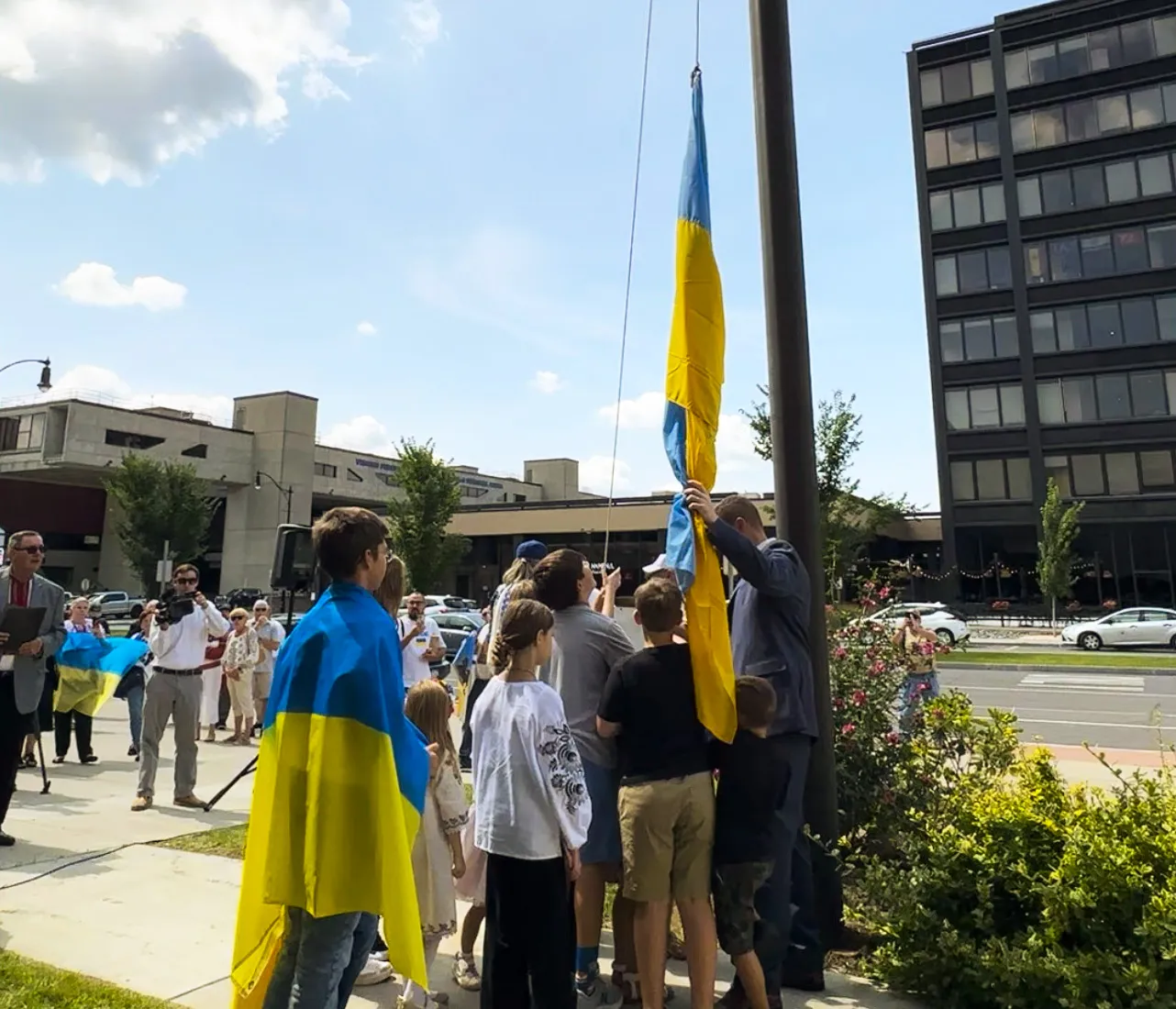
Ukrainian Flag Raising Ceremony –
August 24, 2026 – 11:30 AM
Please join us at the Ukrainian Flag Raising ceremony on Monday, August 24 at 11:30am which was originated from 1950. But now as never before we need to show our support and invite others to support Ukraine.
Будь ласка, приєднуйтесь до нас на церемонії підняття українського прапора в понеділок, 24 серпня, об 11:30, яка була започаткована ще з 1950 року. Але тепер, як ніколи, нам потрібно виявити нашу підтримку і запросити інших підтримати Україну.
Let's Help Ukraine!
St. John's Ukrainian Humanitarian Fund is accepting donations to help Ukrainians during war. Donations will go to provide food and other humanitarian needs.
To make donation online click here
We accept checks as well.
Please make the checks to St. John Ukrainian Humanitarian Fund
Mailing address:
1 Saint John's Parkway
Johnson City NY 13790
Cash is accepted in church
Pray for Ukraine!
Prayers for Ukraine are done during each service. To see the schedule click here.
Молитви за Україну проводяться під час кожної служби. За розкладом дивіться тут.
May God bless and protect Ukraine!
Happy Birthday
- August 16: Bernice Armant
* If your or someone else's birthday is missing or incorrect please let Fr. Ivan know right away.
Please Pray for the Servants of God
Peter John, John, Rose,
Solomiia, Bob, John, Jane, Alla,
Fr. Andre, Mary, Zenna, Douglas,
Ivan, Melanie, William, Marion,
Mariann, Robert, Jean, Ronald, Brian,
Fr. James, Scott, Andriy, James, William,
Vasyl, Olha, Solder Olexiy, Tamara
Upcoming Readings
| Mon. Aug. 17 – | 2 Cor. 5:10-15; | Mk. 1:9-15; |
| Tue. Aug. 18 – | 2 Cor. 5:15-21 ; | Mk. 1:16-22; |
| Wed. Aug. 19 – | 2 Pet. 1:10-19 ; | Mt. 17:1-9; |
| Thu. Aug. 20 – | 2 Cor. 7:1-10; | Mk. 1:29-35; |
| Fri. Aug. 21 – | 2 Cor. 7:10-16; | Mk. 2:18-22; |
| Sat. Aug. 22 – | Acts 1:12-17, 21-26; | Lk. 9:1-6; |