Bulletin for June 21, 2026
June 21 – 3rd Sunday after Pentecost. Tone 2
Synaxis of Halych Saints. Synaxis of Odessa Saints. Great-martyr Theodore Stratelates (319). St. Ephraim, patriarch of Antioch (545). St. Zosimas, monk, of Phoenicia (Syria) (6th c.). St. Theodore, bishop of Suzdal (1023). Finding of the relics (1501) of Sts. Basil (1249) and Constantine (1257), princes of Yaroslavl.
Rom. 5:1-10 ; Mt. 6:22-33;
2 Tim. 2:1-10; Mt. 10:16-22;
June 28 – 4th Sunday after Pentecost. Tone 3
Prophet Amos (8th c. B.C.). Martyrs Vitus, Modestus, and Crescentia at Lucania (303). Martyr Dulas of Cilicia (305-313). Ven. Dulas the Passion-bearer of Egypt. St. Jerome (Hieronymus) of Stridonium (420). Blessed Augustine, bishop of Hippo (430). St. Michael, first metropolitan of Kyiv (992).
Rom. 6:18-23; Mt. 8:5-13 ;
Heb. 13:17-21; Jn. 10:9-16;
Services & Other Events
21 June, Sunday - Неділя:
- 9am – Confession / Hours
- 9:30am – Divine Liturgy - Бож. Літургія
- Memorial Service for Fr. Franko Lawryk
- Graduation Sunday - Father's Day
27 June, Saturday - Субота:
- 5pm – Great Vespers - Вел. Вечірня
28 June, Sunday - Неділя:
- 9am – Confession / Hours
- 9:30am – Divine Liturgy - Бож. Літургія
- Special Parish Meeting
4 July, Saturday - Субота:
- 5pm – Great Vespers - Вел. Вечірня
5 July, Sunday - Неділя:
- 9am – Confession / Hours
- 9:30am – Divine Liturgy - Бож. Літургія
Апостол і Євангеліє - Gospel and Epistle of the Day
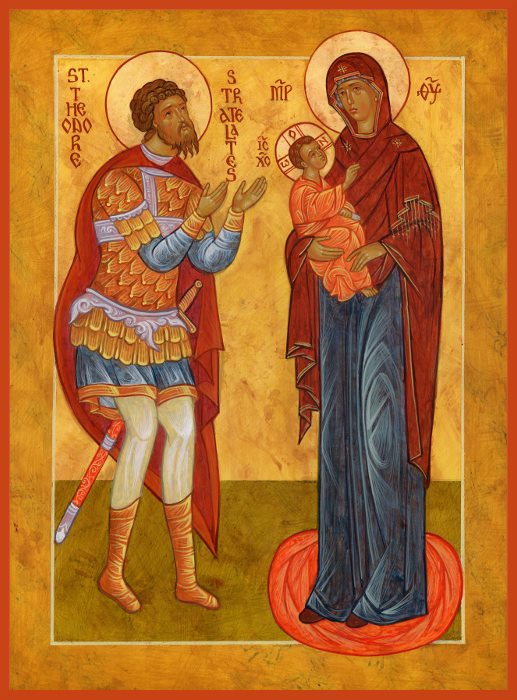
Great Martyr Theodore Stratelates
The holy great martyr Theodore Stratelates was put to death as a martyr in the year 319 after the Nativity of Christ. In a literal translation from Greek, the word "stratelates" means "tall warrior"; in a more literary translation it means "military commander" or "voivode."
Saint Theodore came from the city of Euchaita, now Marsian, in the north of the Asia Minor highlands in present-day Turkey. The good news of the Holy Gospel had been brought to these lands as early as apostolic times.
Saint Theodore was endowed by the Lord with many gifts. Among those around him he stood out for his natural beauty, generous heart, deep knowledge of Christian truths, wisdom, and eloquence. The holy warrior's courage became known to many after he, with God's help, slew an enormous serpent that lived in a chasm on the outskirts of the city of Euchaita. The serpent devoured countless people and animals, keeping the whole region in fear. Saint Theodore, telling no one anything, took with him his usual weapon and, wearing a cross upon his chest, set out on the journey.
Having reached the field near the chasm where the serpent lived, the warrior of Christ dismounted his horse and lay down to rest. A certain devout woman named Eusebia lived in those parts. She was of advanced age. A few years earlier she had obtained the body of the holy martyr Theodore Tyro, which had not been consumed by fire during his execution, buried it near her house, and each year celebrated his memory on the day of his repose, February 17 (March 2). The devout Eusebia, seeing the sleeping warrior of Christ, Theodore Stratelates, woke him and tried to persuade him to leave that place so that he would not suffer at the hands of the serpent. The valiant warrior of Christ, Theodore, answered her: "Go away and stand farther off from this place, and you shall see the power of my Christ." The woman withdrew and began to pray to the Savior to grant victory to the brave warrior. Saint Theodore likewise turned to the Lord in prayer: "Lord Jesus Christ, Who shone forth from the Father's Essence, Who helped me in battles and gave me victory over my adversaries, You are still the same now, Lord Christ God; send me victory from the height of Your holiness." Saint Theodore defeated the monster, glorifying the name of Christ among the people.
For his bravery, Saint Theodore was appointed military commander in the city of Heraclea, near the Black Sea, not far from Euchaita. There Saint Theodore combined his responsible military service with the apostolic preaching of the Gospel among the pagans under his command. His ardent faith, reinforced by his own personal Christian example, turned many away from ruinous habits. As a result, almost all the inhabitants of Heraclea accepted Christianity.
At this time, fierce persecutions of Christians began. The Emperor Licinius (307–324), who had put to death the forty martyrs of Sebaste, directed his persecutions not at the common people but at the educated champions of Christianity, in whom he saw a serious threat to a paganism that was dying out. Having heard of the brave military commander, the emperor wished to see him and sent his courtiers to fetch him. Saint Theodore received the envoys with honor but did not wish to leave his city. Foreseeing the emperor's intentions, the martyr of Christ desired to suffer in his own city, and so he answered the emperor that he could not leave Heraclea at that time, and asked him to come and visit him there instead.
On the eve of the impious ruler's arrival, Saint Theodore was granted a wondrous vision. During prayer he suddenly saw himself in a temple whose roof had opened; heavenly light shone above the temple, and a voice was heard: "Be bold, Theodore, I am with you!" Strengthened by this vision, the holy martyr turned to the Lord with a fervent prayer, asking Him to strengthen his powers for the struggle that lay ahead.
The emperor arrived, bringing with him idols of gold and silver. He treated Saint Theodore favorably, praised him for his good governance of the city, and ordered him to offer sacrifices to the idols before the people. The saint asked the emperor to leave the idols in his house overnight, and the emperor agreed. Having gained possession of the idols, Saint Theodore broke them into many pieces and distributed the fragments of gold and silver to beggars. In this way he exposed the futility of faith in soulless idols, and upon the wreckage of paganism he established the laws of Christian mercy.
By order of the emperor, the martyr of Christ was seized and subjected to cruel and elaborate torture. His torturers beat him with ox sinews and lead rods, tore at his flesh with nails, and burned him with fire. The holy martyr endured all of this with great patience, repeating only: "Glory to You, our God!" After these torments the saint was thrown into prison and held there for five days without food or water; he was then, mutilated as he was, nailed to a cross and left there overnight. His torturers hoped that he would die on the cross during the night. Sensing his approaching death, Saint Theodore had already begun offering his final prayers to God.
The Lord, however, judged it right to glorify His saint before all the inhabitants of Heraclea. In the morning, the soldiers who had taken part in the execution found the holy martyr alive and unharmed: the Lord had healed his mutilated body and brought him down from the cross on which he had been left all night. Convinced with their own eyes of the boundless power of the Christian God, they then and there, not far from the site of the failed execution, received Holy Baptism. The martyr Theodore restrained the inhabitants and soldiers who had come to believe in Christ from rising up in revolt, saying to them: "Cease, beloved ones! My Lord Jesus Christ, as He hung upon the cross, restrained the angels so that they would not take vengeance upon the human race."
The martyr of Christ willingly gave himself into the hands of his torturers. Going to his execution, the saint, with a single word, opened the doors of prisons and set the prisoners free. The inhabitants of Heraclea who touched his garments were healed of their illnesses and freed from demons. Before giving himself into the executioner's hands, the martyr Theodore asked that his body be buried in Euchaita, on his parents' estate. He ordered his servant Uar to record all the torments he had endured, for the instruction of future generations of Christians. The martyr of Christ then prayed for a long time, and at last, having uttered the word "amen," bowed his honorable and holy head beneath the sword. The execution took place on February 8 (21), in the year 319, on a Saturday, at the third hour of the day.
The people honored the holy remains of the martyr with great reverence. On June 8 (21) of that same year they were solemnly translated to Euchaita. During the transfer of the saint's body, and afterward in the city itself, numerous miracles took place to the glory of Christ God.
Saint Theodore Stratelates, the great martyr, faithful unto death to the Lord Jesus Christ, a fearless and self-sacrificing commander and a brave soldier, has long been venerated as the patron of the Orthodox military.
In memory of the great martyr Theodore Stratelates, churches were built throughout the Orthodox world. Through prayers offered to him, many miracles took place before his icons. Thus Saint Anastasius of Sinai, Patriarch of Antioch (599), and John of Damascus (c. 780) record a miracle that occurred in the church of Theodore Stratelates near Damascus, in the town of Karsata in Syria. When these lands were seized by the Saracens, the church was plundered and subsequently desecrated, and Saracens took up residence in the building. On one occasion, one of them took a bow and shot an arrow at the painted image of Saint Theodore on the wall. The arrow struck the saint's right shoulder, and at once a stream of living blood flowed down the wall. The impious men were astonished at this, yet they did not leave the church. In all, about twenty families were living within the church. After some time, all of them died of an unknown cause. A plague struck down the sacrilegious occupants, while their fellow tribesmen who lived outside the church remained unaffected.
Великомученик Феодор Стратилат
Святий великомученик Феодор Стратилат був відданий мученицькій смерті 319 року після Різдва Христового. У дослівному перекладі з грецької слово «стратилат» означає «високий воїн», у літературному перекладі воно означає «воєвода», «воєначальник».
Походив святий Феодор із міста Євхаїти, нині Марсіан, на півночі Малоазійського нагір'я в Туреччині. Блага звістка Святого Євангелія до цих місць принесена була ще в апостольські часи.
Святий Феодор був наділений від Господа багатьма даруваннями. Його вирізняли з-поміж оточення природна краса, великодушне серце, глибоке пізнання християнських істин, мудрість і красномовство. Хоробрість святого воїна стала багатьом відома після того, як він з допомогою Божою вбив величезного змія, що жив у прірві на околицях міста Євхаїти. Змій пожирав безліч людей і тварин, тримаючи в страху всю округу. Святий Феодор, нікому нічого не кажучи, взявши з собою свою звичайну зброю і маючи на грудях хрест, рушив у дорогу.
Доїхавши до поля поблизу прірви, де жив змій, воїн Христовий зліз з коня і ліг відпочити. У цих місцях проживала якась благочестива жінка на ім'я Євсевія. Вона була похилого віку. За кілька років перед цим вона випросила тіло святого мученика Феодора Тирона, яке не згоріло на вогнищі під час страти, поховала його біля свого будинку і щороку святкувала його пам'ять у день преставлення 17 лютого (2 березня). Благочестива Євсевія, побачивши сплячого воїна Христового Феодора Стратилата, розбудила його і намагалася переконати піти з цих місць, щоб не постраждати від змія. Мужній воїн Христовий Феодор відповів їй: «Відійди і стань подалі від місця цього, і ти побачиш силу Христа мого». Жінка відійшла і стала молитися Спасителю про дарування перемоги сміливому воїну. Звернувся з молитвою до Господа і святий Феодор: «Господи Ісусе Христе, Котрий засяяв від Отчої Сутності, Котрий допомагав мені в битвах і давав перемогу над супротивниками, Ти і нині Той самий є, Господи Христе Боже, пошли мені перемогу з висоти Твоєї святої». Святий Феодор переміг чудовисько, прославивши серед людей ім'я Христове.
За відвагу святого Феодора призначили воєначальником у місті Гераклеї поблизу Чорного моря, недалеко від Євхаїт. Тут святий Феодор поєднував відповідальне військове служіння з апостольською проповіддю Євангелія серед підлеглих йому язичників. Його палка віра, підкріплена особистим християнським прикладом, відвертала багатьох від згубних звичок. У підсумку майже всі жителі Гераклеї прийняли християнство.
У цей час почалися жорстокі гоніння на християн. Імператор Лікіній (307–324), який умертвив сорок мучеників Севастійських, спрямував свої гоніння не на простий народ, а на освічених поборників християнства, в яких вбачав серйозну загрозу для язичництва, що відмирало. Почувши про хороброго воєначальника, імператор захотів його побачити і послав за ним своїх наближених. Святий Феодор прийняв послів з честю, але не хотів залишати свого міста. Передбачаючи наміри імператора, мученик Христовий бажав постраждати у своєму місті, тому відповів імператорові, що не може зараз залишити Гераклію і просить його завітати до нього.
Напередодні прибуття нечестивого правителя святий Феодор удостоївся чудесного видіння. Під час молитви він раптом побачив себе в храмі, дах якого розверзнувся, над храмом засяяло небесне світло і пролунав голос: «Дерзай, Феодоре, Я з тобою!» Укріплений видіннями, святий мученик звернувся до Господа з гарячою молитвою, просячи Його зміцнити свої сили для майбутнього подвигу.
Імператор приїхав, взявши з собою золотих і срібних ідолів. Він прихильно поставився до святого Феодора, похвалив його за хороше управління містом і наказав йому принести перед народом жертви ідолам. Святий просив імператора залишити ідолів на ніч у своєму будинку. Імператор погодився. Заволодівши бовванами, святий Феодор розбив їх на багато частин і роздав шматочки золота й срібла жебракам. Так він осоромив марну віру в бездушних ідолів і на уламках язичництва утверджував закони християнського милосердя.
Мученика Христового за наказом імператора схопили і піддали жорстоким та витонченим тортурам. Мучителі били його воловими жилами й олов'яними прутами, терзали його тіло гвіздками і палили вогнем. Усе це святий мученик переносив із великим терпінням і тільки повторював: «Слава Тобі, Боже наш!» Після мук святого кинули до в'язниці і п'ять днів протримали там без їжі та води, а потім понівеченого святого прибили до хреста і залишили на ніч. Мучителі сподівалися, що він помре вночі на хресті. Передчуваючи близьку смерть, святий Феодор уже звертався до Бога з останніми молитвами.
Господь судив прославити Свого святого перед усіма жителями Гераклії. Вранці воїни, котрі брали участь у страті, побачили святого мученика живим і неушкодженим: Господь зцілив понівечене тіло святого і звів його з хреста, на якому той був залишений на всю ніч. Переконані на власні очі в безмежній могутності християнського Бога, вони тут же, неподалік від місця невдалої страти, прийняли Святе Хрещення. Мученик Феодор утримав жителів і воїнів, які увірували в Христа, від заколоту, кажучи їм: «Перестаньте, улюблені! Господь мій Ісус Христос, висячи на хресті, утримував ангелів, аби вони не вчинили помсти роду людському».
Мученик Христовий добровільно віддав себе в руки мучителів. Йдучи на страту, святий одним словом відкривав двері в'язниць і звільняв в'язнів. Жителі Гераклії, які торкалися його одягу, зцілювалися від хвороб і звільнялися від бісів. Перед тим, як віддати себе в руки ката, мученик Феодор заповів поховати своє тіло в Євхаїтах у маєтку батьків. Своєму слузі Уару наказав записати всі муки, яких він зазнав, для повчання майбутніх поколінь християн. Потім мученик Христовий довго молився і, врешті, вимовивши слово «амінь», схилив під меч свою чесну і святу главу. Страта відбулася 8 (21) лютого 319 року в суботу, о третій годині дня.
Народ вшанував святі останки мученика великими почестями. 8 (21) червня того ж року їх було урочисто перенесено до Євхаїт. Під час перенесення тіла святого і вже в самому місті відбувалися численні чудеса на славу Христа Бога.
Святий великомученик Феодор Стратилат, вірний до смерті Господу Ісусу Христу, безстрашний і жертовний воєначальник, хоробрий солдат, здавна шанується як покровитель православного воїнства.
На пам'ять великомученика Феодора Стратилата будували храми в усіх православних країнах. За молитвами до нього, від його ікон відбувалося багато чудес. Так, святий Анастасій Синаїт, патріарх Антіохійський (599 р.), та Іоанн Дамаскін (бл. 780 р.) згадують про диво, яке сталося в храмі Феодора Стратилата неподалік від Дамаска в містечку Карсата в Сирії. Коли ці місця були захоплені сарацинами, храм був розорений і надалі піддався оскверненню. У будівлі оселилися сарацини. Одного разу один із них, узявши лук, пустив стрілу в написане фарбами на стіні зображення святого Феодора. Стріла влучила в праве плече святого, і негайно по стіні потекла цівка живої крові. Нечестивці здивувалися цьому, але храм не покинули. Загалом у церкві проживало близько двадцяти сімейств. Через деякий час всі вони померли з невідомої причини. Мор напав на святотатців, тоді як їхні одноплемінники, що жили поза храмом, не постраждали.
Happy Father's Day!
We greet our fathers and wish them health, strength, love from children and family, and many blessed year!
God Bless you all!
Congratulations, graduates!
As you go forward, may God bless you abundantly — guiding your steps, granting you wisdom for the decisions ahead, and surrounding you with strength and peace in moments of uncertainty. May His grace light your path, and may you find purpose, joy, and growth in all that comes next.
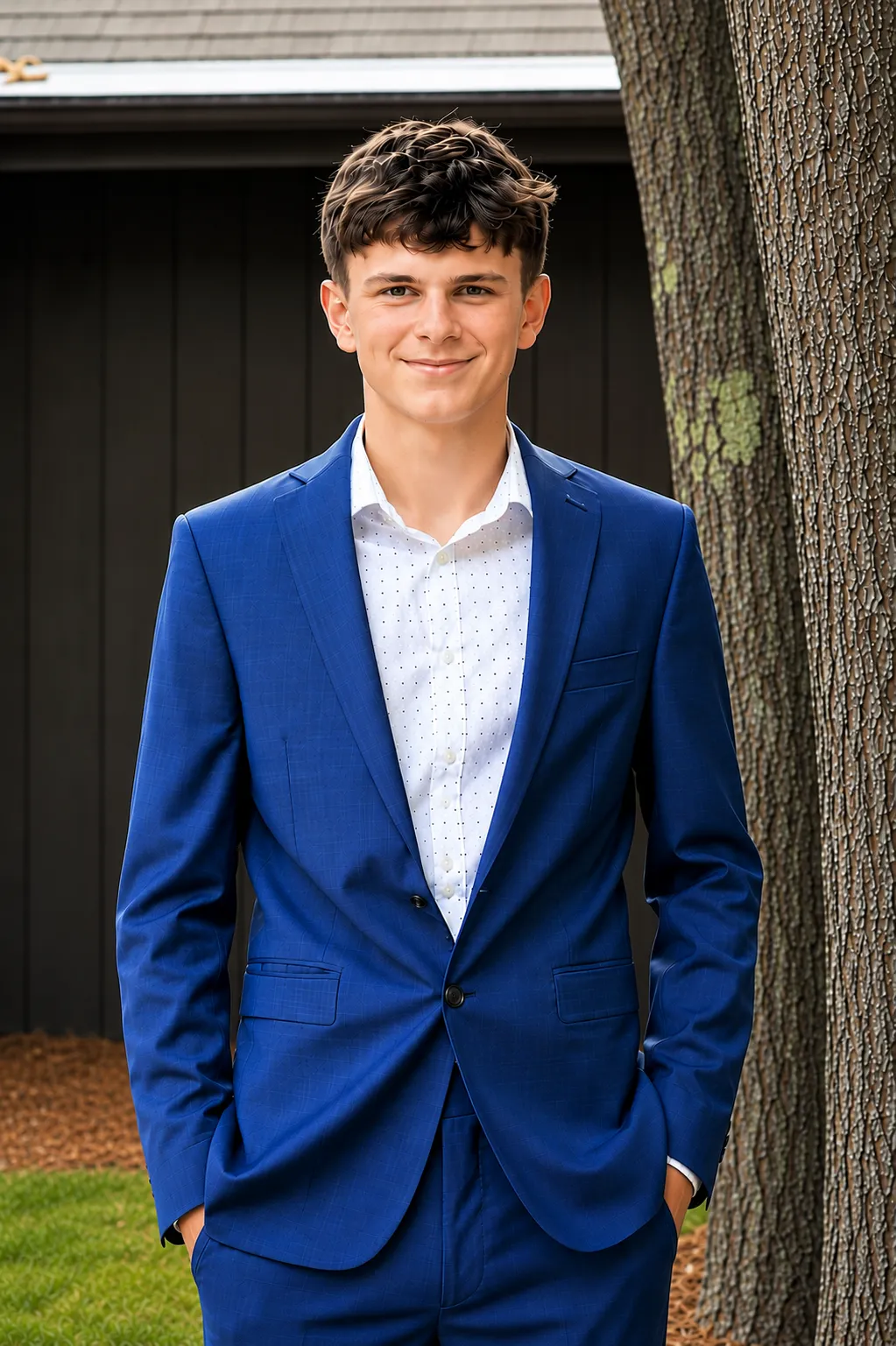
Congratulations Maxwell!
Maxwell Henry Hatala, class of 2026, will be graduating Vestal Senior High School on Friday, June 26th at Veterans Memorial Arena.
Outside of academics, Maxwell participated in a variety of sports from a young age. Maxwell played Varsity golf freshman through senior years. He was co-captain for the golf team his senior year and earned the opportunity to compete in the New York State High School Golf Championship earlier this month in Rochester, NY where he placed 42nd in the state!
Maxwell will be attending St. Petersburg College in the Fall while gaining golf industry experience working at a private country club. Future plans include attending Florida Gulf Coast University's Professional Golf Management program in Fort Meyers, Florida.
Maxwell would like to thank his St. John's Ukrainian family for the support and kindness that has been extended to him over so many years. St. John's has been a meaningful influence in his life, helping shape him into the person he has become.

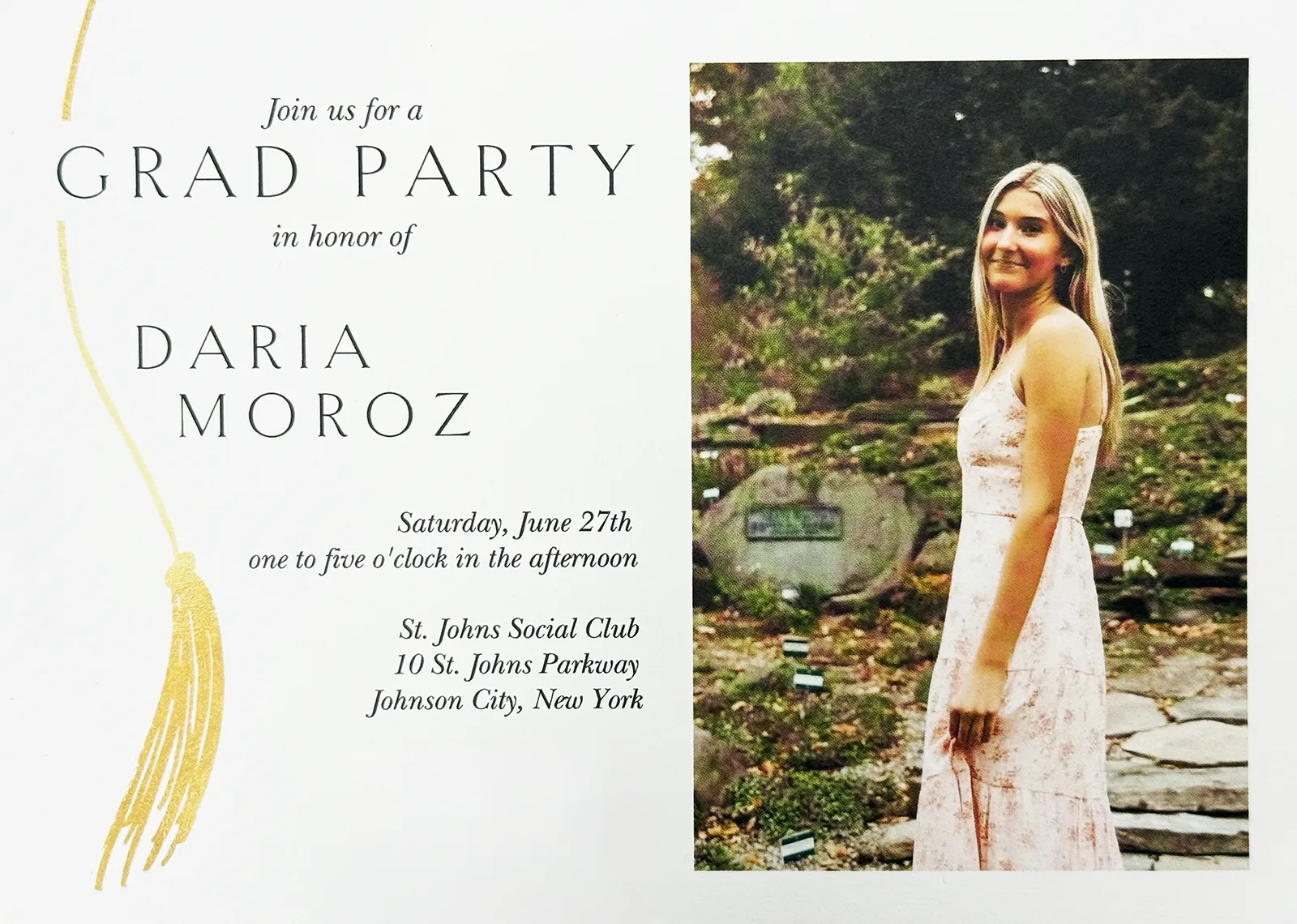
Congratulations Daria!
Daria Moroz will be graduating from Vestal High School on June 26, 2026. She will be attending Le Moyne College in the Fall to study Psychology. During her time at Vestal, Daria was inducted into the National Honor Society, as well as being a scholar athlete on Varsity sports teams. She participated in soccer, indoor track, lacrosse, and flag football earning a Varsity letter in all four. She wishes her co-graduates good luck and best wishes!
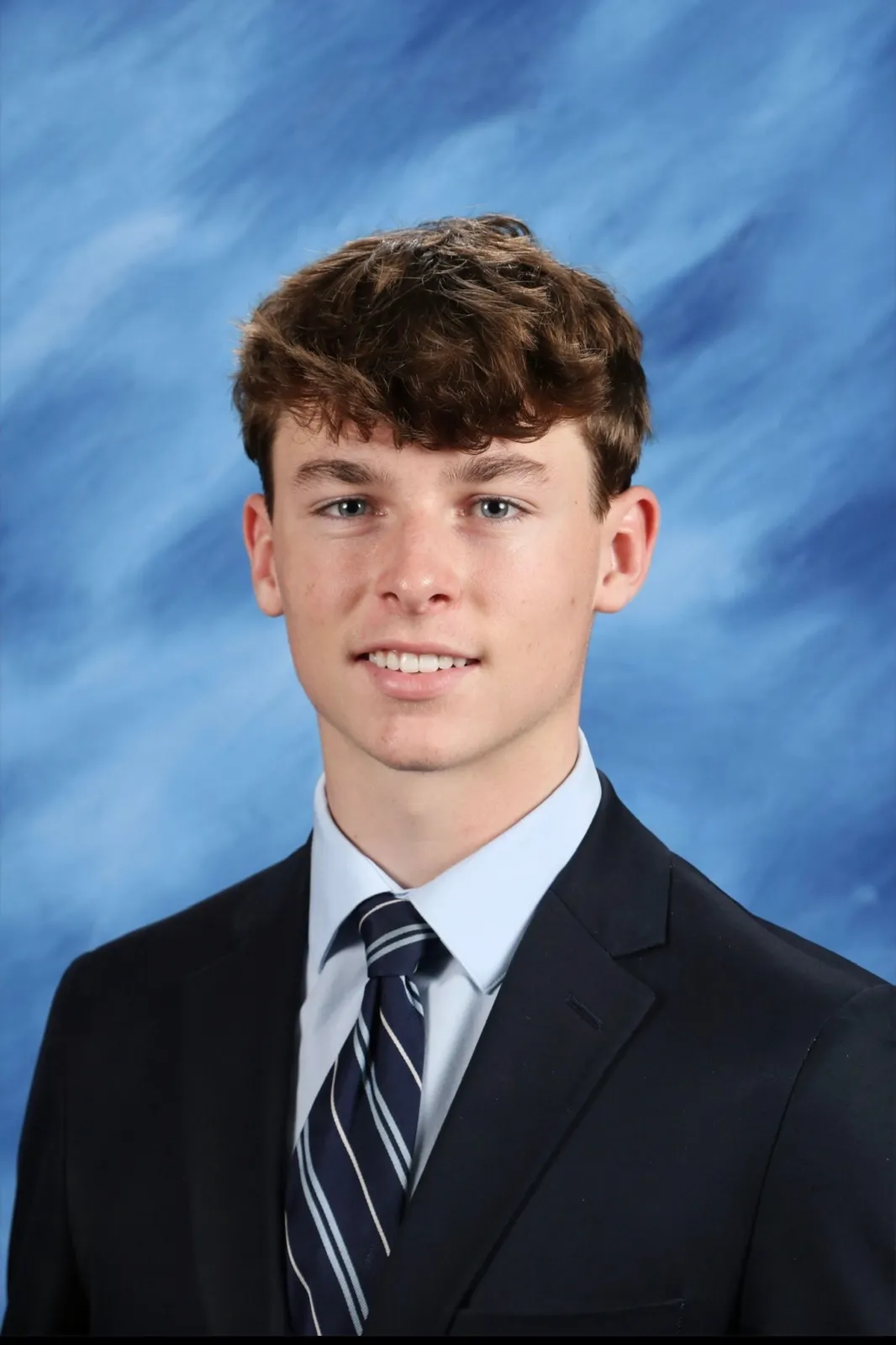
Congratulations Thomas!
On June 7, 2026, Thomas Vincent Lomonaco Jr. graduated from Chaminade High School in Mineola, NY.
While at Chaminade, he was a member of the National Honor Society, participated in the Business Club, Economics Club, Culinary Club, and was President of Sacristans. He earned a Bloomberg Certificate of Financial Literacy.
In the fall, Thomas will attend Indiana University as a direct admit into the Kelley School of Business, majoring in Finance.
He is grateful to his parish family for her prayers, encouragement and support throughout his years at Chaminade. He said, "Your kindness has been a blessing and I ask for your continued prayers as I begin this exciting new chapter."
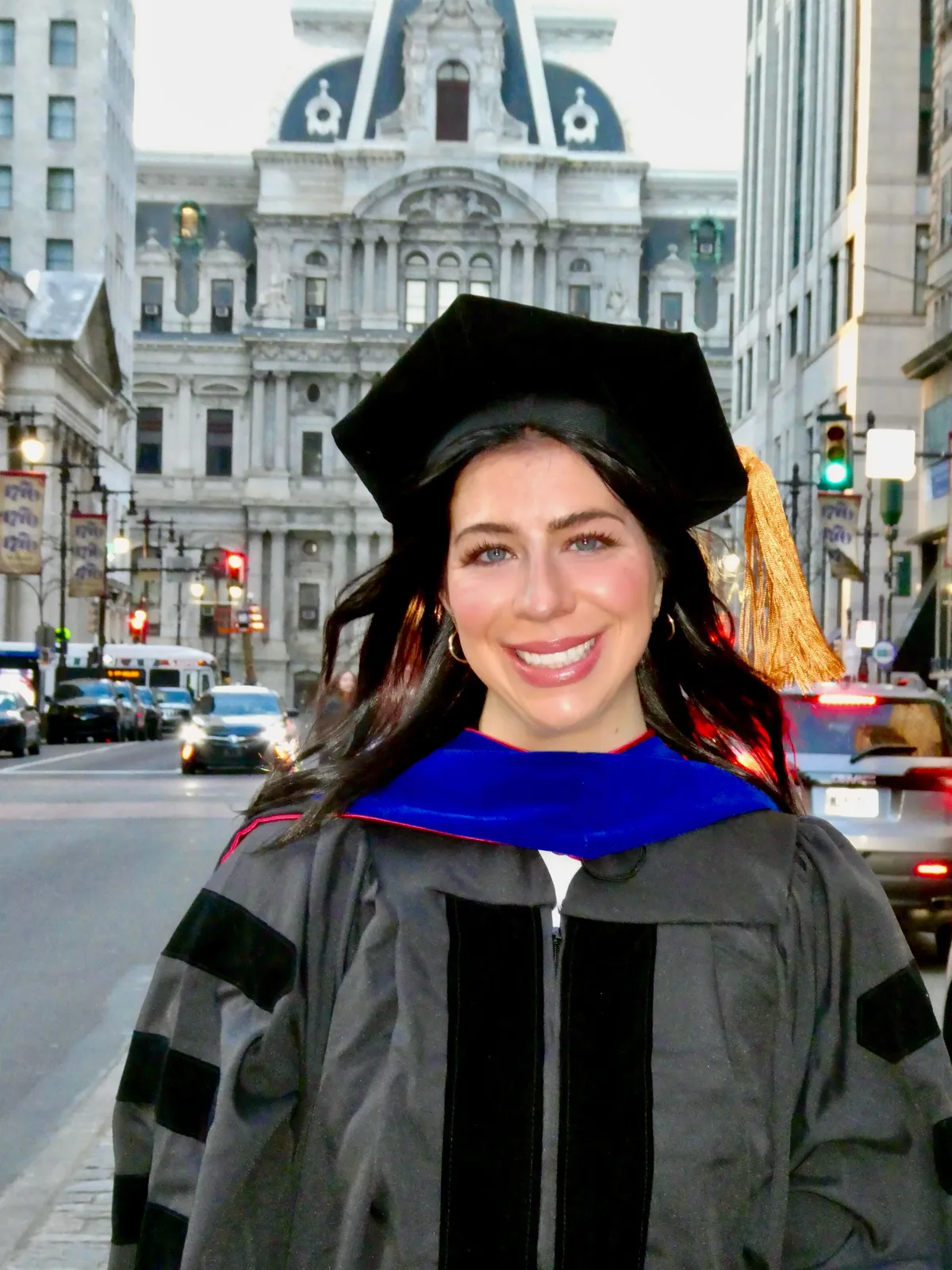
Congratulations Julia!
Dr. Julia Ferrante, PhD Pharmacology‚ University of Pennsylvania
Julia studied for the past six years under the guidance of Dr. Julie Blendy, PhD‚ Perelman School of Medicine‚ Department of Pharmacology. Julia's research was focused on the effects of narcotics on brain development. Her six year journey culminated in the successful presentation of her Doctoral Dissertation Defense - Perinatal Opioid Exposure Alters Neuroimmune, Epigenetic and GABAergic Function throughout Development. During this time she has become a subject matter expert in her field and has presented at numerous professional conferences both domestically and internationally.
Julia has collaborated with peers from various universities across the United States as well as from the Departments of Neurology and Neuroscience at the Icahn School of Medicine at Mount Sinai. Julia has achieved lead author status on two published papers with a third paper in progress. She is preparing to take the patent bar exam in order to qualify as a patent agent in the pharmaceutical industry.

Congratulations Benjamin!
Benjamin (Ben) Holicky graduated from the University of Scranton's Kania School of Management with a Bachelor of Science in Business Analytics.
During his time at the University, Ben earned a place on the Dean's List multiple times and interned with the Career Center. He also gained valuable experience through internships with Tyler Technologies, TJX Companies, and White Dog Management.
Ben has accepted a position as a Regional Asset Manager serving the Scranton and greater Northeast Pennsylvania areas.
Baskets Raffle Chairperson
We are looking for "Baskets Raffle" Chairperson for Ukrainian Day Festival. Please contact Mark Hatala for information. (607) 779-8597.
Graduation Party - June 27 1-5pm
Save the Date - October 10
Our Centennial Celebration is scheduled for October 10, 2026. More info is coming...
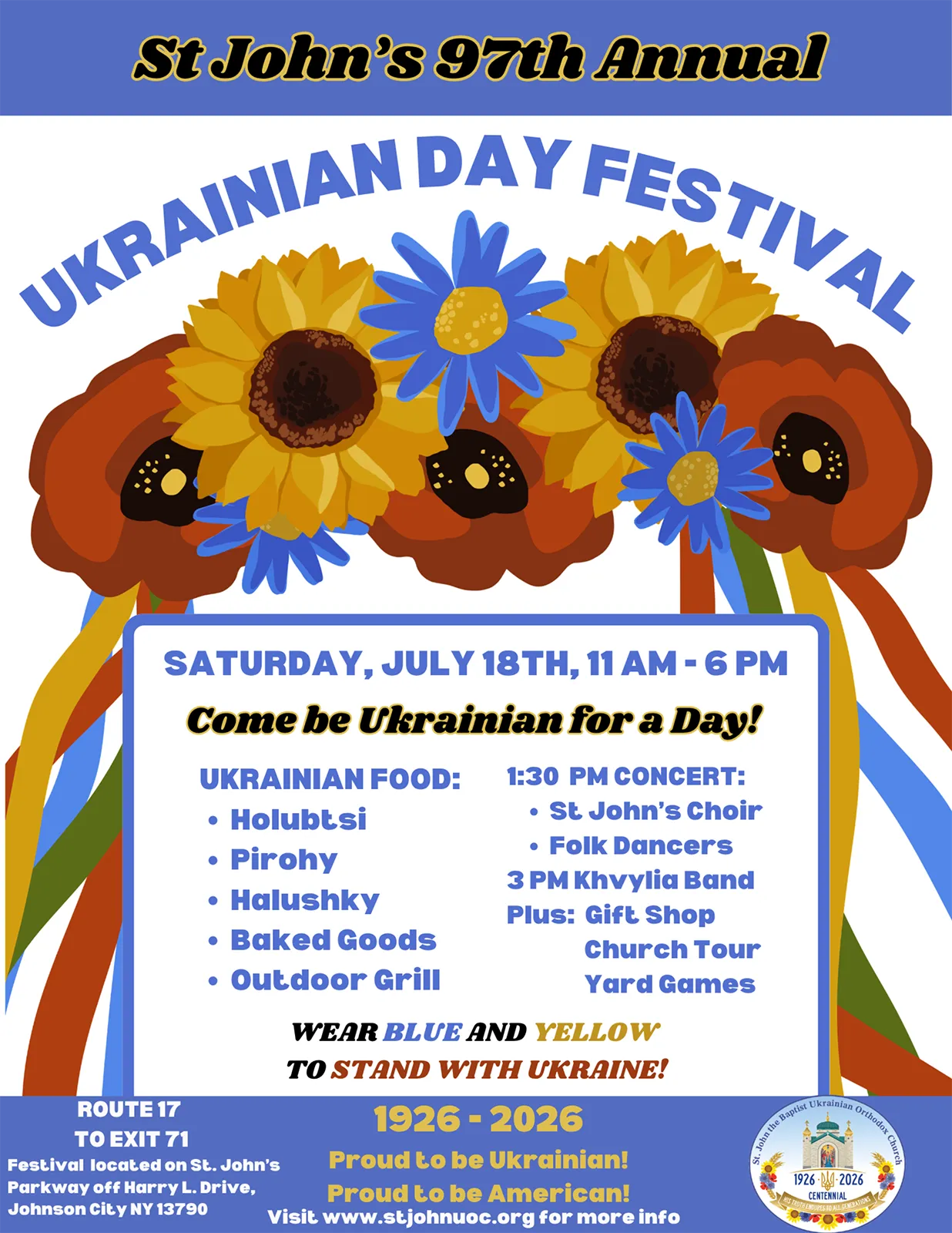
Ukrainian Day Festival - July 18, 2026 - Український Фестиваль - 18 липня
Let's Help Ukraine!

St. John's Ukrainian Humanitarian Fund is accepting donations to help Ukrainians during war. Donations will go to provide food and other humanitarian needs.
To make donation online click here
We accept checks as well.
Please make the checks to St. John Ukrainian Humanitarian Fund
Mailing address:
1 Saint John's Parkway
Johnson City NY 13790
Cash is accepted in church
Pray for Ukraine!
Prayers for Ukraine are done during each service. To see the schedule click here.
Молитви за Україну проводяться під час кожної служби. За розкладом дивіться тут.
May God bless and protect Ukraine!
Happy Birthday
- June 21: Jacqueline Bhandari
- June 23: Nadine Binns
- June 23: Charles Ellsworth Jr.
- June 24: Dylann Dickstein
- June 25: Nick Tarcha Sr.
- June 26: Julia Lomonaco
* If your or someone else's birthday is missing or incorrect please let Fr. Ivan know right away.
Please Pray for the Servants of God
John, Peter John, Rose,
Solomiia, Bob, John, Jane, Alla,
Fr. Andre, Mary, Zenna, Douglas,
Ivan, Melanie, William, Marion,
Mariann, Robert, Jean, Ronald, Brian,
Fr. James, Scott, Andriy, James, William,
Vasyl, Olha
Upcoming Readings
| Mon. June 22 – | Rom. 9:18-33 ; | Mt. 11:2-15; |
| Tue. June 23 – | Rom. 10:11–11:2; | Mt. 11:16-20; |
| Wed. June 24 – | Rom. 11:2-12 ; | Mt. 11:20-26 ; |
| Thu. June 25 – | Rom. 11:13-24; | Mt. 11:27-30; |
| Fri. June 26 – | Rom. 11:25-36 ; | Mt. 12:1-8; |
| Sat. June 27 – | Rom. 6:11-17; | Mt. 8:14-23; |