Bulletin for June 7, 2026
June 7 – 1st Sunday after Pentecost. Tone 8
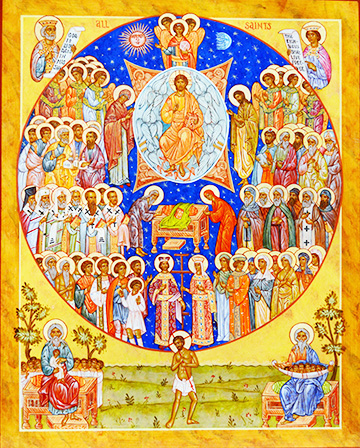
ALL SAINTS. Third Finding of the Precious Head of St. John the Baptist (850). Hieromartyr Therapon, bishop of Cyprus (4th c.).
Heb. 11:33–12:2 ; Mt. 10:32-33, 37-38–19:27-30 ;
The last day before the Apostolic Fast
June 14 – 2nd Sunday after Pentecost. Tone 1
All Saints of Ukraine. All Saints of the Holy Mount Athos. Martyr Justin the Philosopher, and those with him at Rome: Martyrs Justin, Chariton and his wife Charita, Euelpistus, Hierax, Peon, Valerian and Justus (166). Martyr Victoria (Rome). St. Agapitus, unmercenary physician of the Kyiv Caves (1095).
Rom. 2:10-16 ; Mt. 4:18-23;
Heb. 11:33–12:2 ; Mt. 4:25 - 5:12;
Services & Other Events
7 June, All Saints Sunday - Неділя Всіх Святих:
- 9am – Confession / Hours
- 9:30am – Divine Liturgy - Бож. Літургія
- Clergy Appreciation Coffee Hour
Sts. Peter and Paul Fast
- 8 June - 11 July
9 June, Tuesday:
- 6:30pm – Choir Rehearsal in MC
10 June, Wednesday:
- 7pm – Finance Committee Meeting
13 June, Saturday - Субота:
- 5pm – Great Vespers - Вел. Вечірня
14 June, Sunday - Неділя:
- 9am – Confession / Hours
- 9:30am – Divine Liturgy - Бож. Літургія
15 June, Monday:
- 7pm – Parish Council Meeting
20 June, Saturday - Субота:
- 5pm – Great Vespers - Вел. Вечірня
21 June, Sunday - Неділя:
- 9am – Confession / Hours
- 9:30am – Divine Liturgy - Бож. Літургія
- Memorial Service for Fr. Franko Lawryk
- Graduation Sunday - Father's Day
Апостол і Євангеліє - Gospel and Epistle of the Day
How to Become a Saint
According to Orthodox Patristic Tradition
The Orthodox Church does not treat sainthood as an exceptional privilege reserved for a spiritual elite. Rather, the Holy Fathers teach that every baptized Christian is called to holiness — to the fullness of life in God. This calling is not self-improvement; it is theosis: the real, transforming union of the human person with the living God. Here is the path as the Fathers have laid it out.
Repentance (Metanoia) — The Foundation
The Fathers unanimously teach that the path to holiness begins with metanoia — a complete change of mind and heart. St. John Climacus writes that repentance is the renewal of baptism and a contract with God for a fresh start of life. It is not mere regret but a radical turning of the whole person toward God. Without ongoing repentance, the spiritual life cannot begin, much less advance.
Prayer — The Breath of the Soul
St. Theophan the Recluse describes prayer as the foundation of all spiritual work. The Fathers teach both liturgical prayer — full participation in the Divine Liturgy and the Daily Cycle of services — and personal, inner prayer. The most celebrated form of personal prayer is the Jesus Prayer: "Lord Jesus Christ, Son of God, have mercy on me, a sinner." According to the Philokalia, this short prayer, when practiced with attention and sobriety, gradually unites the mind with the heart and opens the soul to divine grace.
Fasting — Mastery Over the Body
The Fathers consistently link fasting to spiritual vigilance. St. Basil the Great teaches that fasting was the first commandment given to mankind in Paradise, and its neglect led to the Fall. Fasting tames the passions, sobers the mind, and creates the inner space necessary for God's grace to work. It is never an end in itself but always directed toward prayer and love.
Humility — The Queen of Virtues
If there is one virtue the Fathers return to again and again, it is humility. St. Isaac the Syrian writes that humility is the garment of the Godhead. Pride is the root of all sin; humility is the foundation of all virtue. The Desert Fathers taught that a person who has tasted true humility considers himself lower than all creatures — and in that lowliness finds God already present. Without humility, every spiritual achievement becomes a danger rather than a gift.
Nepsis — Watchfulness of the Mind
The Greek word nepsis means sobriety or watchfulness. The Patristic tradition teaches that the chief battlefield of the spiritual life is the mind. Evil enters not by force but by consent — first as a fleeting thought (logismos), then as a suggestion, then as passion. The saints learned to stand at the door of the heart, turning away every destructive thought before it could take root. This inner vigilance, combined with prayer, is called the hesychast life.
Love and Service — The Goal and the Proof
St. Silouan of Mount Athos, one of the great saints of the 20th century, taught that the surest sign of the Holy Spirit's presence is love for enemies. The Fathers never separate inner prayer from active charity. St. John Chrysostom insisted that the altar of the poor neighbor is no less sacred than the altar of the Eucharist. Sainthood is not private holiness: it overflows into compassionate service to every human being, who is the living icon of God.
Sacramental Life — The Grace of the Church
The Fathers never taught a solitary path. Holiness grows within the Body of Christ — the Church. Regular confession purifies the conscience and renews the soul's orientation toward God. Holy Communion is not a reward for the righteous but medicine for the sick: it is the very Body and Blood of Christ uniting Himself to those who receive Him in faith and repentance. Without the sacramental life, all other efforts remain on the level of natural virtue, which is good but falls short of theosis.
A Spiritual Father — The Gift of Guidance
The Patristic tradition places enormous weight on the role of a spiritual father or elder (starets/geron). The Fathers warn that the spiritual path is treacherous and that a guide who has himself passed through these stages is essential for safe progress. Abba Dorotheos writes that those who trust in their own judgment and walk without a guide are quickly deceived. The elder does not replace God; he points toward Him — with discernment, prayer, and love.
A Lifelong Journey
Sainthood, according to the Holy Fathers, is not the possession of the perfect but the direction of the repentant. St. Anthony the Great said: "I saw the snares of the enemy spread across the world, and I cried out — who can pass through them? And a voice answered me: Only the humble." The path is narrow, the struggle is real, but the promise is absolute: those who seek God with their whole heart will find Him, and in finding Him, will become — by grace — what He is by nature.
Як стати святим
За Православним Святоотцівським Переданням
Православна Церква не розглядає святість як виняткову привілею духовної еліти. Навпаки, Святі Отці вчать, що кожен охрещений християнин покликаний до святості — до повноти життя в Бозі. Це покликання не є самовдосконаленням; це обоження: реальне, перетворювальне єднання людської особи з живим Богом. Ось шлях, як його виклали Отці.
Покаяння — Основа
Святі Отці одностайно вчать, що шлях до святості починається з покаяння — повної зміни розуму і серця. Святий Іоан Ліствичник пише, що покаяння є оновленням хрещення і договором з Богом про новий початок життя. Це не просто жаль, а радикальне звернення всієї людини до Бога. Без постійного покаяння духовне життя не може розпочатись, тим більше просуватися вперед.
Молитва — Дихання Душі
Святитель Феофан Затворник описує молитву як основу всього духовного діла. Отці вчать як літургійній молитві — повноцінній участі в Божественній Літургії та добовому колі богослужінь — так і особистій, внутрішній молитві. Найвідомішою формою особистої молитви є Ісусова молитва: "Господи Ісусе Христе, Сину Божий, помилуй мене, грішного." За вченням Добротолюбія, ця коротка молитва, якщо практикується з увагою і тверезістю, поступово з'єднує розум із серцем і відкриває душу для Божої благодаті.
Піст — Владування над Тілом
Отці послідовно пов'язують піст із духовною пильністю. Святитель Василій Великий вчить, що піст був першою заповіддю, даною людству в Раю, і її знехтування призвело до Падіння. Піст приборкує пристрасті, тверезить розум і створює внутрішній простір, необхідний для дії Божої благодаті. Він ніколи не є самоціллю, а завжди спрямований до молитви і любові.
Смирення — Цариця Чеснот
Якщо і є одна чеснота, до якої Отці повертаються знову і знову, то це смирення. Святий Ісаак Сирин пише, що смирення є одягом Божества. Гордість — корінь усього гріха; смирення — основа всіх чеснот. Отці-пустельники вчили, що людина, яка скуштувала справжнього смирення, вважає себе нижчою за всі творіння — і в тій нікчемності знаходить Бога вже присутнього. Без смирення кожне духовне досягнення стає небезпекою, а не даром.
Тверезість — Пильність Розуму
Грецьке слово непсис означає тверезість або пильність. Добротолюбна традиція вчить, що головне поле битви духовного життя — це розум. Зло входить не силою, а згодою — спочатку як миттєва думка (логісмос), потім як спокуса, потім як пристрасть. Святі навчилися стояти на дверях серця, відганяючи кожну руйнівну думку, перш ніж вона могла вкоренитися. Ця внутрішня пильність у поєднанні з молитвою зветься ісихастським життям.
Любов і Служіння — Мета і Доказ
Святий Силуан Афонський, один із великих святих XX століття, вчив, що найвірнішою ознакою присутності Святого Духа є любов до ворогів. Отці ніколи не відокремлюють внутрішню молитву від активного милосердя. Святитель Іоан Золотоуст наполягав, що жертовник бідного ближнього є не менш священним, ніж жертовник Євхаристії. Святість — це не приватна побожність: вона переливається в співчутливе служіння кожній людській істоті, яка є живою іконою Бога.
Життя у таїнствах — Благодать Церкви
Отці ніколи не вчили самотнього шляху. Святість зростає в Тілі Христовому — Церкві. Регулярна сповідь очищає совість і оновлює спрямованість душі до Бога. Святе Причастя — це не нагорода для праведних, а ліки для хворих: це сам Тіло і Кров Христові, які з'єднують Його з тими, хто приймає Його з вірою і покаянням. Без таїнств всі інші зусилля залишаються на рівні природної чесноти, яка є доброю, але не досягає святості.
Духовний Отець — Дар Керівництва
Добротолюбна традиція надає величезного значення ролі духовного отця або старця (старець/герон). Отці попереджають, що духовний шлях небезпечний і що провідник, який сам пройшов ці етапи, є необхідним для безпечного просування. Авва Дорофей пише, що ті, хто покладаються на власне судження і йдуть без провідника, швидко вводяться в оману. Старець не замінює Бога; він вказує на Нього — з розсудливістю, молитвою і любов'ю.
Життєвий Шлях
Святість, за вченням Святих Отців, — це не надбання досконалих, а напрямок тих, хто кається. Святий Антоній Великий сказав: "Я бачив пастки ворога, розставлені по всьому світу, і закричав — хто може пройти через них? І голос відповів мені: Тільки смиренний." Шлях вузький, боротьба реальна, але обіцянка абсолютна: ті, хто шукають Бога всім серцем, знайдуть Його, і, знайшовши Його, стануть — благодаттю — тим, чим Він є за природою.
Знайдення глави Предтечі і Хрестителя Господнього Іоанна
Після усікновіння чесної глави Пророка, Предтечі і Хрестителя Господнього Іоанна тіло його було поховане учнями в самарійському місті Севастії, а чесну главу сховала Іродіада в безчесному місці. Благочестива Іоанна, дружина царського домоправителя Хузи, про яку згадує святий євангеліст Лука (Лк. 8:3), таємно взяла святу главу, поклала її в посудину та поховала на горі Єлеонській — в одному із маєтків Ірода.
Через багато років маєток цей перейшов у володіння благочестивому вельможі Інокентію, який став будувати там церкву. Коли копали рів для фундаменту, було знайдено посудину з чесною главою Іоанна Хрестителя. Інокентій дізнався про велич святині за благодатними знаменнями, які були від неї. Так відбулося Перше знайдення глави. Інокентій зберігав її з великою побожністю, але перед своєю смертю, боячись, як би святиня не була осквернена невірними, знову приховав її в тому самому місці, де знайшов. Після смерті його церква прийшла в запустіння і зруйнувалася.
У часи правління рівноапостольного царя Константина Великого († 337, пам'ять 21 травня), коли християнська віра почала процвітати, двом ченцям, котрі прийшли до Єрусалима на поклоніння святим місцям, двічі явився сам святий Предтеча і відкрив місце знаходження своєї чесної глави. Ченці відрили святиню і, поклавши її в мішок із верблюжої вовни, пішли до себе додому. Дорогою вони зустріли незнайомого гончаря і дали йому нести дорогоцінну ношу.
Не знаючи, що він несе, гончар спокійно продовжував шлях. Але йому явився сам святий Предтеча і велів тікати від недбайливих і ледачих ченців разом з тим, що було у нього в руках. Гончар сховався від ченців і вдома з пошаною зберігав чесну главу. Перед смертю він запечатав її у водоносну посудину і передав сестрі.
Відтоді чесна глава була зберігалася і передавалася у спадок побожними християнами, поки її володарем не став священник Євстафій, котрий дотримувався аріанської єресі. Він спокусив безліч недужих, які зцілилися від святої глави, приписуючи благодать єретичності. Коли його блюзнірство відкрилося, він був змушений тікати. Закопавши святиню в печері поблизу Емесси, єретик розраховував згодом повернутися й знову оволодіти нею для поширення лжевчення. Але Бог не допустив цього. У печері оселилися благочестиві ченці, а потім на цьому місці виник монастир. У 452 році архімандриту цієї обителі Маркеллу святий Іоанн Хреститель у видінні вказав місце приховання своєї глави. Це знайдення стало святкуватися як Друге. Святиню було перенесено до Емесси, а потім до Константинополя.
Про пророка Іоанна Хрестителя Господь Ісус Христос сказав: «з народжених жінками не було більшого за Іоанна Хрестителя» (Мф. 11:11). Іоанн Хреститель прославляється Церквою як «ангел, і апостол, і мученик, і пророк, і свічник, і друг Христовий, і печать пророків, і ходатай старої і нової благодаті, і серед народжених найшанованіший, і світлий Слова глас».
Thank you note
To the Venerable Hierarchs, the Parish Council, the St. Mary's Sisterhood, and all the beloved Parishioners of St. John's Parish,
With a heart full of gratitude, I thank you for your warm congratulations on the 16th anniversary of my ordination to the Holy Priesthood.
Fourteen of these sixteen years have been spent with you, here at St. John's Parish — and I can say with all sincerity that these have been among the most meaningful and blessed years of my life. You have not merely been a congregation entrusted to my care; you have been an essential and irreplaceable part of my ministry to God. It is in serving alongside you — in your joys and sorrows, your prayers and your struggles — that I have come to understand more deeply the beauty and the weight of the calling I have been given.
I am truly grateful and glad that God has placed us together on this journey of faith. Your faithfulness, your love, and your devotion are a constant source of encouragement and inspiration to me.
May God bless each and every one of you with many blessed, joyful, and peaceful years — filled with His grace and mercy!
With love and deep gratitude in Christ,
Fr. Ivan Synevskyy
Graduation Sunday - June 21
For all High School and other higher education students who are graduates this year, please send Fr. Ivan a short info of your accomplishments or your plans for future by June 17. We as parish would like to rejoice and congratulate you with this special occasion.
Parish Directory Deadline
If you did not make the photography session for your photo please send your individual/family photo to Pam Scannell by June 15th.
Text 607-760-1671 or email pamelascannell@gmail.com.
Save the Date - October 10
Our Centennial Celebration is scheduled for October 10, 2026. More info is coming...
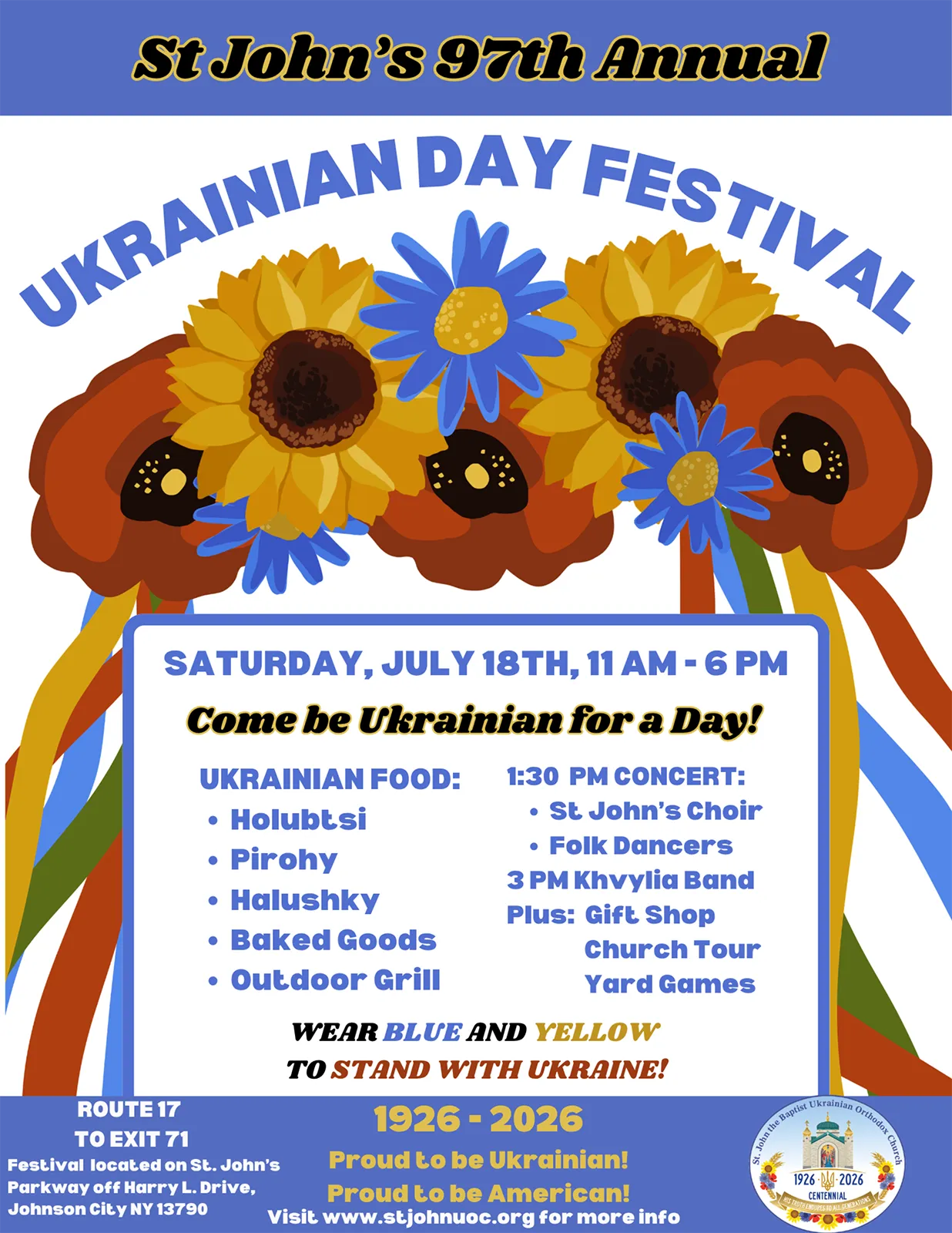
Ukrainian Day Festival - July 18, 2026 - Український Фестиваль - 18 липня
Late Spring 2026 Kitchen Sessions
Preparing for Ukrainian Day · May – July 2026
Holubtsi Session — Round 2
8 BatchesUkrainian Day Week
July 14–18Let's Help Ukraine!

St. John's Ukrainian Humanitarian Fund is accepting donations to help Ukrainians during war. Donations will go to provide food and other humanitarian needs.
To make donation online click here
We accept checks as well.
Please make the checks to St. John Ukrainian Humanitarian Fund
Mailing address:
1 Saint John's Parkway
Johnson City NY 13790
Cash is accepted in church
Pray for Ukraine!
Prayers for Ukraine are done during each service. To see the schedule click here.
Молитви за Україну проводяться під час кожної служби. За розкладом дивіться тут.
May God bless and protect Ukraine!
Happy Birthday
- June 12: Nick Shirk
* If your or someone else's birthday is missing or incorrect please let Fr. Ivan know right away.
Please Pray for the Servants of God
Daniel, John, Peter John, Rose,
Solomiia, Bob, John, Jane, Alla,
Fr. Andre, Mary, Zenna, Douglas,
Ivan, Melanie, William, Marion,
Mariann, Robert, Jean, Ronald, Brian,
Fr. James, Scott, Andriy, James, William,
Vasyl, Olha
Upcoming Readings
| Mon. June 8 – | Rom. 2:28–3:18; | Mt. 6:31-34–7:9-11; |
| Tue. June 9 – | Rom. 4:4-12 ; | Mt. 7:15-21; |
| Wed. June 10 – | Rom. 4:13-25; | Mt. 7:21-23; |
| Thu. June 11 – | Rom. 5:10-16 ; | Mt. 8:23-27; |
| Fri. June 12 – | Rom. 5:17–6:2; | Mt. 9:14-17; |
| Sat. June 13 – | Rom. 3:19-26 ; | Mt. 7:1-8; |