Bulletin for March 1, 2026
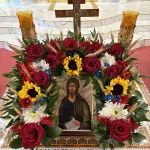
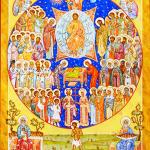
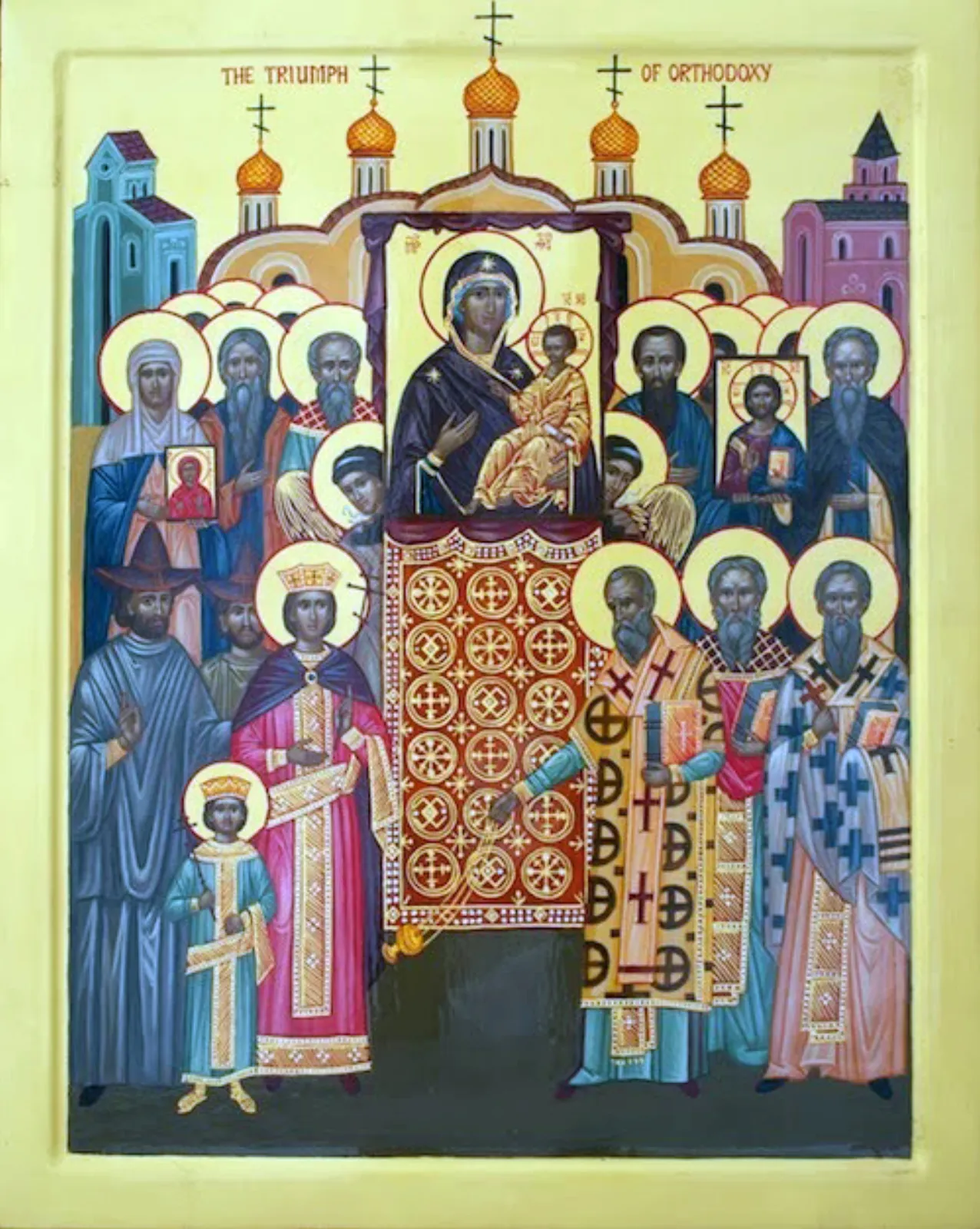
Mar. 1 – 1st Sunday of the Great Lent: Triumph of Orthodoxy. Tone 5
Martyrs Pamphilus presbyter, Valens deacon, Paul, Seleucus, Porphyrius, Julian, Theodulus, Elias, Jeremiah, Isaiah, Samuel, and Daniel, at Caesarea in Palestine (307-309).
Heb. 11:24-26, 32–12:2; Jn. 1:43-51;
Liturgy of St. Basil the Great.
Mar. 8 – Second Sunday of the Great Lent Tone 6
St. Gregory Palamas the Archbishop of Thessalonica. Synaxis of all Venerable Fathers of the Kyiv Caves. Hieromartyr Polycarp, bishop of Smyrna (167). Sts. John, Antioch, Antoninus, Moses, Zebinas, Polychronius, Moses, and Damian, ascetics of the Syrian desert (5th c.). St. Alexander, founder of the order of the Unsleeping Ones (430).
Heb. 1:10–2:3; Mk. 2:1-12;
Heb. 7:26 - 8:2; Jn. 10:9-16;
Liturgy of St. Basil the Great.
Services & Other Events
1 March, Sunday:
- 9am – Confession / Hours
- 9:30am – Divine Liturgy - Бож. Літургія
- Humanitarian Committee Meeting in the Memorial Center
- Core cabbage after Divine Liturgy
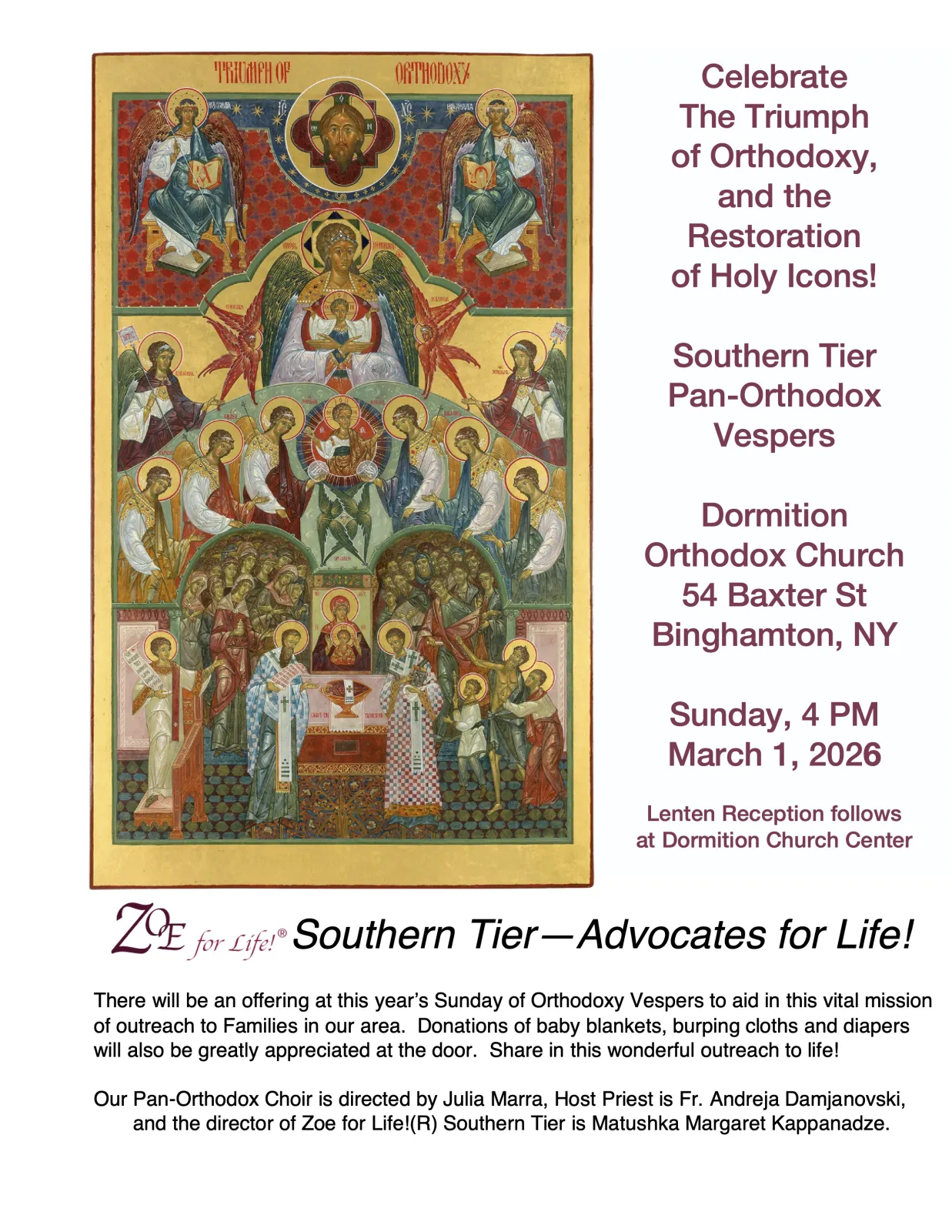
- 4pm – Great Vespers at Dormition Orthodox Church on Baxter St. Binghamton
2 March, Monday:
- 7:30am boil cabbage. Need 3 people. Come try!
- 9:00am Trim leaves. Roaster, kitchen and hall setup.
3 March, Tuesday:
- 8:30am Balls & roll holubtsi, Lunch after
- 7pm – Building & Maintenance Meeting
6 March, Friday:
- 7:30am Potatoes;
- 10am-12noon Make pirohy balls, Kitchen/hall Setup. Setup guide top shelf by cooler.
- 6:30pm – Liturgy of Presanctified Gifts - Літургія Ранішосвячених Дарів
7 March, Saturday:
- 7:30am Finish set-up
- 8am-12noon Pinching pirohy, Lunch after
- 4:30pm – General Memorial Service - Поминальна Субота
- 5pm – Great Vespers - Велика Вечірня
8 March, Sunday:
- 9am – Confession / Hours
- 9:30am – Divine Liturgy - Бож. Літургія
- Centennial Committee Meeting
11 March, Wednesday:
- 7pm – Finance Committee Meeting
13 March, Friday:
- 6:30pm – Liturgy of Presanctified Gifts - Літургія Ранішосвячених Дарів
Апостол і Євангеліє - Gospel and Epistle of the Day
One God, No Idols, and Holy Windows
The Teachings of St. Nicholas Velimirovich on the First and Second Commandments and the Veneration of Icons
For seekers of every age — from the youngest hearts to the wisest elders
A Man Who Loved God and Loved People
Saint Nicholas Velimirovich (1881–1956), the beloved Bishop of Žiča and Ohrid in Serbia, was called "the New Chrysostom" — a golden-mouthed preacher whose words burned with love for God and compassion for every human soul. Whether writing for peasants or philosophers, for children or scholars, his message was always the same: God is alive, God loves you, and He wants your whole heart.
His meditations on the Ten Commandments — especially in his monumental work The Prologue of Ohrid and his Missionary Letters — are not dry legal commentary. They are blazing invitations to freedom.
For Children:
God Is Like the Best Parent
Imagine having a Father who never gets sick, never goes away, and loves you more than the whole universe. That is what God is like.
Saint Nicholas taught that the First Commandment — "You shall have no other gods before Me" — is not a rule meant to make life hard. It is a gift. God says: I am here. I am real. Do not waste your love on things that cannot love you back.
Saint Nicholas used a beautiful image: a little child who runs to hug a painted doll instead of his own mother. The doll cannot hug back. But the mother — she holds the child with real, warm arms. God is like that mother, infinitely more real than anything we could carve, buy, or imagine.
The First Commandment is God saying: "Run to Me. I am here."
For Adults: The Metaphysics of the First Commandment
St. Nicholas understood the First Commandment not merely as a religious regulation but as a statement about the very structure of reality. In his teaching, God is not one God among many possible gods competing for our attention — He is the only ground of Being itself. To place anything else first is not merely disobedience; it is a kind of madness, an ontological confusion, a turning away from Life toward its shadow.
He wrote passionately about how modern man had erected new idols: money, nation, fame, pleasure, science divorced from wisdom. None of these are evil in themselves, but when they occupy the throne of the heart, they enslave. The soul designed for infinity shrivels around a finite object.
St. Nicholas saw in the First Commandment an act of liberation. Every idol is a tyrant. The God of the commandments is a Father. To worship one God is to be freed from the tyranny of a thousand lesser masters.
"Whoever serves one Lord is the freest of the free. Whoever serves many masters is the slave of slaves." — in the spirit of St. Nicholas's teaching
For Children:
Don't Make a Fake God
The Second Commandment says: "You shall not make for yourself a carved image."
Saint Nicholas taught that this means we must not make up what God is like based on our own imagination — as if God were a big person we could draw, control, or fit into a box we build.
Think about it this way: if your best friend moved far away and someone gave you a cardboard cutout of them and said "Talk to this instead," would that be enough? Of course not! You want the real friend, not a copy.
God is real. He is alive. He cannot be trapped in a statue or an idea that we make up. The commandment protects us from getting stuck loving a fake god instead of the real one.
For Adults:
Idols of the Mind Are Idols Too
St. Nicholas extended the Second Commandment far beyond physical statues. He warned against the idols of ideology — philosophical systems that reduce God to a concept, a projection, a useful social fiction. When theologians replace the living God with an abstraction, or when people worship a God they have fashioned to approve of whatever they already want to do, they have violated this commandment as surely as any pagan carving a wooden figure.
He was equally fierce about nationalistic idolatry — not because he lacked love for his Serbian people (he loved them deeply), but because he saw the danger when a nation, a race, or a civilization is elevated to the level of the sacred. The 20th century, which he lived through with great suffering (including imprisonment in Dachau), showed him what happens when nations become gods.
The Second Commandment, for St. Nicholas, is a call to humility before mystery. We do not define God; He defines us.
A Seeming Contradiction:
What About Icons?
Here a thoughtful reader — child or adult — might ask: But Orthodox Christians venerate icons! Aren't those "carved images"? Doesn't that violate the Second Commandment?
This is one of the most beautiful questions in all of Christian theology, and St. Nicholas addressed it with great clarity and joy.
For Children: Windows, Not Walls
Have you ever looked at a photograph of someone you love — a grandparent, a friend who moved away — and felt your heart fill with love for that person?
You weren't loving the paper and ink. You were loving the person the photo showed you. The photo was like a window that helped your heart reach toward someone real.
That is what holy icons are. They are not idols. They are not fake gods. They are windows — windows through which we look toward Christ, the Virgin Mary, and the saints, who are very much alive in God's Kingdom.
When a child kisses an icon of Jesus, they are not kissing paint. They are saying, "I love You, Lord." The love travels through the image to the Person.
Saint Nicholas, following the great Seventh Ecumenical Council and St. John of Damascus, taught that when God became a human being in Jesus Christ, He made it possible for us to depict Him. Before the Incarnation, no one had seen God. But in Jesus, God had a face. And that holy face can be written (that is what the word "icon" means in Greek — image or likeness) so that we might fix our eyes on Him.
For Adults: The Theology of the Incarnation and Sacred Images
St. Nicholas's defense of icons rests on the bedrock of Christology. The Second Commandment was given to Israel in an age before the Incarnation, when God had not yet taken on human flesh. To depict the invisible God would have been presumption. But the Eternal Word became flesh and dwelt among us (John 1:14). He was seen, touched, heard. His face was real.
Therefore, St. Nicholas taught, the icon is not a violation of the Second Commandment — it is a proclamation of the Incarnation. To refuse all sacred images, as the iconoclasts did, is implicitly to deny that God truly became man, that the flesh of Christ was truly His flesh, that matter itself was sanctified when the Son of God wore it.
The distinction that St. John of Damascus made, and which St. Nicholas embraced, is crucial: latreia (worship, adoration) belongs to God alone — this is what the Second Commandment protects. Proskynesis and timitiki proskynessis (veneration, honor, reverence) may be rendered to holy persons and holy things, just as we honor a king's portrait, a soldier's flag, or a parent's memory.
When we stand before an icon, the honor passes through the image to the archetype — to Christ Himself, to the Mother of God, to the saint depicted. We are not worshipping paint and gold. We are reaching through a holy window toward the living persons of the Kingdom of Heaven.
St. Nicholas also emphasized the pedagogical power of icons — they are the "Bible of the illiterate," as the ancient phrase goes. In an age when most people could not read, icons taught the Faith. A child standing before the icon of the Nativity sees the story of God becoming a baby. A grieving soul before the icon of the Resurrection sees that death has been conquered. Icons are not decorations; they are theological proclamations in color and light.
The Living Unity:
One God, No Idols, Holy Icons
What emerges from St. Nicholas's teaching is a coherent, luminous vision:
The First Commandment calls us to give our whole heart to the one true God — not to fragment it among the thousand substitutes the world offers.
The Second Commandment protects the holiness and transcendence of God, refusing to allow Him to be shrunk, controlled, or manufactured by human hands or human ideas.
The veneration of icons is not a contradiction of these commandments, but their fulfillment in the light of the Incarnation — because God Himself broke through the invisible to become visible, touchable, depictable.
Together, these teachings form a single message: God is real. God is holy. God came to us in Jesus Christ. Fix your eyes on Him.
A Final Word — For Everyone
St. Nicholas Velimirovich suffered greatly in his life. He was imprisoned, exiled, humiliated. But he never stopped radiating joy, because he had taken the First Commandment completely to heart: he had given his whole being to the one God who cannot be taken away.
He once wrote words to this effect: The man who has God has everything. The man who lacks God lacks everything, no matter what else he possesses.
Children: You are loved by the God who made the stars and knows your name. Run to Him.
Adults: Whatever idol has crept onto the throne of your heart — lay it down. The living God is waiting. He is not a concept, not a projection, not a distant force. He is a Father with open arms.
And when you stand before a holy icon — look through it, not at it. Let your heart travel through that window of light and gold, past the paint and wood, all the way to the face of the One who loves you without end.
"My soul glorifies the Lord, and my spirit rejoices in God my Savior." — Luke 1:46–47
Blessed St. Nicholas Velimirovich, pray for us.
Єдиний Бог, Жодних Ідолів і Святі Вікна
Вчення святителя Миколая Велимировича
про Першу та Другу Заповіді та вшанування ікон
Для дітей і дорослих
Чоловік із Золотими Устами
Святитель Миколай Велимирович (1881–1956), єпископ Сербської Православної Церкви, був названий «новим Золотоустом». Його слова горіли любов'ю до Бога і співчуттям до кожної душі. Його послання завжди було одним: Бог живий, Бог любить тебе, і Він хоче всього твого серця.
Перша Заповідь:
«Хай не буде у тебе інших богів»
Для дітей
Уявіть Батька, який ніколи не хворіє, ніколи не іде й любить тебе більше за весь всесвіт. Саме таким є Бог.
Ця заповідь — не важке правило, а дар. Святитель Миколай описував маленьку дитину, що біжить обійняти намальовану ляльку замість рідної матері. Лялька не може обійняти у відповідь — а мати може. Бог каже: «Біжи до Мене. Я тут.»
Для дорослих
Святитель Миколай вбачав у Першій Заповіді не просто релігійне приписання, а твердження про саму природу буття. Бог — не один серед багатьох; Він єдина основа існування. Сучасна людина зводить нових ідолів: гроші, владу, славу, ідеологію. Кожен ідол поневолює. Тільки Бог-Батько звільняє.
«Хто служить одному Господу — найвільніший із вільних. Хто служить багатьом панам — раб із рабів.» — у дусі вчення святителя Миколая
Друга Заповідь:
«Не роби собі ідола»
Для дітей
Якби твій друг переїхав далеко, а тобі дали б його картонний силует і сказали «Спілкуйся з цим» — чи вистачило б тобі цього? Ні! Тобі потрібен справжній друг. Так само Бог реальний і живий — Його не можна замінити статуєю чи вигаданою ідеєю.
Для дорослих
Святитель Миколай поширював цю заповідь і на ідолів розуму: філософські системи, що зводять Бога до зручної концепції; богослов'я, що підлаштовує Бога під людські бажання; національні ідеї, піднесені до рівня священного. Він сам пережив ув'язнення в Дахау — і на власному досвіді знав, до чого призводить обожнювання нації. Ми не визначаємо Бога; Він визначає нас.
А Як Щодо Ікон? Вікна, а не Стіни
Для дітей
Чи доводилося тобі дивитися на фото бабусі чи далекого друга і відчувати любов до цієї людини? Ти любив не папір — ти любив людину. Фото — це вікно. Так само й ікона: вона не ідол, а вікно, крізь яке серце сягає до Христа, Богородиці, святих. Коли дитина цілує ікону Ісуса — вона каже: «Я люблю Тебе, Господи.»
Для дорослих
Заповідь була дана до Втілення, коли Бога ніхто не бачив. Але Слово стало тілом (Ін. 1:14) — і Бог здобув справжнє людське обличчя. Відтак ікона — не порушення заповіді, а її христологічне виповнення. Святитель Миколай слідував розрізненню святого Іоанна Дамаскіна: латрія (поклоніння) належить Богу одному; вшанування можна воздавати святим, так само як ми шануємо портрет дорогої людини. Честь проходить крізь образ до першообразу — до живих осіб Царства Небесного.
Ікони — не прикраси. Це богословські проголошення у кольорі й світлі, «Біблія для неписьменних», що навчала Вірі цілі покоління.
Останнє Слово — Для Всіх
Святитель Миколай страждав, був ув'язнений і вигнаний — але ніколи не переставав радіти, бо мав Бога. Він писав: «Той, хто має Бога, має все. Той, кому Бога бракує, не має нічого.»
Діти: Тебе любить Бог, Котрий сотворив зорі й знає твоє ім'я. Біжи до Нього.
Дорослі: Який би ідол не прокрався на трон твого серця — відклади його. Живий Бог чекає з розкритими обіймами.
А стоячи перед святою іконою — дивись крізь неї, не на неї. Нехай серце сягне аж до обличчя Того, Хто любить тебе без кінця.
«Величає душа моя Господа, і радіє дух мій у Богові, Спасителі моєму.» — Лк. 1:46–47
Блаженний святителю Миколаю Велимировичу, моли Бога за нас.
Welcome Our Newest Member!
Please join us in giving a warm welcome to Eva Novak, who has recently joined our parish family!
We are so blessed to have Eva among us. If you see her at our upcoming community events, please take a moment to introduce yourself and share a friendly hello.
Pysanky Classes
Pysanky classes will start Mar. 4. Wednesdays instead of dancing (5:45-7) and Sunday after church school till 2pm. Last class is on April 5.

St. Patrick's Day Parade
Let's walk together for Ukraine next Saturday, March 7, at 12:30 pm when our blue and yellow colors go green at the Annual St. Patrick's Day parade in Binghamton. This memory making event for your entire family and friends gives us all an opportunity to demonstrate that we stand with Ukraine and that Ukraine has not perished, and never will. Wear your smiles, vyshyvankas and vynoks, bring your flags, and meet up with everyone near the Mirabito Stadium parking lot, our assembly point, at 12:30. The parade starts at 1:30. See you there!
Work Sessions
- Saturday, 3/14 8 AM - Bread Baking
- Saturday, 3/21 8 AM - Kolachky Baking
The Pan-Orthodox Choir
Rehearsals scheduled for Sunday afternoon, March 1 at 2:30pm, at Dormition Orthodox Church, Binghamton, NY
Let's Help Ukraine!
St. John's Ukrainian Humanitarian Fund is accepting donations to help Ukrainians during war. Donations will go to provide food and other humanitarian needs.
To make donation online click here
We accept checks as well.
Please make the checks to St. John Ukrainian Humanitarian Fund
Mailing address:
1 Saint John's Parkway
Johnson City NY 13790
Cash is accepted in church
Pray for Ukraine!
Prayers for Ukraine are done during each service. To see the schedule click here.
Молитви за Україну проводяться під час кожної служби. За розкладом дивіться тут.
May God bless and protect Ukraine!
Please Note!
- Only Orthodox Christians may receive Holy Communion or other Sacraments.
- If you have not been to confession in over a month, please go to confession before receiving the Holy
Gifts.
- We fast from all food and drink (including water) from bedtime (the previous night) until we receive the Holy Gifts during morning Divine Liturgy. That also means no coffee, no cigarettes, no gum, candies in the morning and during Divine Liturgy.
Happy Birthday
- March 03: PM Linda Oryhon
- March 04: Oleksandr Burdyliak
- March 05: Erica Hatala
* If your or someone else's birthday is missing or incorrect please let Fr. Ivan know right away.
Please Pray for the Servants of God
Rachel, John, Rose, Solomiia, Bob,
Melodye,
Hristos, John, Jane, Alla,
Fr. Andre, Mary, Zenna, Douglas, Ivan,
Melanie, William, Marion, Helen,
Mariann, Robert, Jean, Ronald, Brian,
Fr. James, Scott, Andriy, James, William,
Pipinos, Fr. Gabriel and PM Susan, Vasyl
Upcoming Readings
| Mon. Mar. 2 | Is. 4:2–5:7; | Gen. 3:21–4:7; Prov. 3:34–4:22; |
| Tue. Mar. 3 | Is. 5:7-16; | Gen. 4:8-15; Prov. 5:1-15; |
| Wed. Mar. 4 | Is. 5:16-25; | Gen. 4:16-26; Prov. 5:15–6:3 ; |
| Thu. Mar. 5 | Is. 6:1-12; | Gen. 5:1-24; Prov. 6:3-20; |
| Fri. Mar. 6 | Is. 7:1-14; | Gen. 5:32–6:8; Prov. 6:20–7:1; |
| Sat. Mar. 7 | Heb. 3:12-16; | Mk. 1:35-44; |