
Bulletin for November 8, 2026
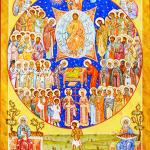
Nov. 8 – 23rd Sunday after Pentecost. Tone 6
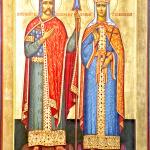
Holy and Glorious Great-martyr Demetrius the Myrrhgusher of Thessalonica (306). Martyr Luppos (306). Ven. Athanasius of Medikion Monastery (814). Ven. Theophilus of the Kyiv Caves, bishop of Novhorod (1482).
Eph. 2:4-10 ; Lk. 16:19-31;
2 Tim. 2:1-10; Jn. 15:17–16:2;
Nov. 15 – 24th Sunday after Pentecost. Tone 7
Martyrs Acindynus, Pegasius, Aphthonius, Elpidephorus, and Anempodistus of Persia (341). Мут. Marcian of Cyrrhus (388).
Eph. 2:14-22 ; Lk. 8:26-39;
Services & Other Events
8 November, Sunday - Неділя:
- 9am – Confession / Hours
- 9:30am – Divine Liturgy - Бож. Літургія
- Memorial Service for Veterans
- Kolachky balls and core cabbage after Divine Liturgy
9 November, Monday:
- 7:30am – boil cabbage. Need 3-4 people. Come try!
- 9:00am – Trim leaves. Roaster, kitchen and hall setup. Use Setup guide.
10 November, Tuesday:
- 8:30am – Balls and roll holubtsi, Lunch after
11 November, Wednesday:
- 5:45pm – Ukrainian Dance Practice
- 6:30pm – St. Nicholas Play Practice
- 7pm – Finance Committee Meeting
13 November, Friday:
- 8am – Kolachky
14 November, Saturday:
- 5pm – Great Vespers - Вел. Вечірня
15 November, Sunday - Неділя:
- 9am – Confession / Hours
- 9:30am – Divine Liturgy - Бож. Літургія
16 November, Monday:
- 7pm – Parish Council Meeting
Апостол і Євангеліє - Gospel and Epistle of the Day
A Name Written in Heaven
The Rich Man, Poor Lazarus, and God's Wonderful Gift of Grace – Ephesians 2:4–10 and Luke 16:19–31
Two Readings, One Big Lesson
Today the Church gives us two readings that fit together like two hands folded in prayer. In the first, the holy Apostle Paul tells us how much God loves us: He saves us not because we earned it, but because He is kind. In the second, the Lord Jesus tells a story about a rich man who had everything, and a poor man named Lazarus who had nothing at all except God.
Put them together and we hear one big lesson: God has been merciful to us, so we must be merciful to others. Let's look at both readings, listen to what the saints have taught about them, and hear some true stories of people who learned this lesson with their whole hearts.
The Story Jesus Told
Once there was a rich man. He wore purple robes, which only kings and very wealthy people could afford, and fine linen clothes. Every single day was a feast for him, with the best food and drink.
Right at his gate lay a poor man named Lazarus. He was sick and covered with sores. He was so hungry that he wished he could eat even the crumbs that fell from the rich man's table. Nobody helped him. Only the dogs came and licked his sores.
One day Lazarus died, and the angels carried him to "Abraham's bosom," a place of rest, comfort and joy with God. The rich man also died and was buried. But he found himself in a place of torment. Looking up, he saw Abraham far away, with Lazarus beside him.
"Father Abraham," he cried, "have mercy on me! Send Lazarus to dip the tip of his finger in water and cool my tongue!" But Abraham answered gently: "Child, remember that in your life you received good things, and Lazarus received bad things. Now he is comforted and you are suffering. And between us there is a great chasm, which no one can cross."
Then the rich man begged Abraham to send Lazarus to warn his five brothers. Abraham said, "They have Moses and the Prophets; let them listen to them." "No," said the rich man, "but if someone goes to them from the dead, they will repent!" Abraham replied: "If they do not listen to Moses and the Prophets, they will not be convinced even if someone rises from the dead."
"Son, remember that in your lifetime you received your good things, and likewise Lazarus evil things; but now he is comforted and you are tormented."— Luke 16:25
Why Does the Poor Man Have a Name?
Here is something to notice. In this story, the poor man has a name: Lazarus. But the rich man has no name at all! St. John Chrysostom, the great Archbishop of Constantinople whose sermons were so beautiful that people called him "Golden-Mouth," preached a whole series of sermons on this parable. The holy Fathers noticed that the world remembered the rich man's name and forgot Lazarus, but God did the opposite. Lazarus's name is written in heaven.
The name "Lazarus" means "God is my help." Lazarus had no money, no friends, and no doctor. But he had God, and he did not grumble or curse God in his suffering. St. John Chrysostom praised Lazarus because he bore his pain patiently, without becoming angry at the rich man or at God. That patience made him a saint.
The Fathers Teach
St. John Chrysostom taught that when we keep for ourselves everything we have and share nothing with the poor, it is like taking something that belongs to them. Our things are given to us by God so that we can share them.
What Did the Rich Man Do Wrong?
Did the rich man hit Lazarus? No. Did he steal from him? No. Did he chase him away? The Gospel doesn't even say that. So what was his sin?
His sin was that he did not see. Lazarus was lying right at his gate, every day, and the rich man walked past him as if he were a stone. St. John Chrysostom reminds us that being rich is not a sin in itself. After all, Abraham, who welcomes Lazarus into paradise, was a very rich man too! But Abraham used his riches to welcome strangers into his tent and feed them. The rich man in the parable used his riches only for himself.
St. Basil the Great, a holy bishop who built a whole "new city" of hospitals, kitchens and shelters for the poor and the sick, taught the same thing. He said that the extra bread in our cupboard belongs to the hungry, the coat we never wear belongs to the person who has none, and the shoes gathering dust belong to the barefoot. God gives us more than we need so that we can be His hands for others.
Think about it: Is there a "Lazarus" at your gate? Maybe a classmate who sits alone at lunch, a neighbor who is old and lonely, or a little brother or sister who wants you to play. Sometimes the person who needs us is very close by.
Saved by Grace: God's Free Gift
Now let's listen to St. Paul. He writes to the Christians in the city of Ephesus:
"God, who is rich in mercy, because of His great love with which He loved us, even when we were dead in trespasses, made us alive together with Christ — by grace you have been saved." — Ephesians 2:4–5
Did you notice? The rich man in the parable was rich in money. But God is rich in mercy! And God is not like the rich man. He doesn't walk past us when we are hurt by sin. He comes down to us, picks us up, and brings us to life, just as the angels carried Lazarus.
"For by grace you have been saved through faith, and that not of yourselves; it is the gift of God, not of works, lest anyone should boast. For we are His workmanship, created in Christ Jesus for good works, which God prepared beforehand that we should walk in them." — Ephesians 2:8–10
Grace means a gift we did not earn. Imagine you got a wonderful birthday present. You wouldn't say, "I made this myself!" You would say, "Thank you!" St. John Chrysostom, explaining these words, says that even our faith is a gift from God: if Christ had not come and called us, we never could have believed. That is why no one can boast.
But look at the last verse! St. Paul says we are God's "workmanship." In Greek the word is poiēma, which is where we get the word "poem." You are God's poem, His masterpiece! And He made you for good works, which He has already prepared for you, like a path laid out for you to walk on. We don't do good works to buy God's love. We do them because we already have God's love, and love wants to share.
The Fathers Teach
St. Paisios of Mount Athos loved the Greek word philotimo. It means a noble, grateful heart that thinks: "God has been so good to me; how can I show my thanks?" A person with philotimo does good not because they have to, but because they are thankful.
Stories from the Lives of the Saints
The saints are people who took these readings seriously. Here are some of their true stories, from many lands of the Orthodox world.
1. St. Peter the Tax Collector and the Loaf of Bread (Egypt and North Africa)
St. John the Merciful, Patriarch of Alexandria in Egypt, loved to tell this story. There was once a tax collector named Peter. He was very rich and very stingy, so stingy that the beggars of the town made a bet: "Has anyone ever gotten anything from Peter?" Nobody had.
One beggar said, "I bet I can get something from him!" He waited at Peter's door. Just then a servant came by carrying bread to Peter's house. Peter saw the beggar and got so angry that, looking for something to throw at him and finding no stone, he grabbed a loaf of bread and threw it at him! The beggar caught the bread and ran off happily: "I got a gift from Peter!"
Soon after, Peter became very sick. In a dream, he saw his life being weighed on a great scale. On one side, dark spirits piled up all his bad deeds: greed, unkindness, cruelty. On the other side, the angels looked and looked for something good... and all they could find was that one loaf of bread, thrown in anger! They put it on the scale and said, "Peter, add to this little loaf, or the dark ones will take you!"
Peter woke up trembling. "If one loaf, thrown in anger, helped me so much," he said, "how much more will it help to give with love!" He completely changed. He gave his clothes to a shivering man, gave away his riches, and finally even sold himself as a slave and gave the money to the poor. He became a saint. Unlike the rich man in the parable, Peter woke up in time.
2. St. John the Merciful and "My Masters" (Alexandria, Egypt)
When St. John became Patriarch of Alexandria, one of the first things he did was send his helpers through the whole city. "Go and write down the names of all my masters," he said. The helpers were puzzled: "Who are your masters?" He answered: "The ones you call the poor and the beggars. They are my masters, because they help me get to heaven!"
They came back with a list of more than seven thousand names, and St. John fed every one of them each day. Do you see? He did the exact opposite of the rich man. The rich man didn't even notice Lazarus. St. John found every Lazarus in the city and wrote down their names, just as God writes their names in heaven.
3. St. Theodosius and the Bread for Prisoners (Kyiv Caves Lavra, Kyivan Rus)
St. Theodosius of the Kyiv Caves was the abbot of the famous Caves Monastery in Kyiv almost a thousand years ago. He built a special house next to the monastery for the blind, the lame, and the sick, and gave part of everything the monastery had to care for them.
And every Saturday he sent a whole cart full of bread to the people in prison. Nobody remembered prisoners, but St. Theodosius did. He saw the Lazaruses that everyone else walked past.
Where Do These Stories Come From?
Many of these stories were gathered by St. Dimitri of Rostov, who was born near Kyiv in Ukraine and spent years collecting the Lives of the Saints for every day of the year, so that ordinary families could read them at home. St. Nikolai of Serbia did the same in his book The Prologue of Ohrid. When you read a saint's life, you are continuing their work!
The Great Chasm: Why Now Matters
At the end of the parable, Abraham says there is a great chasm that no one can cross. This is a serious part of the story. St. John Chrysostom explains it this way: this life is the time to do good, to repent, and to show mercy. After this life, the time for changing our hearts is over.
This is not meant to frighten us, but to wake us up, the way St. Peter the tax collector woke up. Today is the day to share. Today is the day to notice. Today is the day to say "thank you" to God by being kind to someone else.
And here is the good news from St. Paul: we don't have to do this alone, or by our own strength. God, who is rich in mercy, has already made us alive in Christ. He has already prepared good works for us. All we have to do is walk in them, one small step at a time.
Ім'я, записане на небесах
Багач, убогий Лазар і чудовий Божий дар благодаті – Ефесян 2:4–10 та Луки 16:19–31
Два читання — один великий урок
Сьогодні Церква пропонує нам два читання, які поєднуються, немов дві руки, складені для молитви. У першому святий апостол Павло розповідає, як сильно Бог нас любить: Він спасає нас не тому, що ми це заслужили, а тому, що Він добрий. У другому Господь Ісус розповідає історію про багача, який мав усе, і про бідного чоловіка на ім'я Лазар, у якого не було нічого, крім Бога.
Якщо поставити їх поруч, ми почуємо один великий урок: Бог був милосердним до нас — тож і ми маємо бути милосердними до інших. Погляньмо на обидва читання, послухаймо, чого навчали про них святі, і почуймо кілька правдивих історій про людей, які засвоїли цей урок усім серцем.
Притча, яку розповів Ісус
Жив собі один багач. Він одягався в порфиру — пурпуровий одяг, який могли дозволити собі лише царі та дуже заможні люди, — і в тонкий льон. Кожен його день був бенкетом із найкращими стравами й напоями.
А біля його воріт лежав убогий чоловік на ім'я Лазар. Він був хворий і весь у струпах. Він так голодував, що радо з'їв би навіть крихти, які падали зі столу багача. Ніхто йому не допомагав. Лише пси приходили й лизали його рани.
Одного дня Лазар помер, і ангели віднесли його на «лоно Авраамове» — місце спочинку, розради та радості з Богом. Помер і багач, і його поховали. Але він опинився в місці мук. Підвівши очі, він побачив здалеку Авраама, а поруч із ним — Лазаря.
«Отче Аврааме, — закричав він, — змилуйся наді мною! Пошли Лазаря, нехай умочить кінчик пальця у воду й остудить мій язик!» Та Авраам лагідно відповів: «Чадо, згадай, що ти вже отримав своє добро за життя, а Лазар — зло. Тепер він тут утішається, а ти мучишся. До того ж між нами — велика прірва, якої ніхто не може перейти».
Тоді багач став благати Авраама, щоб той послав Лазаря застерегти п'ятьох його братів. Авраам сказав: «Вони мають Мойсея і пророків — нехай їх слухають». «Ні, — сказав багач, — але якщо хтось із мертвих прийде до них, вони покаються!» Авраам відповів: «Якщо Мойсея і пророків не слухають, то, хоч би хтось і воскрес із мертвих, не повірять».
«Чадо, згадай, що ти одержав уже своє добро за життя твого, а Лазар — зло; тепер же він тут утішається». — Лк. 16:25
Чому в убогого є ім'я?
Зверніть увагу на одну цікаву річ. У цій притчі бідний чоловік має ім'я — Лазар. А в багача імені немає зовсім! Святий Іван Золотоустий, великий архиєпископ Константинопольський, чиї проповіді були такі прекрасні, що його назвали «Золоті Уста», виголосив цілу низку проповідей на цю притчу. Святі отці помітили: світ пам'ятав ім'я багача й забув Лазаря, а Бог зробив навпаки. Ім'я Лазаря записане на небесах.
Ім'я «Лазар» означає «Бог — моя допомога». Лазар не мав ні грошей, ні друзів, ні лікаря. Але він мав Бога і в стражданнях не нарікав і не проклинав. Святий Іван Золотоустий хвалив Лазаря за те, що він терпляче зносив біль, не гніваючись ні на багача, ні на Бога. Саме це терпіння зробило його святим.
Навчають святі отці
Святий Іван Золотоустий навчав: коли ми все, що маємо, тримаємо лише для себе й нічим не ділимося з бідними, — це наче ми забираємо в них те, що належить їм. Бог дає нам наше майно для того, щоб ми ним ділилися.
У чому ж завинив багач?
Чи бив багач Лазаря? Ні. Чи крав у нього? Ні. Чи проганяв його? Євангеліє навіть цього не каже. То в чому ж був його гріх?
Його гріх був у тому, що він не бачив. Лазар лежав просто біля його воріт щодня, а багач проходив повз нього, ніби той був каменем. Святий Іван Золотоустий нагадує нам, що бути багатим саме по собі не гріх. Адже й Авраам, який приймає Лазаря в раю, був дуже багатою людиною! Але Авраам використовував своє багатство, щоб приймати мандрівників у своєму наметі й годувати їх. А багач із притчі використовував багатство лише для себе.
Святий Василій Великий, святий єпископ, який збудував ціле «нове місто» з лікарнями, їдальнями й притулками для бідних і хворих, навчав того ж. Він казав, що зайвий хліб у нашій шафі належить голодному, одяг, якого ми ніколи не носимо, — тому, хто не має що вдягти, а взуття, що припадає пилом, — босому. Бог дає нам більше, ніж потрібно, щоб ми могли бути Його руками для інших.
Подумай: чи є «Лазар» біля твоїх воріт? Можливо, це однокласник, який сам сидить на перерві, самотній літній сусід або менший братик чи сестричка, які просять тебе погратися. Іноді той, хто потребує нас, — зовсім поруч.
Спасенні благодаттю: дар від Бога
А тепер послухаймо святого Павла. Він пише християнам міста Ефеса:
«Бог, багатий милістю, через велику любов Свою, якою полюбив нас, — і нас, мертвих через гріхи, оживив разом із Христом: благодаттю ви спасенні». — Еф. 2:4–5
Ви помітили? Багач із притчі був багатий грошима. А Бог — багатий милістю! І Бог зовсім не такий, як той багач. Він не проходить повз нас, коли нас поранив гріх. Він сходить до нас, піднімає нас і повертає до життя — так само, як ангели понесли Лазаря.
«Бо благодаттю ви спасенні через віру, і це не від вас — це Божий дар; не від діл, щоб ніхто не хвалився. Бо ми — Його творіння, створені в Христі Ісусі на добрі діла, які Бог наперед приготував, щоб ми в них ходили». — Еф. 2:8–10
Благодать — це дар, якого ми не заслужили. Уяви, що тобі подарували чудовий подарунок на день народження. Ти ж не скажеш: «Це я сам собі зробив!» Ти скажеш: «Дякую!» Святий Іван Золотоустий, пояснюючи ці слова, каже, що навіть наша віра — це Божий дар: якби Христос не прийшов і не покликав нас, ми ніколи не змогли б повірити. Тому ніхто не може хвалитися.
Але подивіться на останній вірш! Святий Павло каже, що ми — Боже «творіння». Грецькою це слово poiēma — від нього походить слово «поема». Ти — Божа поема, Його шедевр! І Він створив тебе для добрих діл, які вже приготував для тебе, наче стежку, прокладену, щоб ти нею йшов. Ми робимо добрі справи не для того, щоб «купити» Божу любов. Ми робимо їх тому, що Божа любов уже в нас, а любов завжди хоче ділитися.
Навчають святі отці
Святий Паїсій Святогорець дуже любив грецьке слово «філотімо». Воно означає шляхетне, вдячне серце, яке думає: «Бог був до мене такий добрий — як мені віддячити Йому?» Людина з філотімо робить добро не тому, що мусить, а тому, що вдячна.
Розповіді із життя святих
Святі — це люди, які поставилися до цих читань усім серцем. Ось кілька правдивих історій із різних країн православного світу.
1. Святий Петро Митар і хлібина (Єгипет і Північна Африка)
Святий Іван Милостивий, патріарх Олександрійський у Єгипті, дуже любив розповідати цю історію. Жив колись митар (збирач податків) на ім'я Петро. Він був дуже багатий і дуже скупий — такий скупий, що жебраки міста навіть побилися об заклад: «Чи хтось колись отримав щось від Петра?» Ніхто не отримував.
Один жебрак сказав: «Б'юся об заклад, що я щось від нього отримаю!» Він став чекати біля Петрових дверей. Саме тоді слуга ніс хліб до Петрового дому. Петро побачив жебрака й так розгнівався, що почав шукати, чим би в нього кинути, — і, не знайшовши каменя, схопив хлібину й жбурнув у нього! Жебрак упіймав хліб і радісно побіг: «Я отримав подарунок від Петра!»
Невдовзі Петро тяжко захворів. Уві сні він побачив, як його життя зважують на великих терезах. На одну шальку темні духи складали всі його погані вчинки: жадібність, жорстокість, нелюбов. На іншому боці ангели шукали й шукали бодай щось добре… і знайшли лише одну хлібину, кинуту в гніві! Вони поклали її на терези й сказали: «Петре, додай щось до цієї хлібини, бо інакше темні тебе заберуть!»
Петро прокинувся, тремтячи. «Якщо одна хлібина, кинута в гніві, так мені допомогла, — сказав він, — то наскільки більше допоможе те, що дано з любов'ю!» Він цілком змінився. Віддав свій одяг змерзлому чоловікові, роздав багатство, а зрештою навіть продав себе в рабство, а гроші віддав бідним. Він став святим. На відміну від багача з притчі, Петро прокинувся вчасно.
2. Святий Іван Милостивий і «мої володарі» (Олександрія, Єгипет)
Коли святий Іван став патріархом Олександрійським, одним із перших його розпоряджень було розіслати помічників по всьому місту. «Ідіть і перепишіть імена всіх моїх володарів», — сказав він. Помічники здивувалися: «А хто ж твої володарі?» Він відповів: «Ті, кого ви називаєте бідними й жебраками. Вони — мої володарі, бо вони допомагають мені дійти до неба!»
Помічники повернулися зі списком понад семи тисяч імен, і святий Іван щодня годував кожного з них. Бачите? Він учинив прямо протилежне до багача. Багач навіть не помічав Лазаря. А святий Іван розшукав кожного Лазаря в місті й записав його ім'я — так само, як Бог записує їхні імена на небесах.
3. Преподобний Феодосій і хліб для в'язнів (Києво-Печерська лавра, Київська Русь)
Преподобний Феодосій Печерський був ігуменом славного Печерського монастиря в Києві майже тисячу років тому. Він збудував біля монастиря особливий дім для сліпих, кульгавих і хворих і віддавав частину всього, що мав монастир, на турботу про них.
А щосуботи він посилав цілий віз хліба людям у в'язниці. Ніхто не згадував про в'язнів, а преподобний Феодосій пам'ятав. Він бачив тих Лазарів, повз яких усі інші проходили.
Звідки ці історії?
Багато з цих історій зібрав святитель Димитрій Ростовський (Туптало), який народився під Києвом, в Україні, і багато років укладав Житія святих на кожен день року, щоб звичайні родини могли читати їх удома. Святитель Миколай Сербський зробив подібне у своїй книзі «Охридський пролог». Коли ти читаєш житіє святого, ти продовжуєш їхню справу!
Велика прірва: чому важливо саме «тепер»
Наприкінці притчі Авраам каже, що існує велика прірва, якої ніхто не може перейти. Це дуже серйозна частина історії. Святий Іван Золотоустий пояснює: це життя — час робити добро, каятися й виявляти милосердя. Після цього життя час для зміни серця минає.
Це сказано не для того, щоб налякати нас, а щоб розбудити — так, як прокинувся святий Петро Митар. Сьогодні — день, щоб ділитися. Сьогодні — день, щоб помічати. Сьогодні — день, щоб сказати Богові «дякую», зробивши добро комусь іншому.
І ось добра новина від святого Павла: нам не треба робити це самим чи власними силами. Бог, багатий милістю, уже оживив нас у Христі. Він уже приготував для нас добрі діла. Нам треба лише йти ними — крок за кроком.
Tribute to our Military Veterans
We pause today to pay deepest tribute to the veterans who made the ultimate sacrifice for our nation. Their courage was the shield that protected our liberties, and their dedication ensures our continued freedom. We are forever indebted to their bravery. Though they are gone from our sight, their legacy of selfless service remains the bedrock of our country.
We pray to the Lord to rest their souls. Memory Eternal!
Thank You!
Thank you so much Tamara, Meghan, Bill and Dannette, and the Sisterhood of St. Mary for organizing and hosting this year's fall festival for the children. The tasty food, the games, and all the fun made it a day to remember, and it was wonderful to see the kids laughing and enjoying themselves. Events like this take a great deal of time, planning, and love, and it shows. We are truly grateful for your generosity and for the joy you brought to our children and our community.
Constitution and Bylaw
The Constitution and Bylaw committee will soon be discussing proposed amendments for next year's parish meeting. The deadline for recommended changes is one month before the annual meeting. However, we kindly ask to submit your proposal in writing to me or Father as soon as possible to facilitate the processing through committee and parish council. Our next Committee meeting is tentatively scheduled for Tuesday 24 November. We look forward to any changes you might want to submit and the lively debate it provides. Brian Baxendale
Special parish collection
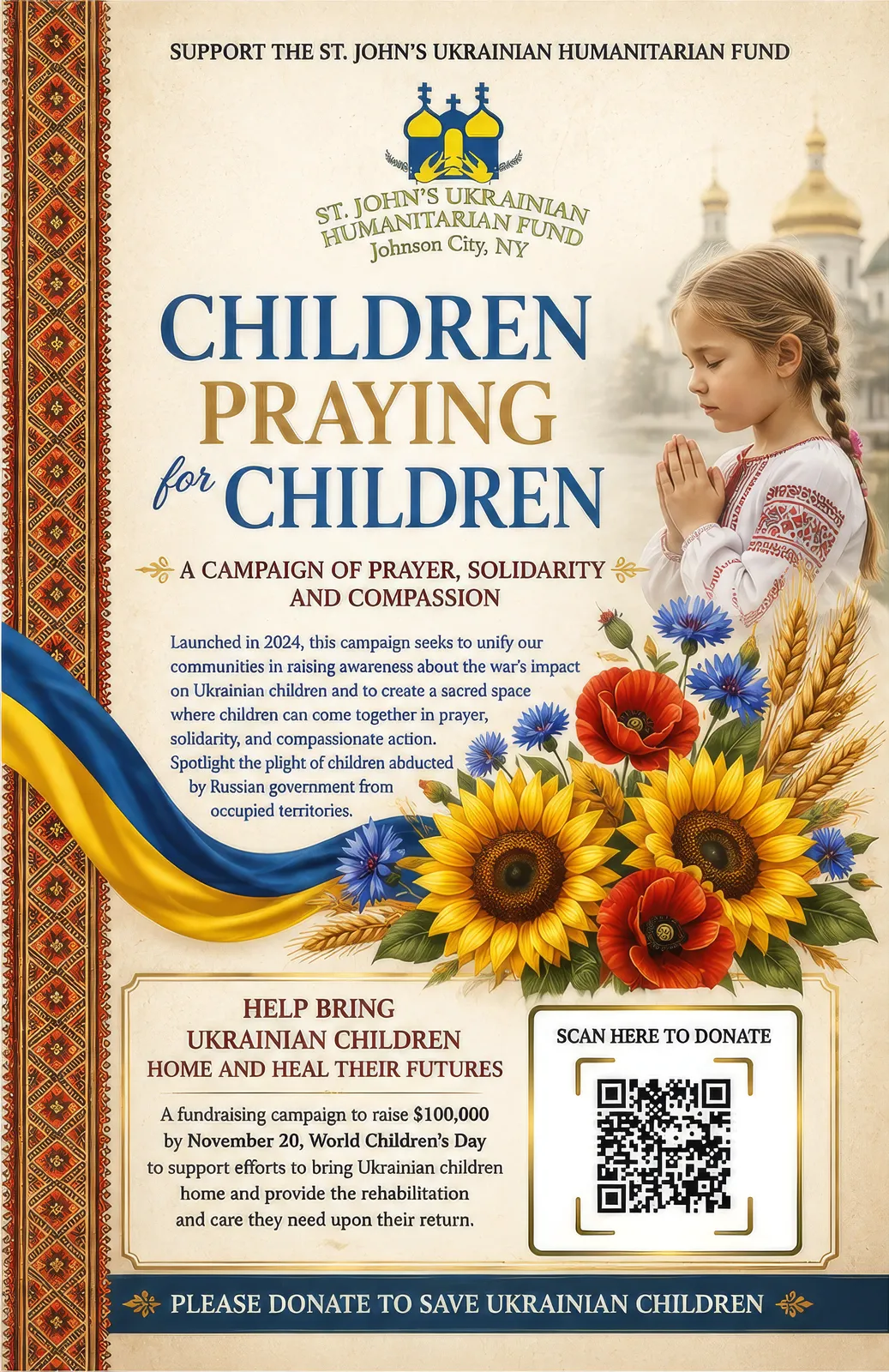
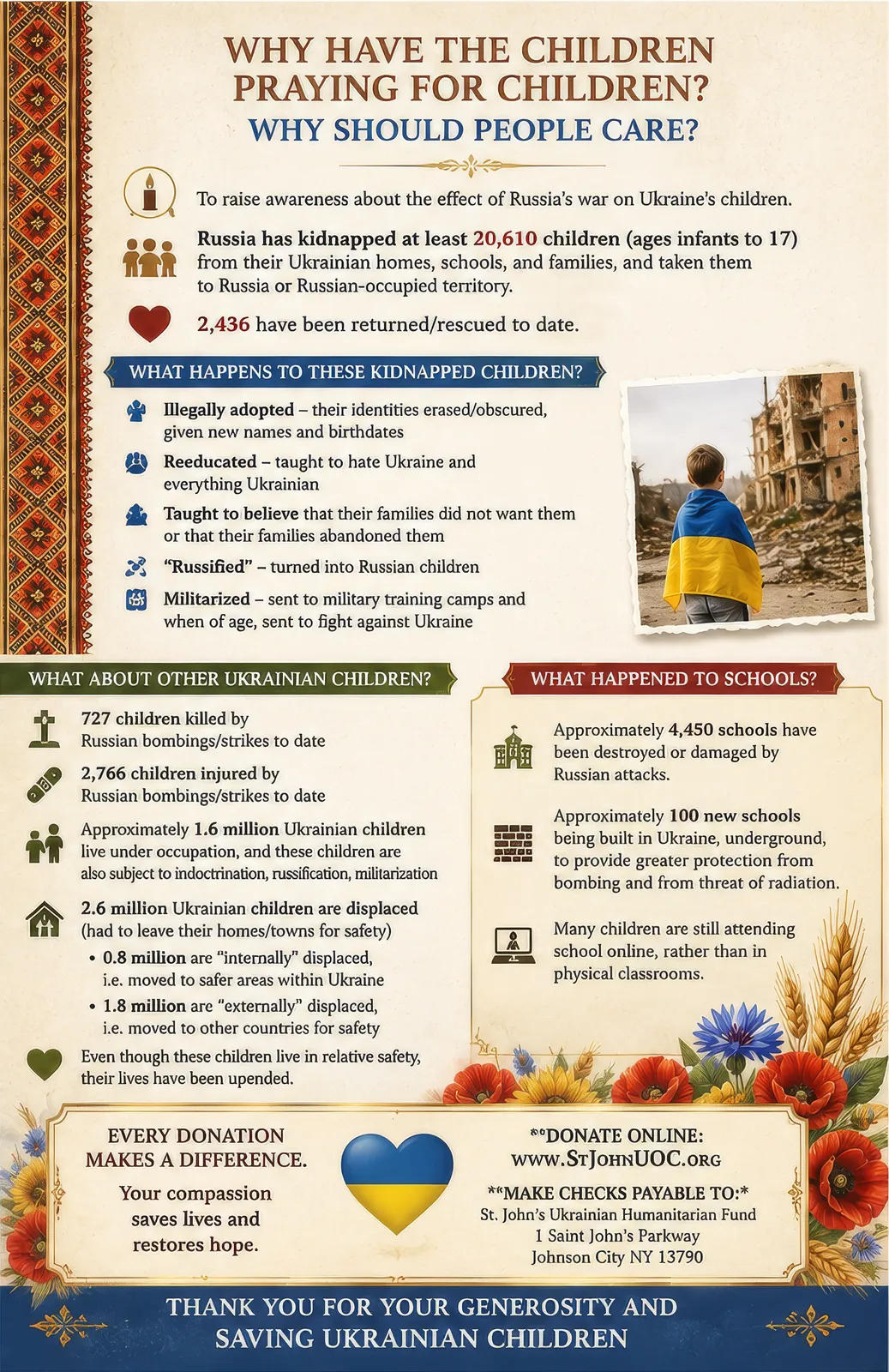
Special parish collection on Sunday, November 15 to support our "Children Praying for Children" campaign and raise money to bring our kidnapped children home to Ukraine. Russia has kidnapped at least 20,610 children (ages infants to 17) from their Ukrainian homes, schools, and families, and taken them to Russia or Russian-occupied territory. We desperately want to reunite them with their families. Please donate.
BAKERS-BAKERS-BAKERS
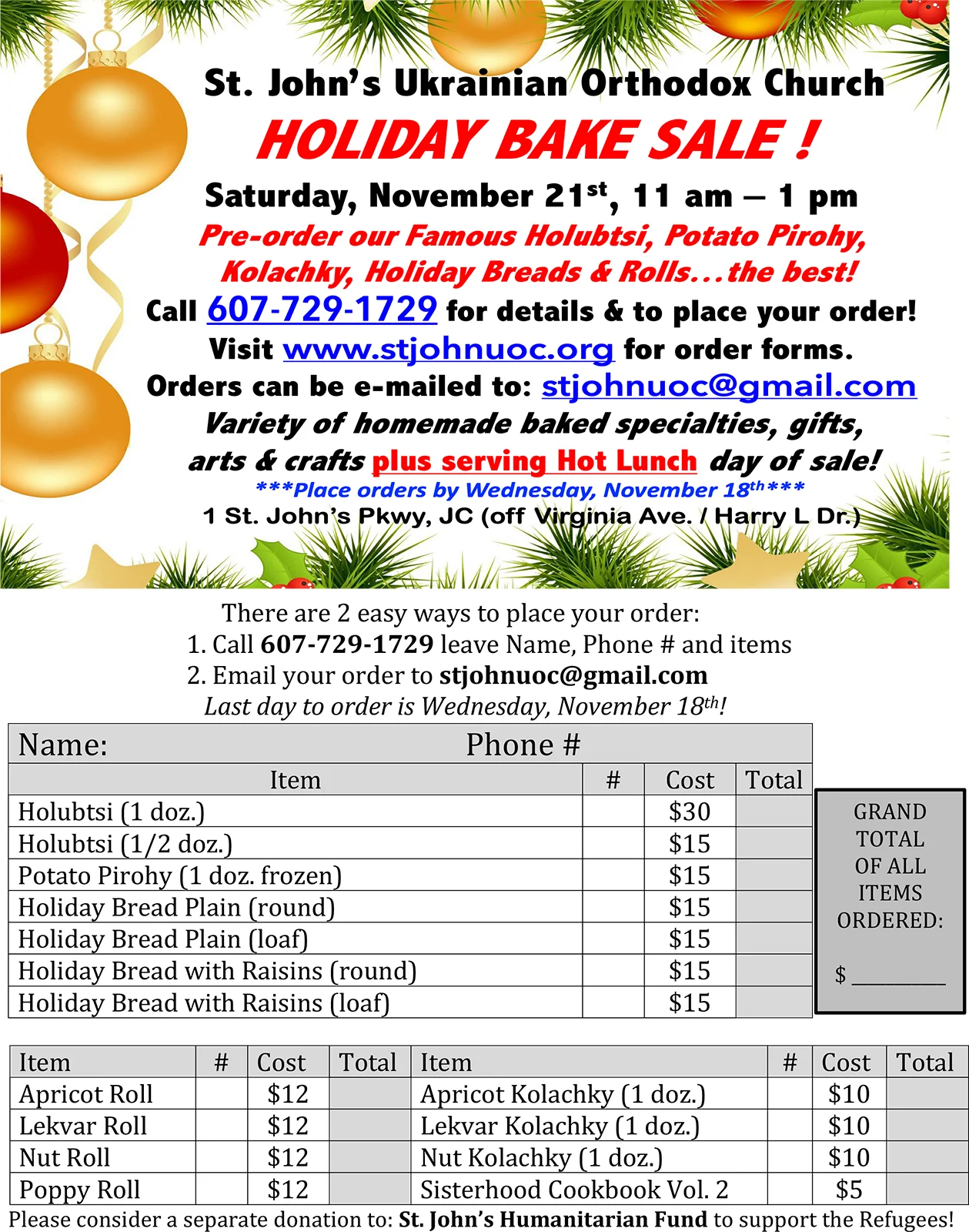
Please prepare your delicious specialties for the variety booth big sale! Drop them off by Friday, November 20, 3 PM. Thank you for supporting St. Mary's sisterhood.
Tiny Finds The Mightiest

Children Praying for Children
Holiday Bake Sale - November 21, 11am - 1pm
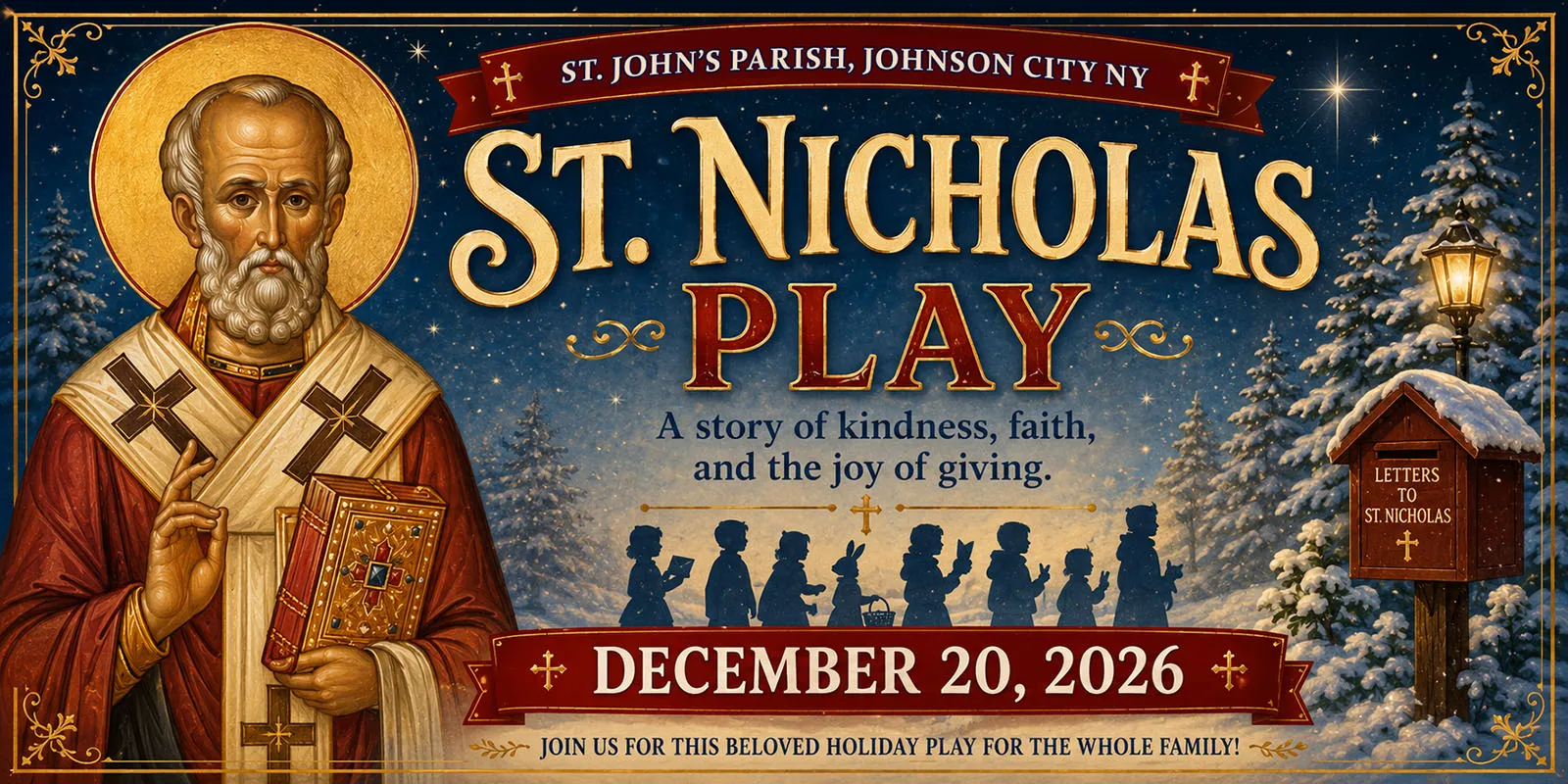
St. Nicholas Play - December 20 after church
Let's Help Ukraine!

St. John's Ukrainian Humanitarian Fund is accepting donations to help Ukrainians during war. Donations will go to provide food and other humanitarian needs.
To make donation online click here
We accept checks as well.
Please make the checks to St. John Ukrainian Humanitarian Fund
Mailing address:
1 Saint John's Parkway
Johnson City NY 13790
Cash is accepted in church
Pray for Ukraine!

Prayers for Ukraine are done during each service. To see the schedule click here.
Молитви за Україну проводяться під час кожної служби. За розкладом дивіться тут.
May God bless and protect Ukraine!
Happy Birthday
- November 09: Evelyn Scannell
* If your or someone else's birthday is missing or incorrect please let Fr. Ivan know right away.
Please Note!
- Only Orthodox Christians may receive Holy Communion or other Sacraments.
- If you have not been to confession in over a month, please go to confession before receiving the Holy Gifts.
- We fast from all food and drink (including water) from bedtime (the previous night) until we receive the Holy Gifts during morning Divine Liturgy. That also means no coffee, no cigarettes, no gum, candies in the morning and during Divine Liturgy.
- Fasting before Holy Communion is required from everyone over seven years of age (Confession age).
Please Pray for the Servants of God
Metropolitan Antony, PM Kelly,
Peter John, John, Rose, Solomiia,
Bob, John, Jane, Alla,
Fr. Andre, Mary, Zenna, Douglas,
Melanie, William, Mariann,
Robert, Jean, Ronald, Brian,
Fr. James, Scott, Andriy, James, William,
Olha, Solder Olexiy, Tamara
Upcoming Readings
| Mon. Nov. 9 – | 1 Thess. 2:20–3:8; | Lk. 10:22-24; |
| Tue. Nov. 10 – | 1 Thess. 3:9-13; | Lk. 11:1-10; |
| Wed. Nov. 11 – | 1 Thess. 4:1-12; | Lk. 11:9-13; |
| Thu. Nov. 12 – | 1 Thess. 5:1-8 ; | Lk. 11:14-23; |
| Fri. Nov. 13 – | 1 Thess. 5:9-13, 24-28; | Lk. 11:23-26; |
| Sat. Nov. 14 – | 2 Cor. 11:1-6 ; | Lk. 8:16-21; |