Bulletin for January 25, 2026
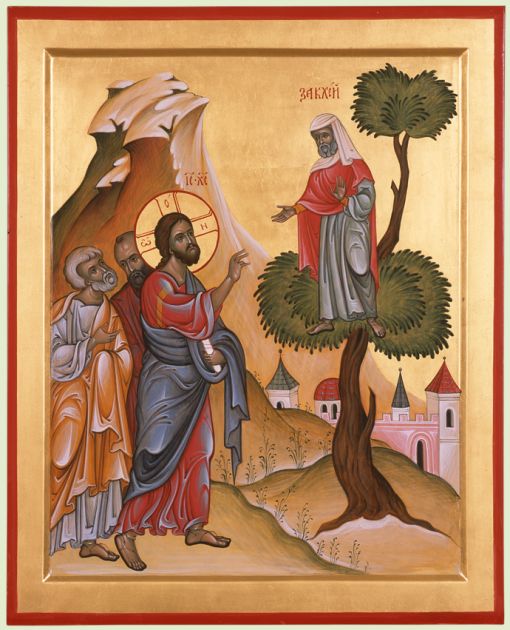
Jan. 25 – 33rd Sunday after Pentecost, of Zacchaeus. Tone 8
Sunday after Theophany. Afterfeast of the Theophany.
Martyr Tatiana of Rome (226-235). Martyr Mertius of Mauretania (284-305). Martyr Peter Apselamus (309). Ven. Eupraxia I of Tabenna in Egypt (393). St. Sava I, first archbishop of Serbia (1237).
Eph. 4:7-13; Mt. 4:12-17;
1 Тim. 4:9-15; Lk. 19:1-10;
Feb. 1 – Sunday of the Publican and the Pharisee. Tone 1
St. Macarius the Great of Egypt (390). Virgin-martyr Euphrasia of Nicomedia (303). Ven. Macarius of Alexandria (394). St. Arsenius, archbishop of Kerkyra (Corfu) (953). Ven. Macarius of the Kiev Caves (12th c.). Ven. Macarius, deacon of the Kiev Caves (13th-14th c.).
2 Tim. 3:10-15 ; Lk. 18:10-14;
Services & Other Events
25 January, Sunday:
- 9am – Confession / Hours
- 9:30am – Divine Liturgy - Бож. Літургія
27 January, Tuesday:
- 7pm – Parish Council Meeting (CHANGED)
30 January, Friday:
- 7:30am Potatoes;
- 10am-12noon Make pirohy balls, Kitchen/hall setup.
- Setup guide top shelf by cooler.
31 January, Saturday:
- 7:30am Finish set-up;
- 8am-12pm Pinching pirohy, Lunch after
- 5pm – Great Vespers - Велика Вечірня
1 February, Sunday:
- 9am – Confession / Hours
- 9:30am – Divine Liturgy - Бож. Літургія
- Annual Parish Meeting
- Kolachky balls after Divine Liturgy
3 February, Tuesday:
- 7pm – Building and Maintenance Committee Meeting (CHANGED)
22 February, Sunday:
- St. Mary's Sisterhood Annual Meeting after services.
Апостол і Євангеліє - Gospel and Epistle of the Day
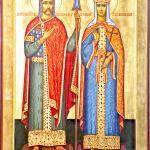
Saint Savva I, first Archbishop of Serbia
Saint Savva, First Archbishop of Serbia, in the world Rostislav (Rastko), was a son of the Serbian king Stephen Nemanya and Anna, daughter of the Byzantine Emperor Romanus. From his early years he fervently attended church services and had a special love for icons.
At seventeen years of age, Rostislav met a monk from Mount Athos, secretly left his father's house and set off for the Saint Panteleimon monastery.
Knowing that his son was on Athos, his father mobilized his retainers headed by a faithful voevod and wrote to the governor of the district which included Athos, saying that if his son were not returned to him, he would go to war against the Greeks. When they arrived at the monastery, the voevod was ordered not to take his eyes off Rostislav. During the evening services, when the soldiers had fallen asleep under the influence of wine, Rostislav received monastic tonsure (in 1186) and sent to his parents his worldly clothes, his hair and a letter. Saint Savva sought to persuade his powerful parents to accept monasticism. The monk's father (in monasticism Simeon, commemorated on February 13) and his son pursued asceticism at the Vatopedi monastery. On Athos they established the Serbian Hilandar monastery, and this monastery received its name by imperial grant. At Hilandar monastery, Saint Savva was ordained to the diaconate and then presbyter. His mother Anna became a nun with the name Anastasia (June 21).
For his holy life and virtuous deeds on Mount Athos, the monk was made an archimandrite at Thessalonica. At Nicea in the year 1219 on the Feast of the Dormition of the Most Holy Theotokos, the Ecumenical Patriarch Germanus consecrated Archimandrite Savva as Archbishop of Serbia. The saint petitioned the Byzantine Emperor to grant permission for Serbian bishops to elect their own Archbishop in future. This was a very important consideration in a time of frequent wars between the eastern and western powers.
Having returned to the Holy Mountain from Nicea, the saint visited all the monasteries for the last time. He made prostrations in all the churches and, calling to mind the blessed lives of the wilderness Fathers, he made his farewells to the ascetics with deep remorse, "leaving the Holy Mountain, as if from Paradise."
Saddened by his separation from the Holy Mountain, the saint went along the path from Athos just barely moving. The Most Holy Theotokos spoke to the saint in a dream, "Having My Patronage, why do you remain sorrowful?" These words roused him from despondency, changing his sorrow into joy. In memory of this appearance, the saint commissioned large icons of the Savior and of the Mother of God at Thessalonica, and put them in a church.
In Serbia, the activity of the Hierarch in organizing the work of his native Church was accompanied by numerous signs and miracles. During the Liturgy and the all-night Vigil, when the saint came to cense the grave of his father the monk Simeon, the holy relics exuded fragrant myrrh.
Being in charge of negotiations with King Vladislav, who had declared war on Serbia, the holy bishop not only brought about the desired peace for his country, but he also brought the monarch to Orthodoxy. Thus he facilitated the start of the historical existence of the autonomous Serbian Church. Saint Savva also contributed to strengthening the Serbian state. In order to insure the independence of the Serbian state, Archbishop Savva crowned his powerful brother Stephen as king. Upon the death of Stephen, his eldest son Radislav was crowned king, and Saint Savva set off to the Holy Land "to worship at the holy tomb of Christ and fearsome Golgotha."
When he returned to his native land, the saint blessed and crowned Vladislav as king. To further strengthen the Serbian throne, he betrothed him to the daughter of the Bulgarian prince Asan. The holy hierarch visited churches all across Serbia, he reformed monastic rules on the model of Athos and Palestine, and he established and consecrated many churches, strengthening the Orthodox in their faith. Having finished his work in his native land, the saint appointed the hieromonk Arsenius as his successor, consecrating him bishop and giving his blessing to all.
He then set off on a journey of no return, desiring "to end his days as a wanderer in a foreign land." He passed through Palestine, Syria and Persia, Babylon, Egypt and Anatolia, everywhere visiting the holy places, conversing with great ascetics, and collecting the holy relics of saints. The saint finished his wanderings at Trnovo in Bulgaria at the home of his kinsman Asan, where with spiritual joy he gave up his soul to the Lord (+ 1237).
At the time of transfer of the holy relics of Saint Savva to Serbia in 1237, there were so many healings that the Bulgarians began to complain about Asan, "because he had given up such a treasure." In the saint's own country, his venerable relics were placed in the Church of Mileshevo, bestowing healing on all who approached with faith. The inhabitants of Trnovo continued to receive healing from the remnants of the saint's coffin, which Asan ordered to be gathered together and placed in a newly built sarcophagus.
The legacy of Saint Savva lives on in the Orthodox Church traditions of the Slavic nations. He is associated with the introduction of the Jerusalem Typikon as the basis for Slavic Monastic Rules. The Serbian Hilandar monastery on Mt. Athos lives by the Typikon of Saint Savva to this day. Editions of The Rudder (a collection of church canons) of Saint Savva, with commentary by Alexis Aristines, are the most widely disseminated in the Slavic Churches. In 1270 the first copy of The Rudder of Saint Savva was sent from Bulgaria to Metropolitan Cyril of Kyiv. From this was copied one of the most ancient the Ryazan Rudder of 1284. It in turn was the source for a printed Rudder published in 1653, and since that time often reprinted by the Church. Such was the legacy of Saint Savva to the canonical treasury of Orthodoxy.
Святитель Савва І, архієпископ Сербський
Архієпископ Сава (серб. Свети Сава), у миру Растко Неманіч (серб. Растко Немањић, бл. 1169 – 14 січня 1236) — один із найшанованіших святих Сербської Православної Церкви, релігійний, культурний і політичний діяч. Його житіє є прикладом палкої любові до Господа, високих чернечих подвигів та пастирських трудів.
Пам'ять святителя Сави вшановується 25 (12) січня. 27 (14) січня його прославляють Сербська, Грецька, Румунська, Албанська Православні Церкви та Православна Церква за кордоном.
Життєпис
У миру Ростислав (Растко), народився у 1169 році в родині самодержця Сербії Стефана Немані та Анни, доньки грецького імператора Романа. З раннього дитинства він старанно відвідував церковні служби та мав особливу любов до ченців.
У сімнадцятирічному віці, зустрівши ченця зі Святої Гори Афон, Ростислав таємно залишив батьківський дім і прибув до Афонського Пантелеймонового монастиря.
Батько його, дізнавшись, що син на Афоні, спорядив цілу дружину з вірним воєводою і написав правителю області, куди входив Афон, що якщо йому не повернуть сина, він піде на греків війною. Прибувши до монастиря, воєвода наказав не зводити очей з Ростислава. Під час вечірнього богослужіння, коли втомлені воїни поснули, Ростислав прийняв постриг з нареченням імені на честь преподобного Сави Освяченого і надіслав батькам свій мирський одяг, волосся та листа. Це сталося у 1186 році.
Чернець Сава зумів переконати своїх батьків прийняти чернецтво. Батько преподобного разом із сином трудився у Ватопедській обителі. На Афоні вони оновили сербський Хіландарський монастир, і ця обитель отримала звання царської ставропігії.
У Хіландарському монастирі преподобний Сава був висвячений на диякона, а згодом — на пресвітера. У Солуні за свої чернечі подвиги на Святій Горі преподобний був удостоєний сану архімандрита.
Повернувшись згодом на батьківщину, святий Сава разом зі своїм братом святим Стефаном заклали Жицький монастир на честь Вознесіння Господнього, покликаний стати центром Сербської Церкви.
У 1219 році в Нікеї на свято Успіння Пресвятої Богородиці Константинопольський патріарх Герман висвятив архімандрита Саву на єпископа з піднесенням у гідність архієпископа всієї Сербії. При цьому преподобний Сава випросив у грецького імператора право кандидату на сан архієпископа бути висвяченим у Сербії собором єпископів, що було дуже важливо для того часу частих воєн між східними та західними володарями.
Прибувши з Нікеї на Святу Гору, святитель востаннє обійшов усі монастирі, вклонився всім церквам і, згадуючи блаженне життя пустельних отців, у глибокому сокрушенні попрощався з подвижниками, «виходячи зі Святої Гори, як із якогось Божественного раю». По дорозі з Афону, пригнічений тяжкістю розлуки, святитель ледь ішов. Тільки слова Пресвятої Богородиці, яка з'явилася йому уві сні — «Маючи Мене Заступницею перед Царем усіх, Сином і Богом Моїм, чи про це ще сумуєш?» — визволили його зі зневіри, змінивши печаль на радість. На згадку про це явлення святитель замовив у Солуні дві великі ікони Спасителя та Божої Матері, які встановив у церкві Філокалії.
Служіння в Сербії
У Сербії діяльність Первосвятителя з улаштування справ Церкви та вітчизни супроводжувалася численними знаменнями та чудесами. Під час Літургії та всенічної, коли святитель приходив покадити над гробом свого батька, преподобного Симеона, святі мощі виточували благоуханне миро.
Ведучи переговори з угорським королем Владиславом, який оголосив війну Сербії, прославлений небесними знаменнями святитель не лише приніс бажаний мир своїй вітчизні, а й навернув у Православ'я угорського монарха. Поклавши початок історичному існуванню самостійної Сербської Церкви, святитель Сава також сприяв утвердженню сербської державності. Щоб зміцнити незалежну державу сербів, святий архієпископ Сава у 1222 році вінчав на царство брата Стефана.
Після упокоєння Стефана, вінчаючи на царство його старшого сина Радослава, святитель Сава вирушив до Святої Землі, щоб «зі сльозами цілувати святий Гроб Господній і страшну Голгофу». Повернувшись додому, святитель благословив і вінчав на царство Владислава і для більшого утвердження престолу заручив його з донькою болгарського князя Іоанна Асеня.
Святий Первосвятитель обійшов усю землю Сербську, виправив чернечі статути за зразком афонських та палестинських, збудував і освятив безліч церков, утверджуючи православних у вірі. Завершивши свій подвиг на батьківщині та призначивши своїм наступником ієромонаха Арсенія, святитель вирушив у свою останню подорож, бажаючи «закінчити дні свої мандрівником у землі чужій». Пройшовши всю Палестину, Сирію, Персію, Вавилон, Єгипет та Анатолію, він закінчив свою мандрівку в Тирново (Болгарія), де з духовною радістю віддав свою душу Господу у 1237 році.
Мощі та вшанування
Високошанований ще за життя, архієпископ Сава одразу став вважатися святим після кончини. Оскільки його мощі спочивали в Болгарії, сербський король Владислав та архієпископ Арсеній доклали багато зусиль, щоб перенести їх до Сербії. Болгарський цар Іоанн Асень II спочатку не хотів віддавати мощі, проте після нічного видіння дозволив перенесення.
У 1237 році мощі були покладені в монастирі Мілешево. Згодом святий Сава з'явився одному зі своїх учнів і наказав покласти його тіло відкрито, після чого мощі перебували в дерев'яному ковчезі в монастирському храмі.
Мощі спочивали в Мілешевській обителі до 1594 року, коли Синан-паша захопив цю найбільшу святиню сербського народу, вивіз її до Белграда і 27 квітня спалив на пагорбі Врачар.
Його праця та спадщина
Спадщина святителя Сави Сербського живе у православному Переданні слов'янських народів. З його ім'ям пов'язане перше введення Єрусалимського Статуту в слов'янських чернечих обителях; за Типіком святого Сави донині живе Хіландарський монастир на Афоні.
Належна святителю редакція Кормчої книги (Номоканона) з тлумаченнями Олексія Аристина стала найбільш розповсюдженою в Руській Церкві. У 1270 році митрополиту Київському Кирилу було надіслано з Болгарії першу книгу Кормчої святого Сави. З нього була списана одна з найдавніших руських Кормчих — Рязанська Кормча 1284 року, яка згодом лягла в основу друкованих видань.
Про освіту та знання
Святого Саву вважають покровителем шкіл та вчителів. Він часто наголошував на важливості вивчення книг:
«Книжне знання — це світло для розуму, але тільки тоді, коли воно поєднане з чистотою серця. Шукайте мудрості не для гордості, а для спасіння душі та служіння ближньому».
Святитель Сава був частиною могутньої династії Неманичів, де його духовний авторитет часто важив більше за королівські корони.
Annual Blessing of Homes
The Annual Blessing of Homes with Theophany Holy water can be scheduled with Fr. Ivan from Jan. 19 until Feb. 14.
Contact Fr. Ivan to schedule annual blessing of your home.
Annual Parish Meeting - February 1, 2026
On December 15, 2025 at the Parish Council we moved the Annual Parish Meeting to February 1, 2026.
Please mark your calendars and see you all on Feb. 1.
Gary Dobransky
Parish Council President
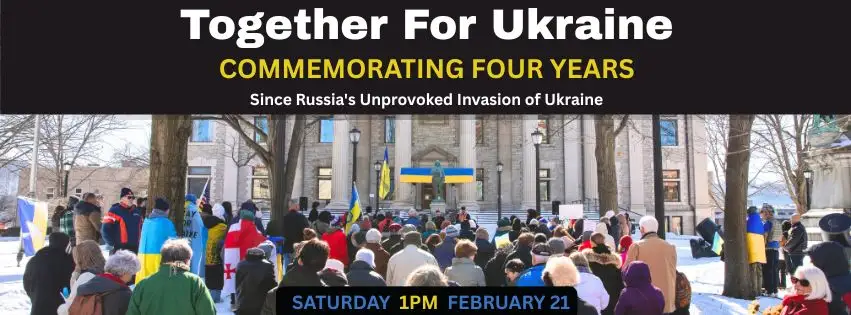
92 Court Street, Binghamton, NY
Mark your calendar and join our Ukrainian- American Community and Friends of Ukraine at 1 pm on February 21, 2026
Let's Help Ukraine!
St. John's Ukrainian Humanitarian Fund is accepting donations to help Ukrainians during war. Donations will go to provide food and other humanitarian needs.
To make donation online click here
We accept checks as well.
Please make the checks to St. John Ukrainian Humanitarian Fund
Mailing address:
1 Saint John's Parkway
Johnson City NY 13790
Cash is accepted in church
Pray for Ukraine!
Prayers for Ukraine are done during each service. To see the schedule click here.
Молитви за Україну проводяться під час кожної служби. За розкладом дивіться тут.
May God bless and protect Ukraine!
Please Note!
- Only Orthodox Christians may receive Holy Communion or other Sacraments.
- If you have not been to confession in over a month, please go to confession before receiving the Holy
Gifts.
- We fast from all food and drink (including water) from bedtime (the previous night) until we receive the Holy Gifts during morning Divine Liturgy. That also means no coffee, no cigarettes, no gum, candies in the morning and during Divine Liturgy.
Happy Birthday
- January 29: Alexander Wasylko
- January 30: Brian Baxendale
* If your or someone else's birthday is missing or incorrect please let Fr. Ivan know right away.
Please Pray for the Servants of God
Rachel, John, Rose, Solomiia, Bob,
Melodye,
Hristos, John, Jane,
Fr. Andre, Mary, Zenna, Douglas, Ivan,
Melanie, William, Marion, Helen,
Mariann, Robert, Jean, Ronald, Brian,
Fr. James, Scott, Andriy, James, William,
Pipinos, Fr. Gabriel and PM Susan, Vasyl
Upcoming Readings
| Mon. Jan. 26 | 1 Pet. 2:21 – 3:9; | Mk. 12:13-17; |
| Tue. Jan. 27 | 1 Pet. 3:10-22; | Mk. 12:18-27; |
| Wed. Jan. 28 | 1 Pet. 4:1-11; | Mk. 12:28-37; |
| Thu. Jan. 29 | 1 Pet. 4:12-5:5; | Mk. 12:38-44; |
| Fri. Jan. 30 | 2 Pet. 1:1-10; | Mk. 13:1-8; |
| Sat. Jan. 31 | 1 Tim. 2:11-19; | Lk. 18:2-8; |